

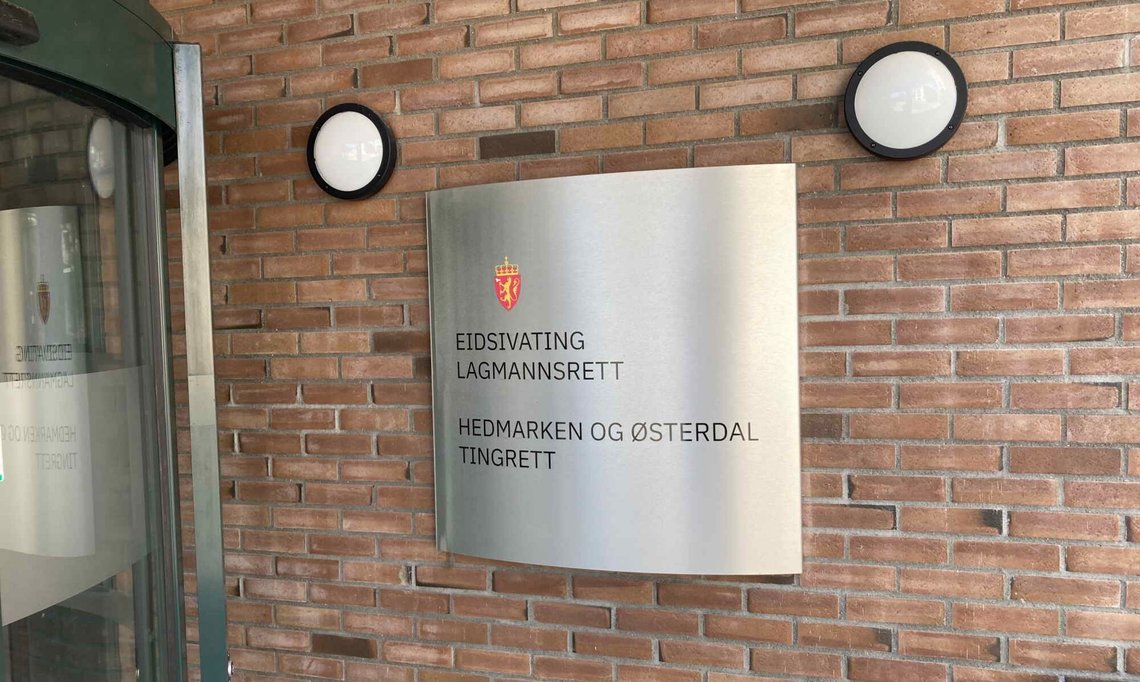
The criminal case in Hedmarken and Østerdal District Court in Hamar on Tuesday, in which two underage girls stand accused of aggravated criminal damage after having instigated the fire at Løten lower secondary school in August last year, was, as is well known, delayed because the defence counsel stated that their clients would not give evidence with Document present in court.
Hamar Arbeiderblad’s report of this “case within the case” bears witness to the fact that the argumentation of defence counsel Mette Yvonne Larsen was exceedingly weak:
– I have no confidence in that media house, or whatever one is to call them. They have been found against in the PFU on a number of occasions. I have no confidence that Document will not reproduce names and details. My client will not give evidence as long as they are present, she said to the judge.
Larsen contends that Document has been found against – or “convicted”, which is her preferred formulation – on a number of occasions. But that applies to practically all major media. It is entirely obvious that she would not have attempted to keep VG or NRK out in the corridor with such an argument. It is tantamount to her finding it acceptable that the court treats media differentially.
Thus she permits herself the luxury of displaying antipathy, which she also does with the afterthought “or whatever one is to call them”. How deeply does a lawyer in a serious criminal case consider it fitting to sink? Would she have thought it acceptable if we had employed the formulation “the lawyer, or whatever one is to call her”? Or does she consider herself elevated above others?
What to the uninitiated may appear a valid premise is not so either: Larsen fears that Document would publish the names of the accused upon presence in court. But why should presence or otherwise be decisive for such a decision? The names of the two accused are known to the media in any event, Document included. But it would never occur to us to publish them when the court itself has expressly prohibited this. Larsen thus insinuates that Document does not respect Norwegian law.
The judge perhaps felt he had no choice once the threat not to give evidence was made, thereby sending all the media out into the corridor during the accused’s evidence. This is not unproblematic either, as the defence counsel is in practice engaging in a form of blackmail of the court which the latter ought not to tolerate.
The Court of Appeal should have a simple task when it comes to deal with the media’s appeal against the exclusion.


