

The radicalisation of the Democratic Party in the USA is becoming ever deeper and is proceeding at an incomprehensible speed. It is now hardly an exaggeration to describe the political landscape as completely changed since 2020. The divide between the two major parties, the Democrats and the Republicans, can no longer be described as political in the usual sense, but must rather be called post-political.
The radicalisation of the Democratic Party means that it is now accurate to call the Republicans a conservative and traditionalist party and the Democrats a socialist/communist party, where the most activist elements openly agitate for a revolutionary upheaval of the order that has in essence been the guiding thread or dream through the USA’s 250-year-long history.
Yes, there was once slavery, but the Democrats, who continue to rub this abominable institution in the face of their political opponents, forget that their own Democratic Party was the party of the slave owners, and that Abraham Lincoln’s Republicans arose as a political party in opposition to slavery. After slavery was abolished, the Democrats in the southern states continued to suppress the blacks and deprive them of their civil rights. This was the case right up until the civil rights laws in 1964.
And now Abraham Lincoln’s Republican successors have to listen to accusations of racism!
To get an insight into the depth of the conflict that is in the process of tearing the USA apart, it is instructive to note the opinion polls.
According to a poll from The Economist/YouGov, nearly four in ten Democrats say they are ashamed to be Americans. Looking at the population as a whole, 12 per cent say they are to some degree ashamed, while 8 per cent state that they are very ashamed. For Republicans the situation is the opposite. The great majority say that they are proud or very proud to be Americans, while only 3 per cent say that they are ashamed.
In a poll reproduced by CNN (no friend of the Republicans) a representative sample of the population was asked what the USA’s national day, 4 July, means to them. The great majority of Republican voters, namely 65 per cent, stated that they would celebrate the day, while this applied to only 24 per cent of the Democrats.
In 2001, 68 per cent of Republicans and 65 per cent of Democrats stated that they would hoist the Stars and Stripes. Now almost as many Republicans, namely 65 per cent, say that they will hoist the flag, while this applies to only 27 per cent of the Democrats. There has, in other words, been a sudden fall in the Democrats’ patriotism.
The same tendency appears when voters are asked what they think of capitalism. 55 per cent of Democratic voters now say that they to a greater or lesser degree distance themselves from the capitalist market economy.
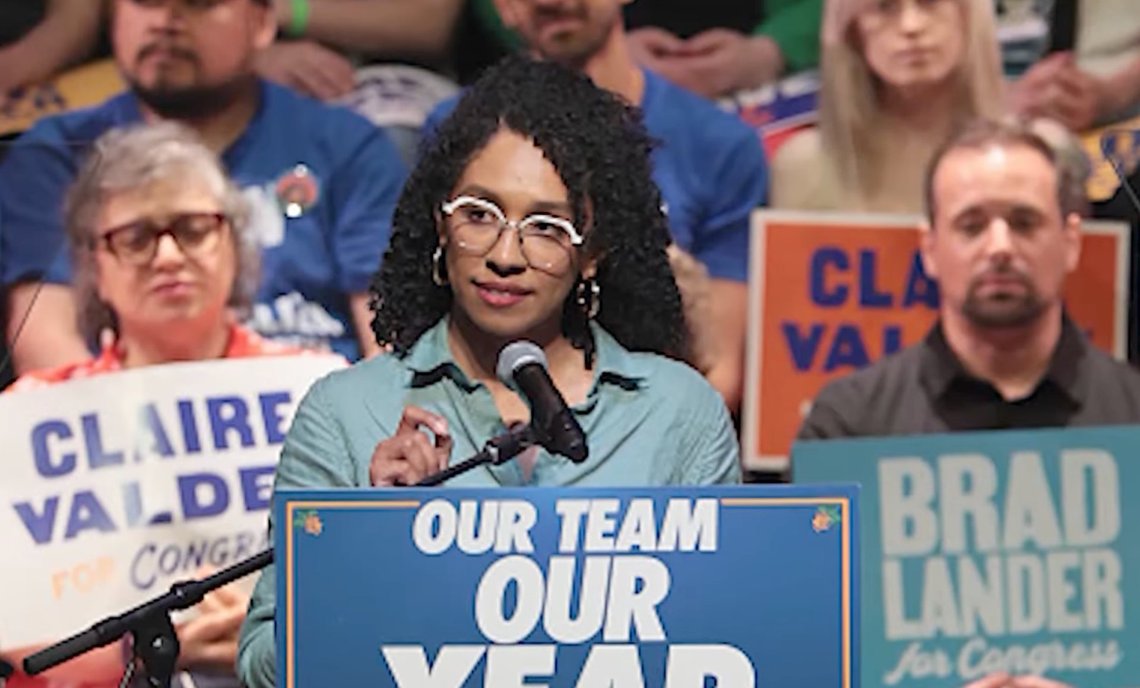
It therefore comes as no surprise that declared socialists have just won a series of primary elections, among others in New York, where established Democrats have been passed over in favour of candidates who call themselves democratic socialists, but who would rather be called communists – something that also applies to the city’s Democratic mayor, Zohran Mamdani. They make no secret of the fact that their ultimate goal is to abolish private property rights and to tax «the rich».
Antisemitism is also a pervasive feature among these advancing revolutionaries.
The problem with introducing new taxes on billionaires is that not only the billionaires, but also large parts of those who are not as rich, prefer to flee from socialist-governed states such as New York and California to settle in Republican states such as Texas and Florida. And they of course take their money, their businesses and their jobs with them, which helps to undermine the tax base of the socialist states. In addition, the emigration from Democrat- to Republican-governed states leads to a shift in the number of members of the House of Representatives that the individual states can be allocated.
As has been shown time and again through history, demographic changes are more fundamental and lasting than more or less fleeting political changes.
The USA is rapidly approaching a political divide that is beginning to resemble the deep divide between the northern and southern states, which led to the civil war of 1861–1865. The difference is that the southern states this time stand on the side of freedom, while the northern states wallow in communist and authoritarian dreams.


