
 John Martin Johansen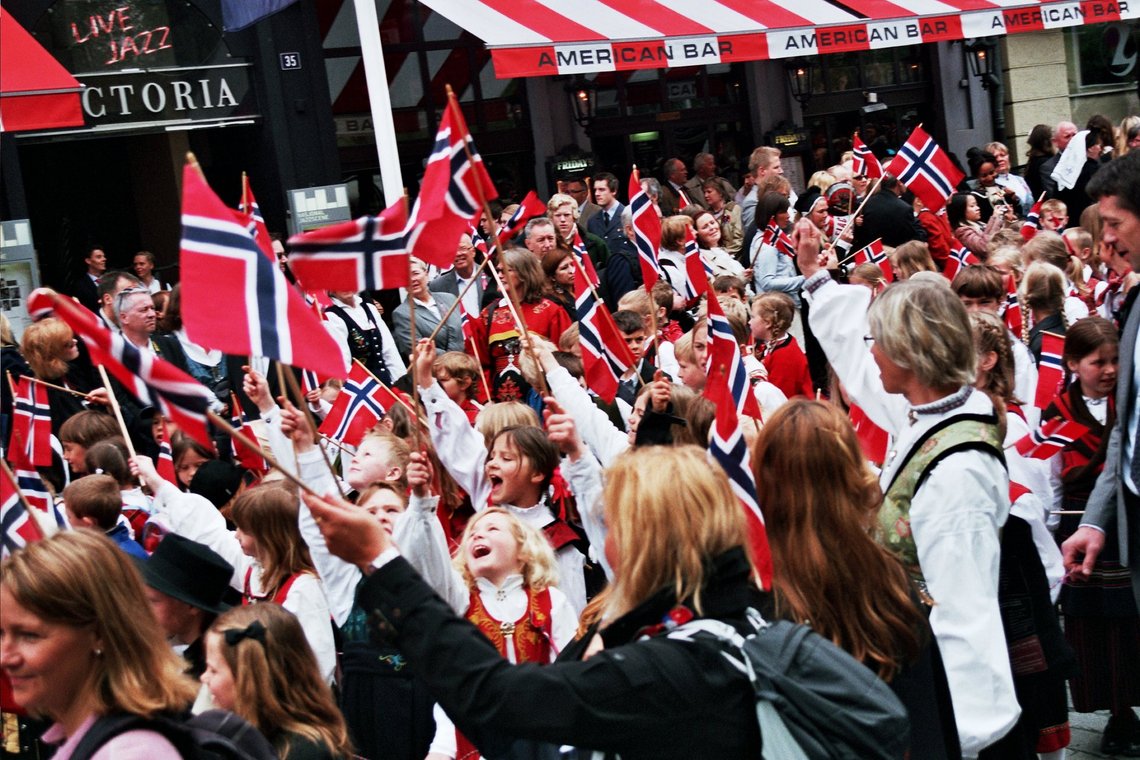
It began with an oath. On 17 May 1814, 112 men gathered at Eidsvoll and signed a constitution that made Norway an independent state, at a time when the rest of Europe was preoccupied with dividing power among emperors and kings. It was a daring undertaking. Norway was poor, sparsely populated, and had just spent four hundred years under Danish rule. Nevertheless, they put their names to the document.
It is worth reflecting on what they actually did. They did not sign an administrative document. They declared that a people had the right to govern itself, that there existed something called Norway, and that it was worth defending.
That is the day we celebrate.
For many decades, 17 May was taken for granted. Bunads, children’s parades, ice cream and brass bands. A day when even the most reserved Norwegians allowed themselves to be swept along. No one asked whether it was appropriate to wave the flag. It was simply the way things were.
But something has changed.
It is not dramatic, and it is not happening overnight, but it is happening. The debate over whether other flags should be permitted in the 17 May parades resurfaces regularly, always wrapped in the language of inclusion and diversity. The argument is that people should feel welcome. That is indeed an argument, but it rests on the assumption that the Norwegian flag on Norway’s national day is an exclusionary symbol.
That assumption is difficult to take seriously.
A parade filled with Palestinian flags, Somali flags and EU flags is not an inclusive 17 May parade. It is a parade that has lost sight of its own purpose. The national day is not an international folk festival. It is a commemoration of the self-government of a particular people: the Norwegian people. We, as Norwegians, must also be allowed to celebrate our own independence — entirely without other nations pressuring us to change anything whatsoever.
The EU question is related, although it is rarely discussed in those terms.
Norway has voted no twice. Historically speaking, that was not long ago. Yet today there is a significant body of opinion, particularly in academia and in sections of the press, which believes that Norwegian EU membership is the natural next step. The arguments concern influence, having a seat at the table, and the fact that we follow EU rules anyway, albeit without voting rights.
These are not unreasonable arguments. But they overlook something. Something very important.
What the men of Eidsvoll signed in 1814 was not a temporary arrangement pending a larger supranational structure. It was a declaration that self-government possesses an intrinsic value, regardless of whether it is practical or efficient. Norway has managed remarkably well outside the EU. We have demonstrated that we are perfectly capable of managing on our own.
All of this would change with membership. Not dramatically from the first day, but gradually and irreversibly. Indeed, it has already changed for the worse through the EEA Agreement (EØS-avtalen), which was signed without the Norwegian people being allowed to have their say.
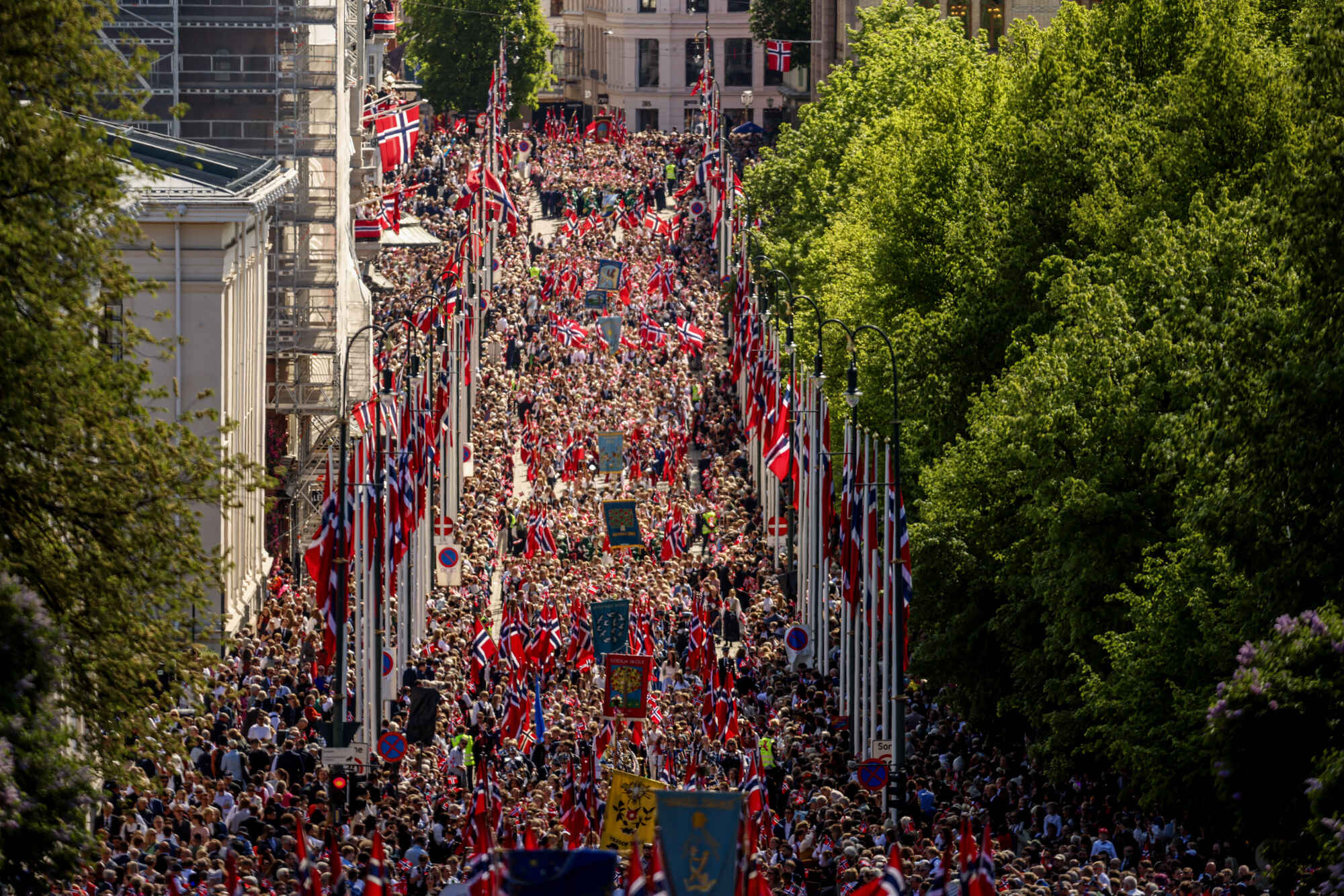 Oslo 17.05.2025.
The children’s parade proceeds up Karl Johans gate during the 17 May celebrations in Oslo.
Photo: Amanda Pedersen Giske / NTB
Back to the flag.
Norway is one of the world’s most immigration-friendly countries, measured by its willingness to receive, integrate and grant citizenship. In many respects, this is a weakness and an expression of the naïve culture of trust that characterises Norwegian society.
For that trust is one-sided.
Those who choose to settle in Norway and eventually become Norwegian citizens enter into a kind of tacit agreement. One acknowledges having received something that very many others do not receive: security, welfare and opportunity. That is precisely why it is so important to understand that the country which granted you these things possesses a history and an identity worthy of respect.
To ignore 17 May is not a political statement. It is indifference towards something that ought to matter to everyone who has chosen Norway as their country.
National identity is not racism. It is not xenophobia. It is not nostalgia for something that never existed. It is the awareness that there exists something worth preserving — a language, a rule of law, a culture and a people that are the result of generations of labour and choice. That awareness need not be aggressive. It need not point fingers. But it must be permitted to exist.
We have now reached a stage where being a nationalist is placed in the same category as being a racist, or even a fascist or Nazi. That merely means that our own identity is under attack, and in that case we must be allowed to defend it.
17 May is the day on which we remind ourselves of this.
I hereby wish all Norwegians a happy Constitution Day, and loudly cry three cheers for Norway!


