



President Donald Trump has recently stated:
«The leader of the new regime in Iran, much less radical than his predecessors, and far more intelligent, has just asked the United States for a ceasefire.»
Here Trump speaks of a new regime. At one level he is correct: On 28 February, in the first minutes after the war between the USA–Israel and Iran broke out, Ali Khamenei was killed together with approximately 40 other central Iranian leaders. This created a power vacuum which the Islamic Revolutionary Guard Corps quickly exploited. Through what may be described as a silent coup, the Revolutionary Guard took full control, both over the state and over the population.
A new leadership, but not a new regime
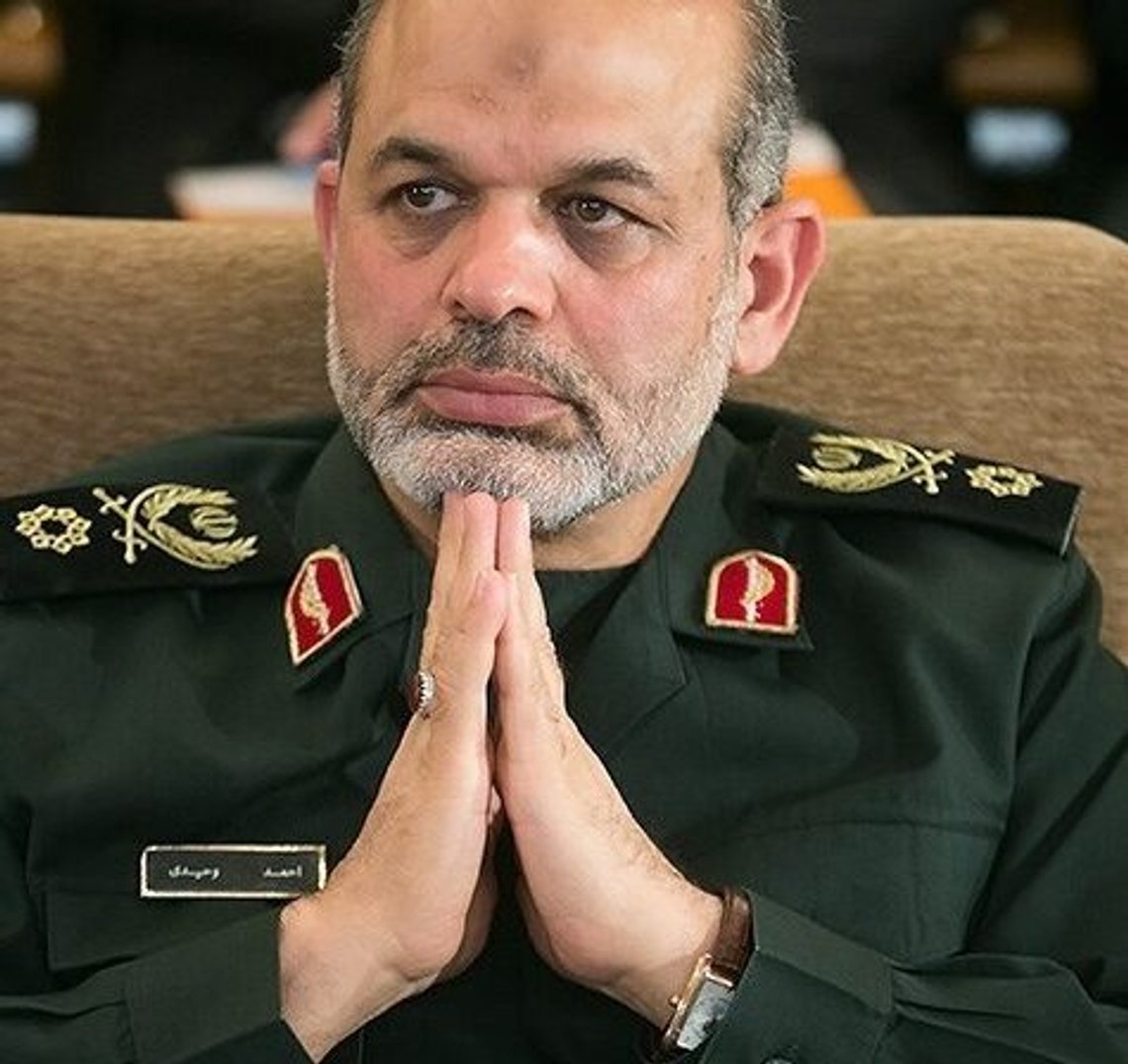
The Revolutionary Guard had already possessed significant economic and military power. Now they have consolidated this power in full, while continuing the same slogans: «Death to the United States» and «Death to Israel», combined with a hard and aggressive foreign policy. The new power figure is Ahmad Vahidi. He is wanted pursuant to a so-called Interpol Red Notice from 2007 for his alleged role in the bombing of the Jewish AMIA centre in Buenos Aires in 1994, in which 85 people were killed.
At the same time, it has become strikingly quiet around Mojtaba Khamenei, who was formally designated as successor after his father. He was selected by the Guardian Council under pressure from the Revolutionary Guard, but has neither appeared in public nor delivered speeches. Many assume that he is seriously injured.
Under Vahidi’s leadership, Iran has in practice become a militarily governed society. The streets are filled with checkpoints. Armed regime supporters patrol, with orders to use lethal force with reference to a state of war. At the same time, jihadist groups and mercenaries have been brought in from Iraq, Afghanistan and Pakistan in order to be ready to suppress new uprisings. The propaganda has also become more extreme. Large posters with Mojtaba Khamenei side by side with Hitler have appeared in the streets, accompanied by quotations falsely attributed to Adolf Hitler. The comparison is used deliberately to portray strong, uncompromising leaders with an explicit enemy image. The principal objective for both is to annihilate Jews.
This is a change of leadership which in reality has made the situation more dangerous. But it is not a regime change. Iran remains an Islamic republic. And precisely this is the core of the problem for many Iranians: A republic entails that the people elect their leaders. An Islamic republic entails that power is ultimately legitimised through religion, not through the people. After 47 years, many Iranians have experienced that these two principles cannot be reconciled in practice.
The President without power
The current President, Masoud Pezeshkian, in reality has no power. The Revolutionary Guard controls his statements, and he has been instructed to refrain from commenting on central political questions. Several reform-oriented politicians have been placed under house arrest. The Speaker of Parliament, Mohammad Bagher Ghalibaf, likewise stands without real influence.
The President’s role has been reduced to functioning as a diplomatic face outwardly, one who can send letters and signal dialogue, but without actual room for manoeuvre. This is used to give the impression that Iran seeks diplomacy, while the regime buys itself time. Even among the population, he has little credibility. During the election campaign he promised that no one would be killed or injured in the streets. Nevertheless, he supported the regime after the January massacre of peaceful demonstrators.
Double communication and power struggle
There are signs of internal division. Iran’s President Pezeshkian and the Speaker of Parliament Ghalibaf have requested a ceasefire. Iranian authorities reject this and will continue the war. This is not merely classic double communication, but an expression of a real power struggle:
A weak presidential group without real power, against a military elite around Vahidi and the Revolutionary Guard which controls everything.
It is the latter which in practice determines both the direction of the war and Iran’s future. The most serious aspect is the fascist ideology underlying it. For the Iranian power apparatus, destruction is not a risk, regardless of how extensive it may be. In the extreme, this thinking is based on the notion that enormous human losses may accelerate the religious salvation associated with the twelfth imam, Mahdi. This renders the situation dangerous – not only for Iran, but for the entire region and the world.
This power group remains firm in its line, continues to send rockets and missiles towards neighbouring countries, and keeps the Strait of Hormuz closed. All of this contributes to a fragile ceasefire in which even minor incidents may trigger a far more extensive war than previously. What is now taking place in Iran is not a shift towards moderation. It is a concentration of power in the hands of a more uncompromising Revolutionary Guard, which holds the Iranian people hostage, cuts communications, and governs through daily executions.
It is therefore crucial to understand who in fact governs Iran now, and which forces are driving the development. And it is therefore also crucial to prevent such forces from gaining access to nuclear weapons. This is not something that can be resolved through dialogue alone.


