

Influential segments of the Democratic Party in the United States, including a considerable number of members of Congress and many of the traditional media, evidently hope for an Iranian victory in the war between Israel–the United States and the Iranian clerical regime. They rejoice at every minor difficulty which they claim President Trump lacks the understanding to master. Some of them even assert that the mullahs and their Revolutionary Guard have either already won the war or are on their way to doing so.
It may well be, they say, that the Allies have won certain military victories and thereby weakened the regime in Tehran, but strategically Trump has ended up in a blind alley from which he has no idea how to extricate himself. He may bomb as much as he likes, but as long as the men of Allah can remain standing, they will regard it as a victory, and they have the patience to wait for a new opportunity to bring about the downfall of the West, as soon as Trump grows weary or is hamstrung by a Democratic majority in Congress after the midterm elections in November.
One of the accusations from the Democrats and the media against Trump is that he has no strategic plan or conception of how his military venture is to end.
There are, however, also perceptive observers who advance a completely different view, namely that Trump knows very well what he seeks to achieve. And they point out that he has a strategic plan that is far more comprehensive than merely crushing the clerical regime, namely to weaken China’s ability to realise its imperial ambitions – above all to invade Taiwan. Xi Jinping has ordered the Chinese military to prepare for war in 2027, but after the conflict in the Middle East it is doubtful whether he has the strength to challenge the United States and its allies.
The point is that China is dependent on oil imports from Iran, and by blocking the Strait of Hormuz Trump has shut off Iranian oil. The blockade thus serves several purposes.
So far, American naval vessels have effectively prevented ships coming from Iranian ports from passing through the strait, while all others may pass freely. The blockade must be seen as part of the United States’ economic warfare. As long as it continues, Tehran receives no revenue from the country’s principal export commodity, and before long the mullah regime will be unable to pay salaries to the police and other enforcement gangs. This means that the Iranian population, which largely hates the regime, will have better opportunities to overthrow it. The blockade also leads to a shortage of storage capacity for the oil that Iran is unable to sell. According to some observers, there is soon no storage capacity left, and this will force Tehran to shut down oil production.
However brutal the Islamic Republic may be, it is compelled to yield to economic realities. One cannot keep an economy going by hanging people from cranes or shooting them in the streets. The Iranian currency has already lost all value, the banks are closed, and inflation is the highest in the world.
As regards China, the communist regime must realise that it has suffered a geostrategic defeat. Not only has the country lost two of its strategic allies in the form of Venezuela and Iran. It is now also being affected economically.
On 31 March Reuters reported that China purchases more than 80 per cent of Iran’s exported oil, which constitutes approximately 13.4 per cent of the country’s seaborne oil imports. The Chinese communists have been able to buy this oil at a significant discount compared with the world market price – just as they did with oil from Venezuela. This has now come to an end, for the United States has taken control of the oil trade – at the same time as the country, owing to Trump’s “drill baby drill” policy and the confrontation with the climate lobby, has become the world’s largest oil producer and a leading oil exporter.
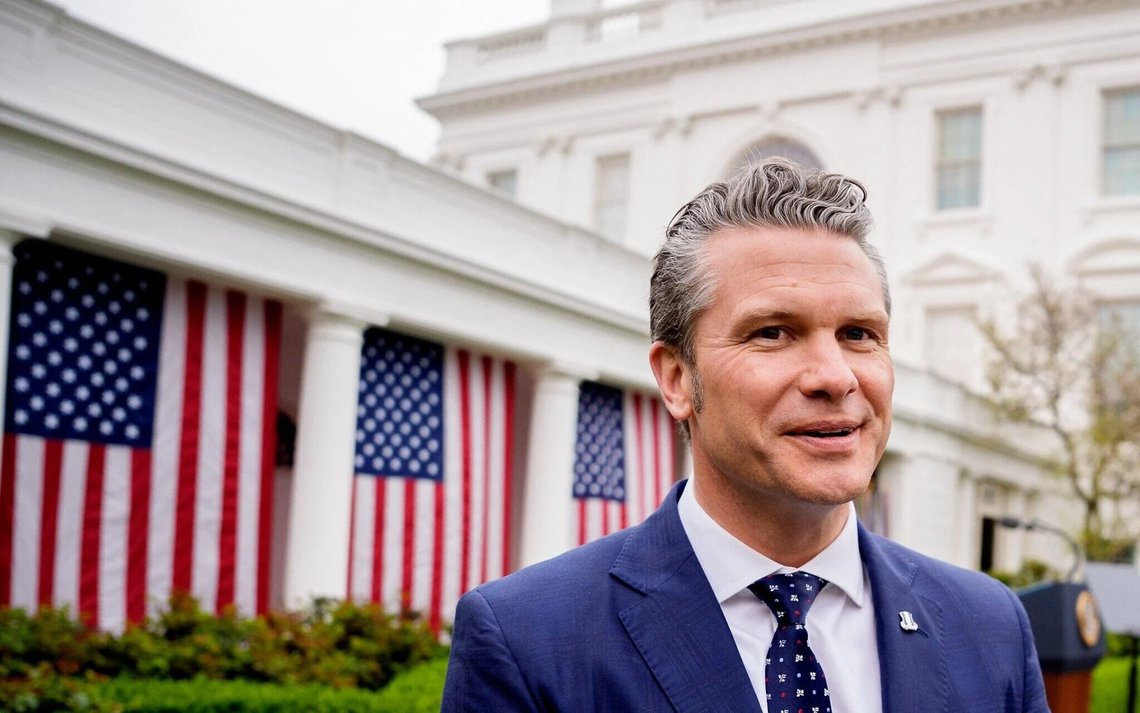
As if that were not bad enough for Beijing, the American Secretary of Defense Pete Hegseth announced two days ago that the United States has concluded a defence agreement with Indonesia which, among other things, entails that the United States has unimpeded access to fly over Indonesian territory. This is important, because Indonesia controls the Strait of Malacca – another bottleneck for global maritime trade, and a crucial trade route for China.
China’s ambitious plans to achieve world domination are crumbling. The same applies to the opponents of Trump’s fond hopes that his grand strategy should come to grief.


