
 Kent Andersen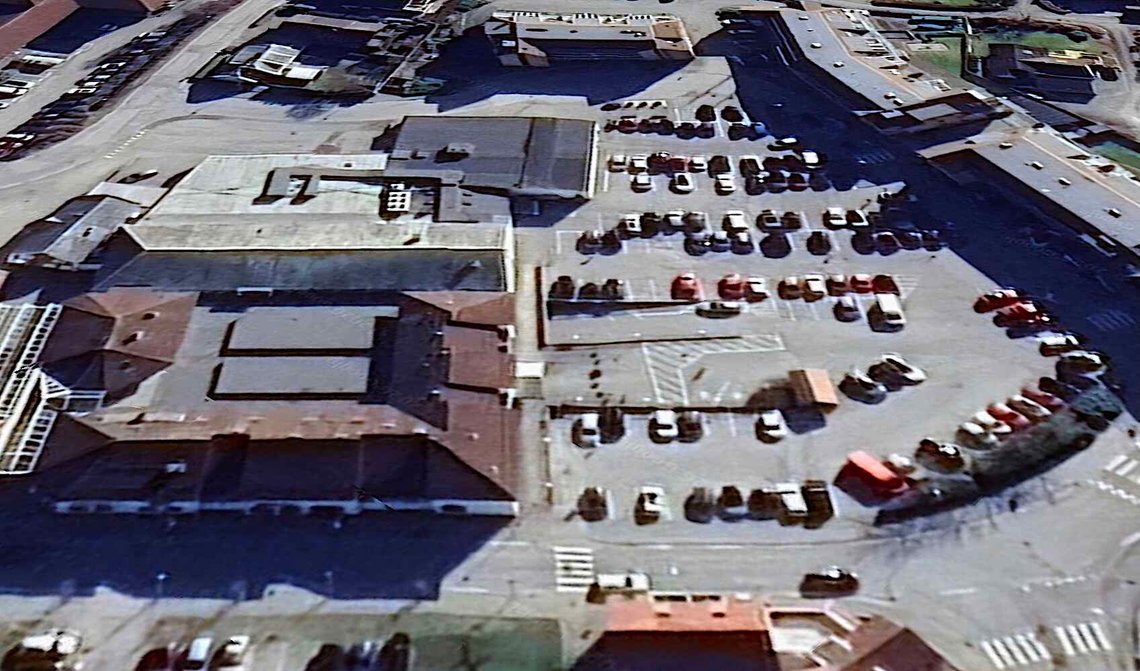
No sooner have people laughed themselves to pieces at the County Governor (statsforvalteren) in Trondheim, who determined that the requirement for the new IKEA warehouse should be 1,099 bicycle parking spaces, than the absurdity receives a sequel in Randaberg outside Stavanger. Coop Mega at Randaberg is planning to build anew, but is required to install 481 bicycle spaces in connection with a combined retail and residential project.
According to the plans, the current parking area outside Coop Mega at Randaberg is to be redeveloped and replaced with a complex comprising a shop and around 100 dwellings. The existing parking area must therefore be moved underground. The underground car park will accommodate 90 cars—but Coop is required to construct an astonishing 481 bicycle parking spaces in addition—that is, five times as many bicycle spaces as car spaces.
The present Coop Mega already has a bicycle rack with space for ten bicycles. This is very rarely full, so the need for 50 times as many bicycle spaces appears entirely absurd, but the decision-makers behind the requirement refer to regional and national objectives of reduced car use and increased bicycle traffic, particularly in urban and built-up areas.
No national standard – municipalities set their own requirements
The national building regulations (TEK17) require that buildings shall have “sufficient” parking and good accessibility, but do not stipulate exact figures for bicycle parking. This is largely left to each municipality to define its own parking standards based on the size of the building or the number of users, and Rogaland is participating in the competition for green “ambitious targets”.
Since the project at Randaberg combines commercial premises with more than 100 new apartments, strict local calculations are triggered through adopted mathematical formulas. According to the “zero-growth target” (nullvekstmål) for car traffic, such as “Jæren 2050”, all growth in passenger transport in cities is to take place by public transport, on foot, or by bicycle. In the homeland of foul weather, Norway.
The zero-growth target for car traffic has been adopted by the Storting and applies to all the largest urban areas in Norway through so-called “urban growth agreements” (byvekstavtaler), which encompass nine urban areas: Oslo, Bergen, Trondheim, Nord-Jæren with Stavanger, Sandnes, Sola, Randaberg, the Kristiansand region, Buskerudbyen, Grenland, Nedre Glomma and Tromsø.
Provokes opposition to green policy
Despite enormous population growth through immigration, growth in passenger transport in these urban areas is to occur exclusively through public transport, cycling and walking, so that car traffic does not increase. This succeeds nowhere, because Norway is cold, wet, steep and miserable throughout the year, but Green Party (MDG) policy functions only on sunny days in July.
The requirement for 481 bicycle spaces has therefore met with anger, exasperation and ridicule. Politicians from the Progress Party (FrP) and other groups consider the requirement to be detached from reality, and several fear that this folly will impede car accessibility, weaken town-centre commerce and in practice negatively affect the local community.
In the worst case, such regulatory requirements may result in the cancellation of new developments.


