

A former commander in the U.S. Army accuses Lord Hermer of undermining the British defence with his crusade against British soldiers.
Lord Hermer, who is Attorney General for England and Wales and the principal legal adviser to the British government, has, among other things, pursued former special forces soldiers in elite forces such as the Special Air Service (SAS) over events in Northern Ireland.
Hermer accuses, among others, SAS soldiers of alleged war crimes they are said to have committed several decades ago. The result is that many of the Britons’ very finest soldiers have had enough, and are hanging up their uniforms.
Fortunately, some of the court cases motivated by the ideas of Lord Hermer and Sir Keir have met resistance in the British legal system, where judges have used terms such as “ridiculous”.
Dommerne avviser «latterlig» rettssak mot SAS for drap på IRA-terrorister
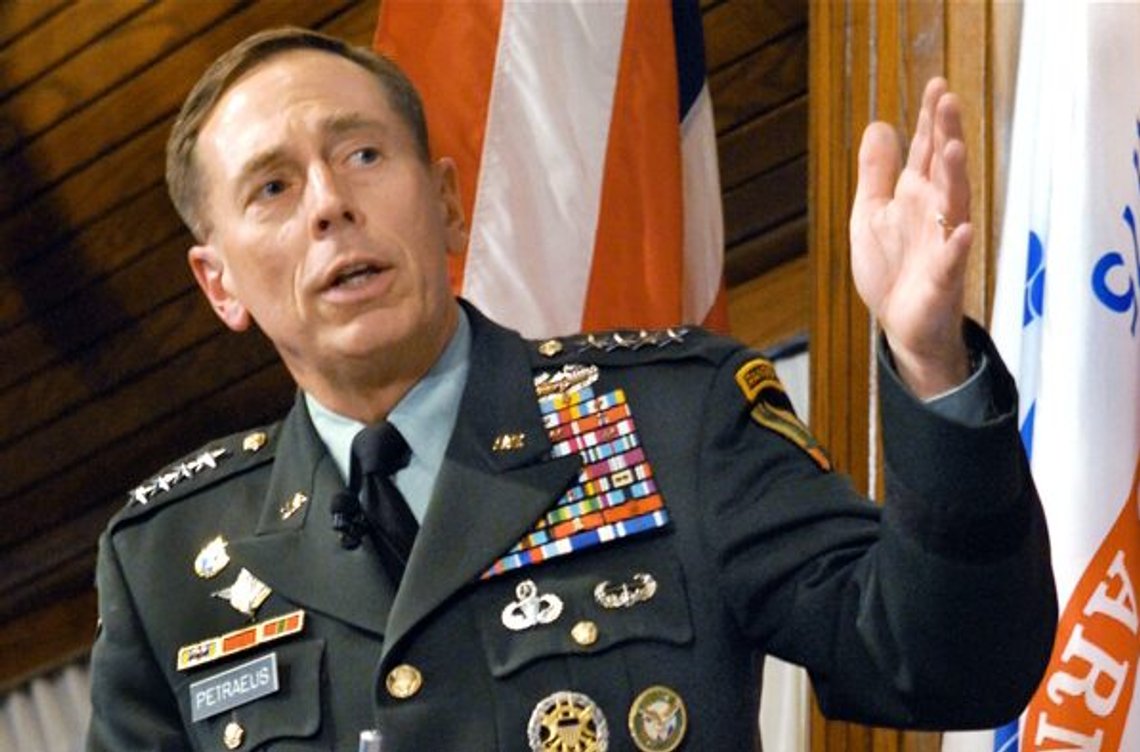
General David Petraeus is no ordinary figure. He commanded the US-led coalition forces during the Iraq War in 2007–2008, led U.S. Central Command from 2008 to 2010 and ISAF and the American forces during the war in Afghanistan from 2010 to 2011. He was also Director of the CIA from 6 September 2011 to 9 November 2012.
Petraeus is now urging the United Kingdom to put a stop to using civil law as a weapon against its own soldiers (lawfare), and issued his first known public criticism of Lord Hermer after The Telegraph revealed his role in the “witch-hunt” against British soldiers, which was also inspired by the sitting Prime Minister Keir Starmer.
In the article Lawfare poses a grave risk to Britain’s military in The Spectator, the retired four-star general Petraeus writes that he had watched with “growing concern” as British soldiers he fought side by side with were subjected to endless investigations.
The American general described this as “cycles of investigation and re-investigation over extended periods”.
Petraeus is critical of the development, which in his view weakens Britain’s defence capability, and thereby also the entire NATO alliance. This is due, among other things, to the increasing tension between the legal frameworks regulating armed conflict and the realities of modern military operations.
In particular, the increasing application of European human rights law to military operations abroad has created a degree of uncertainty which has concrete consequences for how British forces operate in the field.
The military weakening resulting from several decades of insufficient investment and weaker recruitment weakens the security of the whole of NATO, particularly since similar developments characterise so many of the countries in the alliance, especially in Europe, with Poland as an honourable exception. Now combat capability is being weakened further through the use of civil legislation in the fog of war.
The United States was heading in the same direction under Biden, but Trump and Secretary of War Pete Hegseth have turned the development on its head. Investments are increasing and recruitment is at a historically high level. The U.S. Army no longer needs Fat Camps; even overweight senior officers risk losing their jobs. Diversity, Equity, Inclusion and other woke ideas have been removed from the curriculum for American soldiers, since it violates all military principles.
Diversity: A military unit must work for unity, not for diversity. Of course one may have different skin colour, height and other external variations. But the goal is to fuse together: one is to be individuals who build a common minimum, so that one can co-operate at as high a level as possible. One is to march in step, follow the rules, dress alike and co-operate so closely that one appears as a single organism.
Equity (equality of outcome): Yet another concept that violates all basic military ideas. Not just anyone can become non-commissioned officers or officers. A very few have what is required to become special forces soldiers or fighter pilots. In order for as many as possible to survive live situations, the elites must be selected on the right basis.
Everything else leads to lives lost and, in the worst case, defeat in war. Napoleon was the first in modern times to understand this, and introduced the idea that even an ordinary soldier could become a marshal if he was capable enough. This was expressed in the famous saying: Tout soldat porte dans son sac le bâton de maréchal (every private carries a marshal’s baton in his knapsack).
Inclusion: It is the soldier who must include the unit, not the reverse. One is included when one fulfils the requirements set by the unit. It is up to each individual to choose the correct unit as a goal. If one is overweight and poorly trained, one should not choose to apply as a parachute ranger.
Many military units have mottos that one is expected to include in one’s life. An example may be the British special forces, the Special Air Service (SAS), with the well-known motto Who Dares Wins. These are not empty expressions; the words say something about the tactics and principles according to which the SAS operates.
Will provoke reactions in Whitehall
The statement from one of the most influential American military leaders in the period after the Cold War will probably be interpreted in Whitehall not only as a rebuke of Lord Hermer, but also of Prime Minister Keir Starmer. For Starmer was the one who appointed Lord Hermer, and was moreover heavily involved in the witch-hunt against British veterans.
Sir Keir worked, during his time as a lawyer in private practice, together with Lord Hermer and the disgraced solicitor Phil Shiner in a series of cases that opened the way for hundreds of soldiers to be put on trial.
Petraeus writes that the British must now determine “how best to ensure that the country’s legal framework supports, rather than inadvertently constrains, the effectiveness of those it asks to serve”.
“The maximalist approach being promoted by Britain’s government’s chief legal adviser does not appear to meet this challenge.
Given this, it appears to be time for the United Kingdom’s political leaders to engage in serious statesmanship and to debate and resolve the question of international law in the nation’s interest.”
Transferring European human rights legislation to the battlefield will create confusion and endanger soldiers’ lives, because non-commissioned officers and officers begin to doubt their own instincts.
Soldiers and officers may also find that their instincts are obstructed by civilian leaders who have never experienced combat. One example that American soldiers have also experienced, and which has cost many soldiers their lives, is the despised rules of engagement, which prevent soldiers from carrying out their missions in the best possible way, with as few soldiers lost as possible.
As Petraeus puts it: “In high-intensity conflicts, the difference between success and failure is often measured in seconds and metres.” In such situations, one has no time to set up a study group. One needs clear chains of command and obedient soldiers, with certain exceptions.
British military personnel are, like their colleagues in the allied forces, rightly obliged to comply with the law of armed conflict. These rules are crucial. They reflect both moral obligations and hard-earned practical wisdom about how wars should be fought.
The law of war is naturally specifically designed for the conduct of hostilities. It takes account of the realities of combat, including the need for rapid decisions under uncertain conditions.
Human rights, by contrast, are primarily designed for governance in peacetime. They are based on different assumptions, standards and processes.
Rules of engagement (ROE) are part of the law of war; the problem arises when ROE is infiltrated by civilian human rights that do not understand the brutal reality of war. ROE then becomes a self-imposed handicap that leads to death and suffering among one’s own troops. In the worst case, it leads to defeat for entire units.
Thus one removes the second most important principle for any military leader, which is to ensure the best possible security for the soldiers for whom one is responsible. The most important principle of all is, of course, to accomplish the mission.
Must Lord Hermer resign?
Starmer is already under pressure to dismiss his closest legal ally in the government because of the scandal. Nick Timothy, the Shadow Justice Secretary, has written to the Prime Minister asking him to dismiss Lord Hermer.
On Monday, the House of Lords’ ethics watchdog dismissed the case. But General Petraeus’s assertion that retaining Lord Hermer in office may put Britain’s ties with the United States at stake has raised the stakes.
As the general points out: unlike the British, the United States has “generally maintained a clearer distinction between the law of war and national constitutional rights in the context of operations abroad”.
The extension of human rights to cover overseas military operations has blurred the distinction between these frameworks, Petraeus believes. There is a risk that conflicts based on differing approaches to the law of war will break out between allies in the midst of ongoing life-and-death fighting.
Britain’s relationship with its most important ally has already been weakened, even though President Trump shows a surprisingly great goodwill towards preserving The Special Relationship. But General Petraeus warns that if British troops operate under “significantly different” legal frameworks from their allies, the coalition risks breaking down.
So perhaps Starmer and the Labour government must choose: do they wish to retain Lord Hermer and thereby risk sacrificing the NATO alliance? Or is it perhaps a better solution to get rid of a single and not particularly popular legal adviser?
Britain’s problem is that Starmer & co appear to have a particular ability to choose the worst solutions.


