

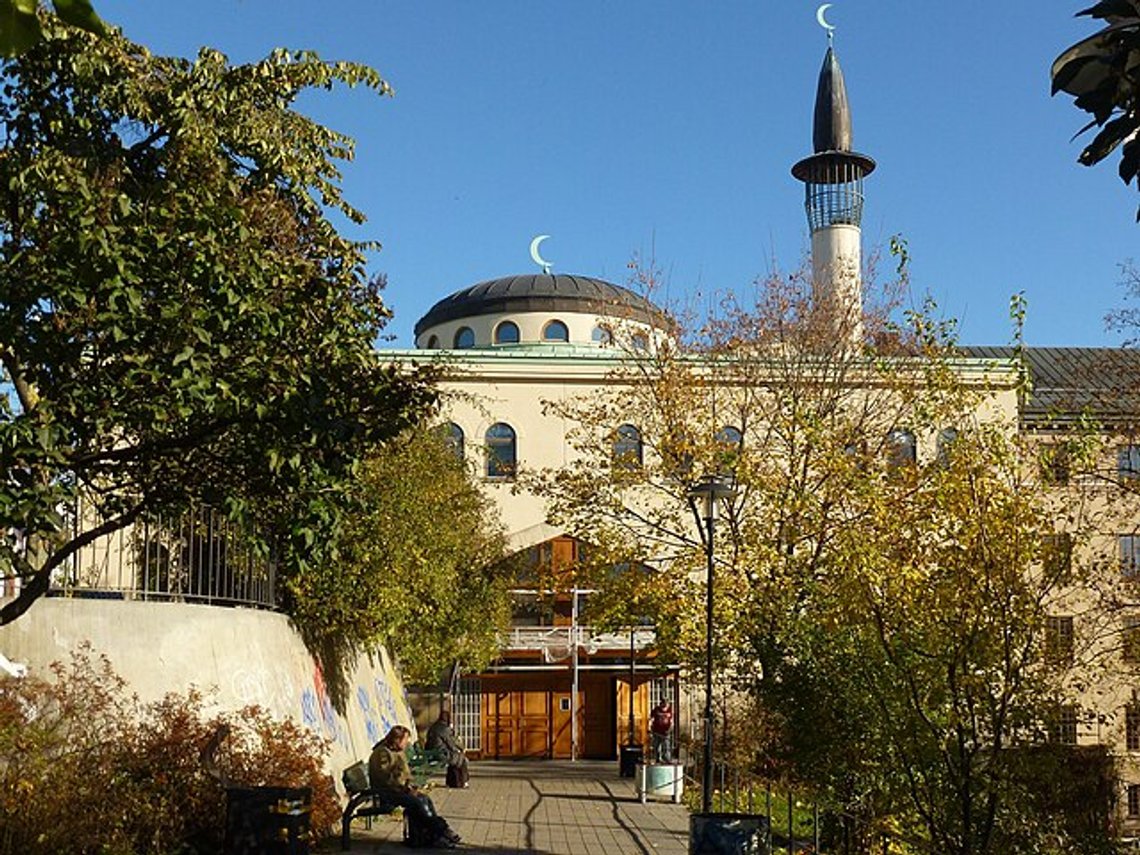
The sermons of hatred and violence that have been spread in a mosque in Kristianstad are not an isolated incident. They are a wake-up call, warning of a religiously rooted hatred that threatens our entire democratic society. But is the alarm ringing too late?
This is where we now find ourselves: An imam can, in Sweden in 2026, stand and preach about “blood, death, and expulsion.” He can speak of a duty to kill one’s opponents, of teaching children to seek revenge, of hatred toward Jews and contempt for Christians – all while operating within a society built on precisely the opposite values.
This is not just remarkable – it is a systemic failure. And it is far from surprising.
Two value systems – in the same country
Sweden has long seen itself as an open, tolerant, and pluralistic society. Who does not remember the Social Democrats’ “vaccination campaigns against racism,” or how the nation styled itself a “humanitarian superpower”?
The boundary against racism in general, and Islamophobia in particular, has been emphasized in every conceivable context, while the exclusion and labeling of anyone questioning the chosen path as “Nazis” has been refined to perfection.
The result? Today, the Swede has become a master of self-censorship: “Are you critical of the Green Book’s misogyny, pedophilia, and glorification of violence? Then keep quiet – if you want to keep your job and your reputation.”
Perhaps that is precisely why there is a line we have refused to draw for far too long: the line against values that actively undermine the open society.
When a religious leader openly speaks of hatred and killing as something legitimate – even necessary – we are no longer dealing with a discussion about culture or faith. We are dealing with a parallel value system in direct conflict with democracy, the rule of law, and human rights.
At that point, this is no longer about the “challenges” of integration, but about the limits of coexistence.
Have we been naive – again?
How did we get here?
The answer is uncomfortable: through years of naivety.
We have wanted to believe that all values can ultimately be reconciled. That extreme views are marginal. That terrorists will become harmless simply by crossing Sweden’s borders. That people everywhere, deep down, want to become just like us. That dialogue, funding, and inclusion are enough for everyone’s “inner Swede” (or Norwegian, for that matter) to flourish.
That this worldview is closer to colonialism than anti-racism is an uncomfortable truth that has been quietly ignored.
Meanwhile, influential individuals have been able to build positions, gather followers, and spread ideas that run 180 degrees counter to what the majority society considers normal, desirable, and – yes – Swedish.
Not in secret, but in plain sight. And when someone has published a translated sermon from a mosque or a secretly recorded conversation with an imam, it is the whistleblower who has been attacked, while the image of the Muslim as well-meaning, misunderstood, and victimized has been carefully cultivated.
When hatred is normalized
What is most troubling is not just what has been said – but how it has been defended:
“Did the imam say that a man may beat his wife? Well, remember that Islam honors women and mothers!”
“Are Muslim schools practicing gender segregation and religious indoctrination? That will sort itself out over time.”
“Did the imam advocate killing all non-Muslims? Might be, but he doesn’t really mean it…”
Or the most common relativization of all: “Extremists are just a small minority – most are just like us – and besides, there are outdated things in the Bible too…”
And so it has continued. Year after year. Hatred has been relativized, normalized, and accepted – but only when it comes from a certain group.
The imam in Kristianstad knows this well. He knows he can say whatever he wants in his mosque – and even post the sermons on YouTube – without facing consequences. He also knows that if he is criticized, he can simply shout “Islamophobia!” and receive immediate support.
And that is exactly why we are where we are today: a democratic Sweden, long taken for granted, is now genuinely threatened by anti-democratic forces.
A belated awakening
That FiFS (United Islamic Associations in Sweden) is now cutting funding to the mosque is a step in the right direction. But it can also be seen as a conversion under pressure. Either way, it signals a far too late awakening.
Hatred directed at Jews and Christians is not an isolated anomaly. Warnings have been raised for years, but it has been considered more important to appear politically correct and anti-racist than to defend Jews and Christians – or, for that matter, Muslim women and children.
Meanwhile, as Swedes have tied themselves in knots to avoid appearing Islamophobic, hatred has continued to be preached from mosques and YouTube channels.
The questions we must now answer are: Why have we accepted this hatred? Why has it been allowed to spread? And why has it been allowed to continue for so long?
And further: How many more environments in Sweden are spreading similar messages? How many more leaders are teaching children that non-Muslims are enemies to be killed? What happens when those children grow up? And what do we do now..?
What is required now?
Individual measures are not enough – what is needed now is clarity:
Freedom of religion does not mean freedom to spread hatred.
Public funds must never go to activities that undermine democratic values.
Anyone who wants to live and operate in Sweden must accept the fundamental norms on which society is built. If they cannot, they should leave the country.
This is not controversial. It is self-evident.
Even if it sounds like a worn-out cliché, Sweden now stands at a crossroads: Either we continue to ignore the existence of environments where hatred, separatism, and anti-democratic ideas are cultivated – and hope the problems will solve themselves, even if that solution means Sweden transforming into an Islamic state.
Or we face reality: that a society cannot only be open – it must also be capable of defending itself, by whatever means are required.
Because ultimately, this is not about an imam in Kristianstad.
It is about what kind of Sweden we want.


