

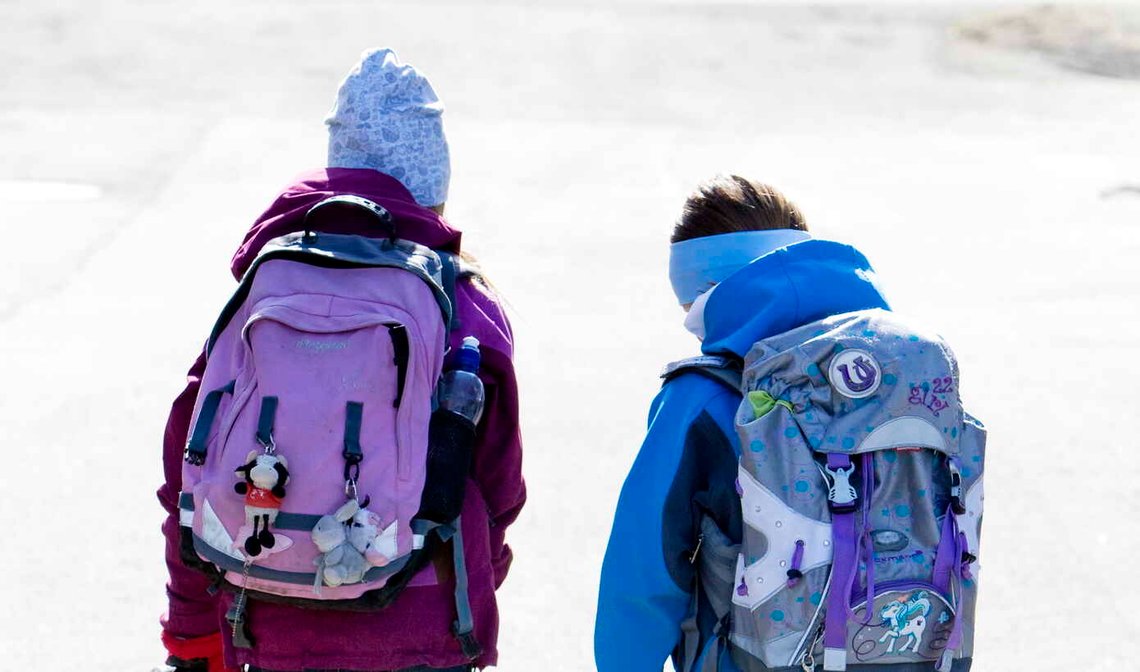
It’s becoming a pattern: when the adult world fails, children are called upon—to deal with everything from collapsed integration policies to the consequences of dismantled mental health services. And, of course, it is all presented as something noble.
Sweden has a new social contract. It is not written down anywhere, no one has voted on it, and no politician speaks openly about it. Yet its effects are visible everywhere.
When systems break down, when politics falters, when institutions crumble—children are called in.
The state’s last resort: elementary school children
Take Malmö, Sandviken, Trollhättan, Gislaved, Örebro, Nyköping, Linköping, and Borås.
These municipalities are examples of schools busing children between districts to “increase integration.” The goal is clear: children must be mixed—not to benefit their own education, but to compensate for the integration failures created by adults.
And the parents of these children?
They have been mildly supportive, to put it politely. “It cannot be our children’s responsibility to solve this,” is a comment that recurs in countless variations.
Yet this is exactly what happens.
Children are uprooted from familiar and safe environments—not for their own sake, but to serve as linguistic and social support for others. In practice, they are acting as unpaid integration consultants.
And this is far from the only area where children are expected to shoulder responsibility abandoned by adults.
The classroom as a psychiatric clinic
Sveriges Radio reports on a teacher who alternates between being Marcus or Malinda.
Each morning, “the feeling” decides whether it’s a Marcus day or a Malinda day. Gender identity shifts from day to day. Sometimes students meet a man. Sometimes that same man wears a skirt, hair clip, and a ring with a vagina symbol. Students are then expected to play along, treating him as a she.
This is presented as “demi-fluid,” a personal expression students are supposed to “get used to.”
Of course they adapt. Children adapt to almost anything—which is precisely why adults have a responsibility to protect them.
Instead, the opposite is happening.
In practice, children are expected to navigate adults’ complex life situations: identities, pronouns, and psychological processes that even grown-ups often struggle to understand.
And they must do it at school. During lessons. As part of everyday life. While also being graded and navigating adolescence—the very time meant to form their own identities.
Children: the shock absorbers of the welfare state
Children are placed in the middle of adults’ identity processes, and it’s called pedagogy. They are expected to understand, affirm, and adapt—without anyone questioning whether it’s reasonable.
When integration fails, children are bused. When mental health care fails, children must understand. When adults lose control, children must adapt.
Children have become the welfare state’s shock absorbers. They bear the brunt when systems collapse. And the more society creaks, the more is piled on them.
The moral blackmail
To silence criticism, everything is packaged as moral duty, and anyone who objects is immediately discredited.
Don’t want children to be bused? Then you are against integration. Probably racist. Islamophobic? Definitely.
Don’t want children to manage adults’ identity projects? Then you are intolerant. Perhaps homophobic. Undoubtedly far-right.
It is an effective way to silence criticism—but it does not change reality: children should not bear the consequences of adult failures. Children should not be tools for integration. Children should not serve as psychological support for adults. Children should not be expected to solve problems created by adults.
Children should be children.
So let’s ask the question everyone avoids: when did it become children’s responsibility to compensate for political decisions, ideological experiments, and dismantled institutions?
And how long do we think this can continue?


