

When the United States is at war, as now in Iran, it is customary to say that politics stops at the water’s edge. This means that one ought to refrain from quarrel and discord, and at the very least give the president a chance to succeed with his foreign policy, even if one opposed it before the war, or perhaps even despised the United States’ «commander in chief». Before Japan, on 6 December 1941, through the attack on Pearl Harbor forced the United States to wage war, the American isolationists and opponents of war stood so strongly in public opinion that President Franklin D. Roosevelt did not dare to embark upon open war against the German Nazis and the Japanese imperialists, even though it was undoubtedly what he most desired. The Japanese attack on the U.S. naval base in Hawaii caused almost every form of opposition to the war to fall silent. President Truman’s decision to deploy American troops to the defence of South Korea in 1950 was not popular, but few domestic opponents of war conceived of undermining the effort, much less taking the side of North Korea and thereby of Stalin and Mao Zedong.
The old understanding of the necessity of standing together when hundreds of thousands of American soldiers were fighting and dying received a decisive blow in connection with the United States’ military involvement in the Vietnam War 1962–1973. The war was so unpopular that millions of Americans demonstrated in protest against the policy of the American government. Hundreds of thousands even declared that they supported the attacks of the North Vietnamese communists — and thereby of the Soviet Union and communist China — against the pro-Western government of South Vietnam.
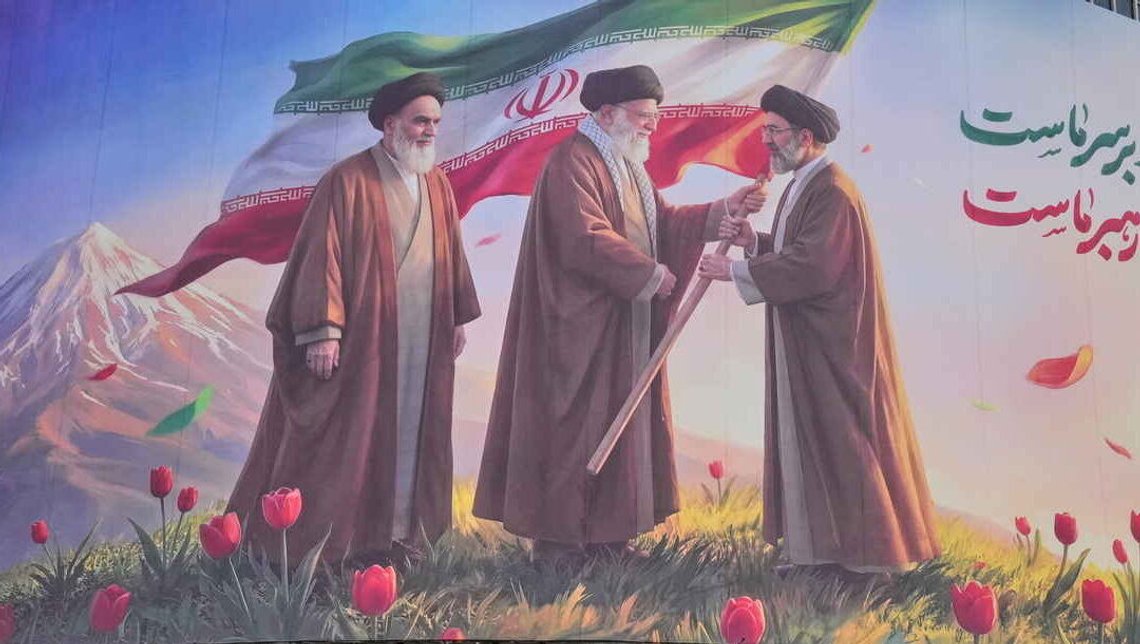
With the United States’ and Israel’s offensive against the Iranian clerical regime we are experiencing a culmination of internal division. An alliance between the established media and large parts of the Democratic Party has, since the United States and Israel struck on 28 February, done everything to undermine the effort. Democratic politicians and experts claim that there is no basis for Trump’s and Netanyahu’s decision to meet Tehran’s bullies with force. One must understand, say the spokesmen for the pro-Iranian alliance, that the mullahs were not on their way to acquiring nuclear weapons, which via long-range missiles would be able to strike Rome, Berlin, London, New York and Copenhagen.
To be sure, every single American president for decades has assured that the Islamic madmen would not be allowed to acquire nuclear weapons — and they have of course done so because they knew that Tehran’s Shi’a «scumbags» (to quote Donald Trump) were doing everything to obtain weapons that could annihilate the civilised world. Some of the successive American administrations may even have familiarised themselves with the ideology of Islam and therefore known that the moment the ayatollahs obtained nuclear weapons, they would use them.
For, as the former Jerusalem Post commentator and current international adviser to Benjamin Netanyahu, Caroline Glick, without circumlocution explains, the Iranian regime is governed by holy bloodthirst and nothing else. One cannot negotiate with them and cannot trust anything they promise. American presidents have tried different methods to soften and civilise Allah’s men: sanctions, agreements, diplomacy and — as in the case of Barack Hussein Obama — billions of dollars, which the Mohammedans in Tehran have used to finance their nuclear-weapons programme, their development of missiles and their internal apparatus of repression.
The heirs to 47 years of failed appeasement towards the man-eaters in Tehran are these days attempting to save a regime that competes with China and North Korea for the top position as the most evil in the world. Whether this is due to antisemitism, hatred of the West, or simply hatred of Donald Trump. In any case, it is hatred all the way around — and a perverse desire to welcome Satan.


