

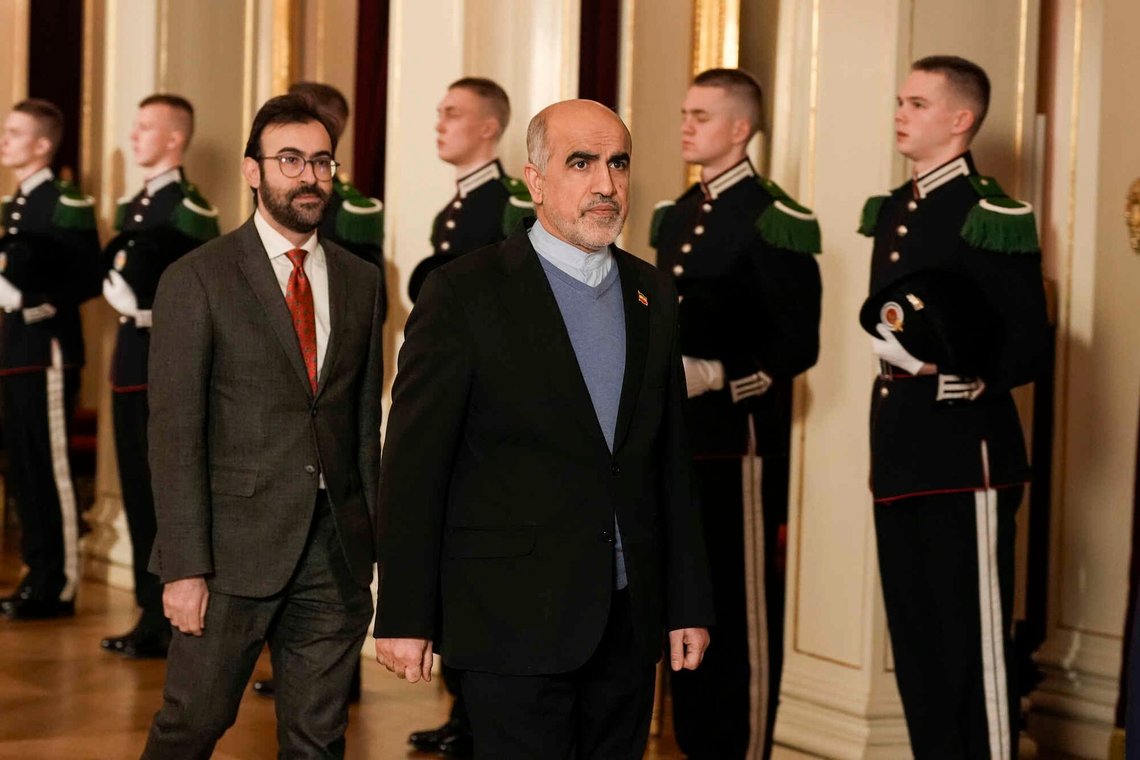
Some actions in politics are so symbolic that they cannot be excused by politeness or diplomatic protocol. Invitations to the Royal Palace are precisely that. They do not merely indicate who we are engaging with, but also which values we are prepared to set aside.
That is why it causes deep unease that the representative of the Iranian regime was invited to the annual diplomatic dinner at the Palace last night. This is the regime that, according to numerous human rights sources, is linked to attacks resulting in over 90,000 deaths in connection with political repression and unrest. Several thousand demonstrators are said to have been permanently blinded through targeted use of force. Thousands have been imprisoned. Others have disappeared – literally vanished, with their families receiving no answers.
Who are we inviting to the table – and what does that say about us?
Behind the numbers are stories that are even harder to comprehend: women who, according to testimonies and reports, have been subjected to serious sexual violence while in custody. There are also grave allegations of attempts to cover up such abuse in ways that make proper investigation almost impossible.
These are not allegations that can be brushed aside with a glass of wine and a polite handshake without causing profound moral discomfort. The question therefore arises with full force: Are these the values that Norwegian democracy wishes to be associated with?
Norway has spent decades building its identity as a champion of human rights. We expect freedom, the rule of law, and human dignity for ourselves. But that is precisely why the world also expects us to stand up for the same principles when they are denied to others.
Anything you want others to do to you, you should do to them
The principle is simple: What we demand for ourselves, we must also want for others. Especially for people who live without the rights we take for granted.
No one is asking Norway to isolate itself diplomatically. Dialogue between states is necessary, even when disagreements run deep. But there is a crucial difference between essential contact and symbolic normalisation.
A royal invitation is not neutral. It sends signals. To the regime, it can be interpreted as meaning that conditions remain tolerable. To the victims, it can be perceived as meaning that their suffering does not carry sufficient weight.
For the Iranian minority in Norway, this creates a particularly painful contrast. Many have fled the very system now being received with ceremonial respect. Several have lost family members. Others carry traumas that still shape their lives.
This is not merely viewed as a diplomatic decision. It feels like an ignored warning.
Representatives of the diaspora tried to speak out. Emails were sent in a “respectful” tone. Concerns were expressed with confidence in Norwegian institutions.
When such approaches go unheeded, it is hard to avoid the question: Who is really being listened to?
The criticism now being voiced is not an expression of disrespect for Norway. On the contrary, it stems from a belief that Norway can and should be better than this.
Anger and protest in this context are not about diplomatic incompetence. They are about moral consistency.
The Norwegian monarchy holds no political governing power, but for that very reason it possesses enormous symbolic power. It represents the nation’s values in their most concentrated form. When such an institution appears equivocal in the face of the most documented human rights violations of our time, it not only sparks debate; it sows doubts about where we stand when it truly matters.
History is unforgiving of societies that fail to understand the meaning of symbols in their time. One day you will ask:
- Were we clear enough?
- Were we brave enough?
- Did we choose the right side?
There is still time for reflection. No one expects unrealistic breaks with diplomatic traditions. But it is reasonable to expect greater awareness of what signals our most visible institutions are sending. Because sometimes the most serious thing is not that mistakes are made. The most serious is when they are not recognised.
Norway should not only be a good country to live in. It should also be a country that others can trust when values are put to the test.
That’s why this case is about more than a dinner.
It’s about who we are and who we want to be.


