

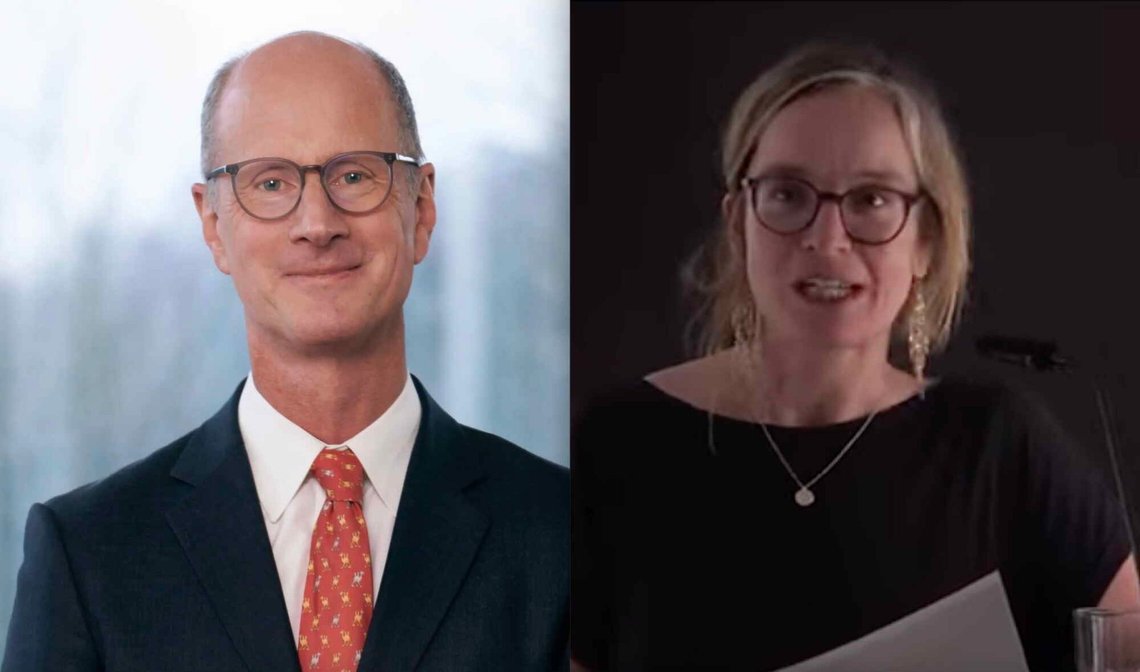


When politics fails by not banning AfD, civil society can step into the vacuum by blocking the party’s national conference in Erfurt, as tens of thousands of demonstrators are expected to attempt, according to the German academics Ralf Michaels and Anne Gräfe.
It is in an opinion piece in the left-wing newspaper Tageszeitung (taz) on Wednesday that Michaels, who has professorships in London and Hamburg and is head of the Max Planck Institute for Foreign and International Private Law in the Hanseatic city, and Gräfe, who is affiliated with Leuphana University in Lüneburg, in practice legitimise political activists’ attempts to block the AfD national conference in Erfurt on 4 and 5 July by among other things highlighting that civil disobedience is part of democracy.
The two academics join a series of recent attempts to define Alice Weidel’s team, which has long been at the top of the opinion polls in Germany, out of society by drawing a straight line from AfD to Hitler:
Certain things should not exist, especially not in this country. The Hitler salute, for example – it is forbidden. Antisemitism – it unfortunately still exists. But above all there should not be a large far-right party holding a party congress in Thuringia on 4 and 5 July – exactly 100 years after the NSDAP in Weimar in Thuringia held its first national party congress after the ban on the party was lifted, and founded the Hitler Youth.
The party’s rise should have been prevented long ago, Michaels and Gräfe believe:
A functioning society would not have allowed such a party to grow large in the first place. And functioning politics would long ago have initiated a ban process. One expert report after another, most recently from the Gesellschaft für Freiheitsrechte, shows that AfD is far-right and hostile to the constitution.
They argue that people can intervene when institutions fail:
Now civil society steps into the vacuum. The day before the party congress in Erfurt, researchers are organising a conference on the dangers of fascism. An alliance consisting of neighbours, trade union members, parents, pupils and shopkeepers, as well as people from over 80 local groups across Germany, wishes under the name “Widersetzen” to block the party congress.
The law is not alone in deciding legitimacy, the two believe:
The question of whether one is allowed to block a party meeting that should not really be taking place is too narrow. Civil disobedience can be an expression of loyalty to the constitution. The blockade is illegality in the name of legitimacy. The question is not whether one is allowed to prevent the AfD party congress, but whether one is not obliged to do so. Anyone who wants to live up to our constitution and our historical responsibility can hardly answer anything but yes.
Not everyone on the left is enthusiastic about the idea. Bodo Ramelow, who represents the far-left party Die Linke and is vice-president of the Bundestag, is himself among the sceptics, reports Die Welt.
– Violence or physical obstruction is not a legitimate means, comments Ramelow, well aware that German security authorities expect 2,500 violent extremists to Erfurt this weekend, while peaceful protests are, he says.


