

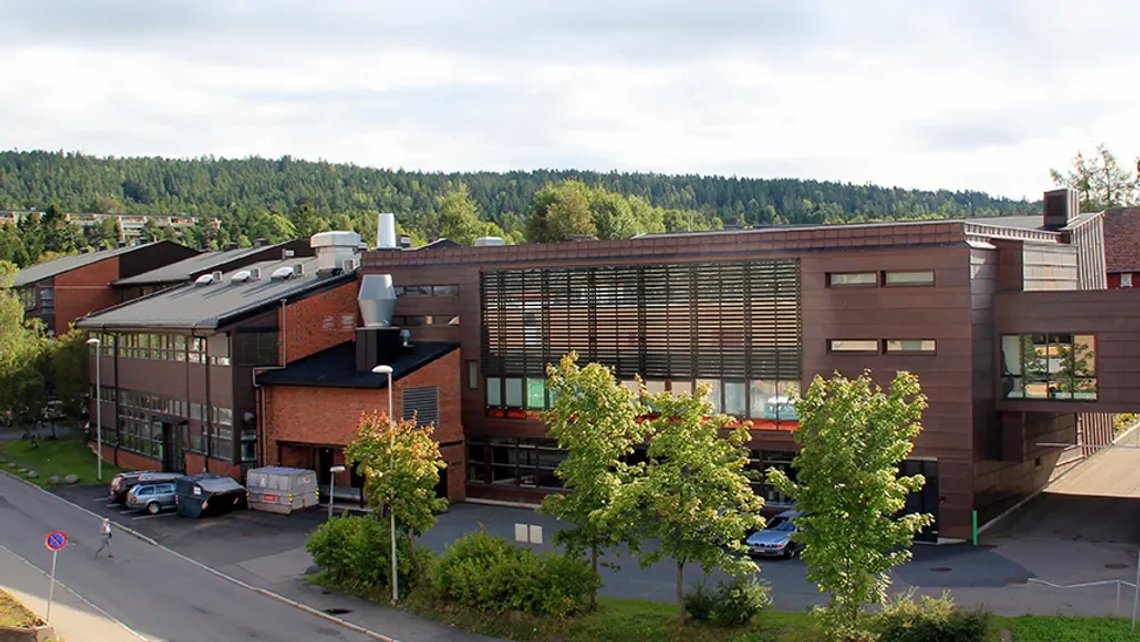


The County Governor has reprimanded one of Oslo’s most popular upper secondary schools after a 16-year-old girl and her family raised concerns over the school’s failure to address the school environment.
The reprimand comes while the capital’s upper secondary schools are facing a capacity crisis.
Avisa Oslo tells the story of the girl who, after several years of bullying, chose the school on the basis of an open day, and who one year later sits in a classroom with 34 pupils. She says that neither the school nurse nor the counsellor has time.
– It did not seem as though they understood me. They only protected the teachers, she tells the newspaper.
The family involved the County Governor, who concluded that the school had not done what could reasonably be expected and ordered the school to prepare an action plan meeting the minimum requirements.
Strong growth in upper secondary enrolment
The number of pupils in upper secondary education in Oslo has increased by around 2,000 over five years. The Education Agency expects a further 3,500 new pupils by the 2028/29 school year. For the current school year, around 400 places are lacking, and 300 pupils risk being left without a school place this autumn.
This autumn, Mølla Upper Secondary School will open with 200 places in Møllergata, and Fyrstikkalleen School will be expanded. Anders Fremming Andersen, divisional director at the Education Agency, points to the admissions model.
– The admissions model means that the most sought-after schools fill up, since applicants are entitled to admission to one of three educational programmes. The city-centre schools are very popular, he tells Avisa Oslo.
The composition of the population
Oslo grew by around 60,000 inhabitants between 2015 and 2023. At the beginning of 2025, 192,000 of the city’s inhabitants had immigrated to Norway, corresponding to 26.5 per cent of the population. The national average stands at 17.3 per cent.
Including Norwegian-born persons with immigrant parents, approximately one in three Oslo residents already had an immigrant background in 2022, according to Statistics Norway (SSB). Immigration has been by far the largest driver of Oslo’s population growth over the past twenty years. Seventy-three per cent of Norwegian-born persons with immigrant parents are under twenty years of age.
Disagreement over responsibility
Councillor for Education Julie Remen Midtgarden (Conservative Party) places responsibility for the lack of capacity on the previous city government.
– Several schools are today overcrowded because insufficient places were planned under the red-green city government. That is why it has been crucial to establish a new school structure, she concludes.


