

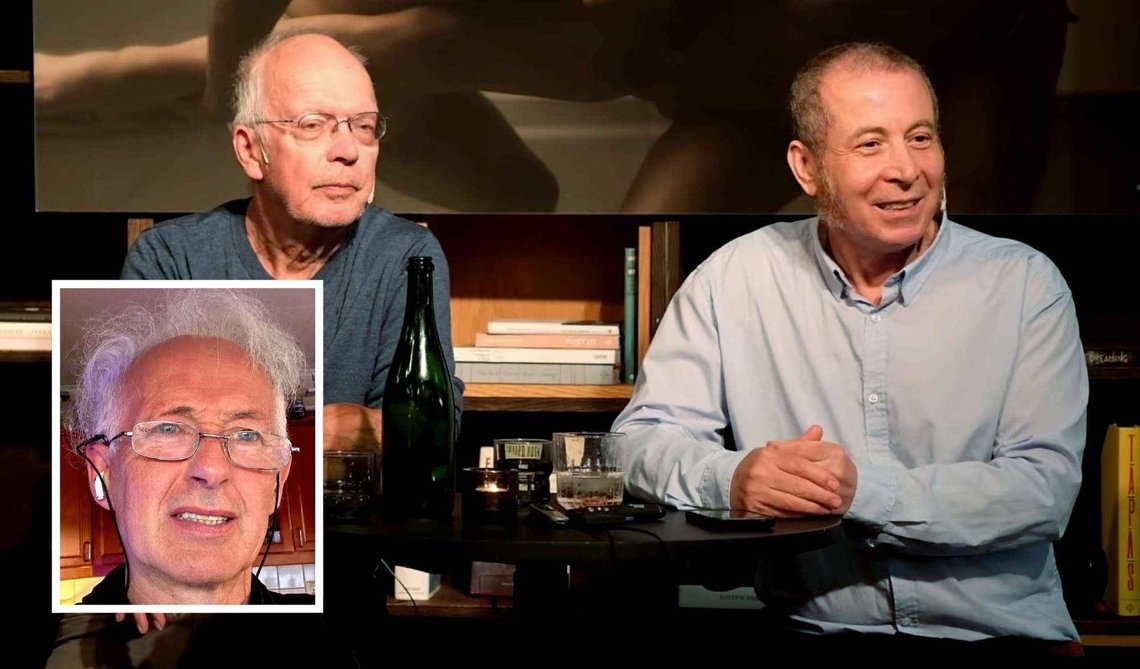


Lawyer and author Ragnar Herleif Hatlem is among those who react strongly to NTNU professor Bassam Hussein’s praise of terror, which Document wrote about yesterday. – Not an analysis, but an explicit legitimisation of violence, Hatlem believes.
During the lecture for Sosialistisk Forum in Trondheim, Hussein was one of the speakers, with an explicitly Palestinian perspective. He is a Palestinian from Gaza and is introduced to the audience as a professor at NTNU, where his field is project management and organisational learning.
– This provides a clear framework of authority and an expectation of academically verifiable analysis. Precisely for that reason, what follows is all the more serious, Hatlem writes in a post, although he specifies that Hussein does not act as any formal representative of NTNU at the event.
During the lecture, which can be seen on YouTube, the professor referred to Hamas’ 7 October pogrom as “the most beautiful thing that has happened in our century”.
This is a direct valuation of an event marked by mass killing of civilians, kidnappings and grave abuses. When this is said from a podium with a professorial title behind it, it is not analysis – it is an explicit legitimisation of violence, Hatlem writes.
He is the author of the book Palestina – Israels historiske og folkerettslege legitimitet and a former police officer, chief of police and prosecutor.
NTNU-professor om 7. oktober-pogromen: – Vakreste som har skjedd
The Middle East expert’s reactions concern above all what is academically and ethically defensible, he writes in a commentary.
Such statements help to normalise and spread a level of hatred and rhetoric that we do not want in Norway. Therefore this should be brought into the public sphere and subjected to critical scrutiny. I encourage people to share the post – so that both the academic community and NTNU itself assess this for what it is and take the necessary steps.
An “intelligent” and “smart” leader with 400 men
He [Hussein] goes on to describe a Palestinian leader with “400 men” who managed to outmanoeuvre a “dragon”. This leader is described as “intelligent” and “smart”, and the portrayal is marked by clear admiration. In context, this is not a neutral military assessment, but praise of the operation itself behind 7 October 2023. Effectiveness is emphasised – while the nature of the actions, directed at civilians, disappears entirely from the assessment.
– International law is set aside
Over nearly an hour there is no real discussion of fundamental principles of international law: protection of civilians, the prohibition of hostage-taking, and the distinction between combatants and non-combatants. Instead it is reduced to the idea that one “may think what one wishes” about whether 7 October was terror. This is not an alternative legal analysis – it is a rejection of the entire legal framework.
 Ragnar Herleif Hatlem. (Photo: Private)
Ragnar Herleif Hatlem
Retired lawyer and author of the book: “Palestina – Israels historiske og folkerettslege legitimitet”
During his impressive career he has, among other things, worked as an associate professor at Høgskolen i Bodø and has behind him 16 years in the police and prosecuting authority, including as chief of police and district head in respectively Inntrøndelag police district and the civil defence district.
Hatlem has also served as prosecutor and defence counsel before Norwegian courts, and held a position as a researcher at the Norwegian Police University College, where he led the Ministry of Justice’s project on “the quality of police investigations”.
In addition, he has 18 years of experience as a private practising lawyer.
Hatlem also reacts to Hussein’s claims about Israel’s global power ambitions:
Hussein also claims that Israel does not only operate regionally, but has ambitions to take over global power – in practice to replace the United States in the world system. This is presented without documentation, but as an explanation of the war. It is not verifiable analysis, but speculation that reinforces an enemy image.
The NTNU professor also referred to Western political leaders as “not human, but lower than human”, and as having “completely lost their humanity”.
– Dehumanisation and crude, undocumented claims about control over media and power structures. This is not academic argumentation, but rhetoric that does not belong in serious lectures, Hatlem writes.
– A conclusion that is given in advance
– When the starting point is that 7 October is “beautiful”, the rest of the reasoning becomes locked, Hatlem believes.
- violence becomes legitimate
- the opposing party is delegitimised
- facts are selected selectively
This is not an analysis that investigates reality – it is a narrative that confirms its own premise.
The retired lawyer raises questions about the academic responsibility of a person presented as a professor when he uses his authority to promote statements that legitimise mass killing:
– The question that remains is whether this really is representative of the level of Norwegian professors today. Or is it an example of how academic freedom and authority are misused to lend weight to pure propaganda?


