

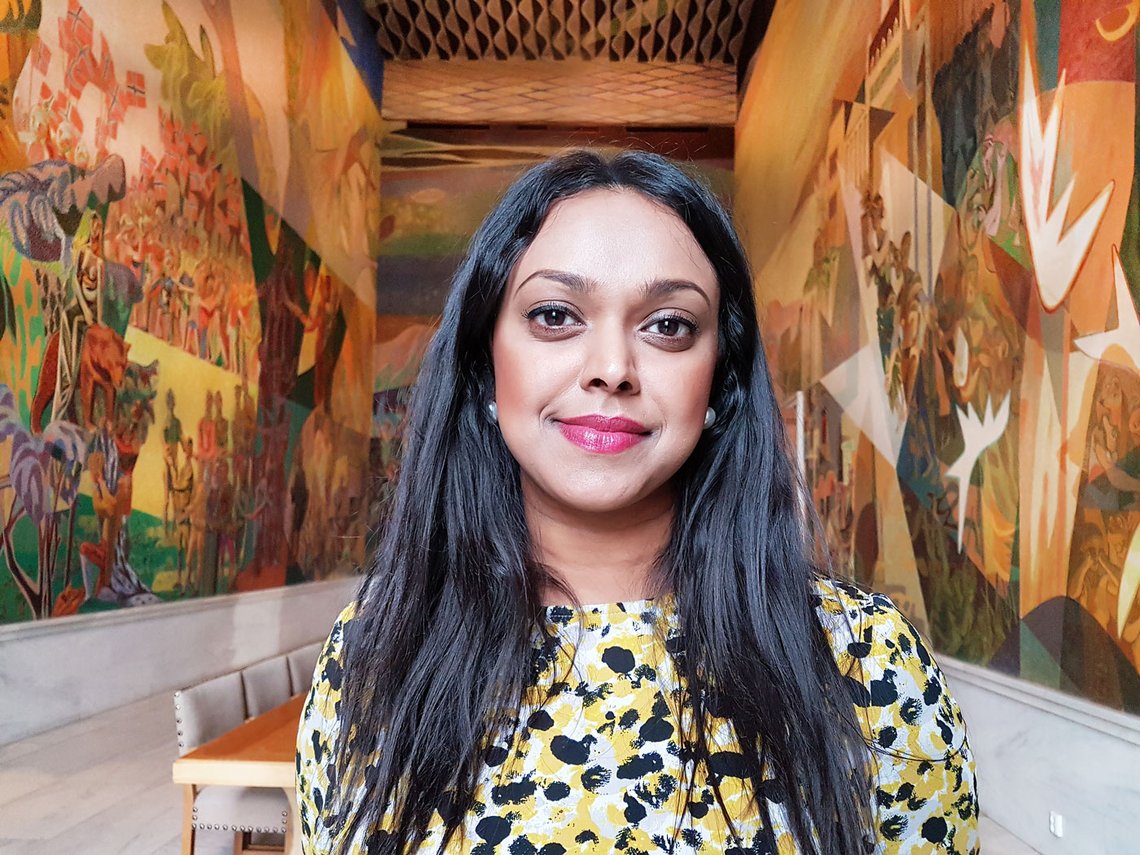


Majoran Vivekananthan asks a directly impertinent question in Utrop: Are some immigrants better integrated in Norway than Norwegians?
His answer is yes, and the proof is Hashim Abdi, Kamzy Gunaratnam and Nasir Ahmed.
All three are Labour Party politicians.
It is a strange selection upon which to build a theory. But let us look at Kamzy Gunaratnam. She is not exactly an example of integration in the traditional sense. In an opinion piece in Aftenposten, she established that she is opposed to assimilation and integration and instead prefers what she calls “inclusion”. Her definition is revealing: Integration is when a child encounters the school. Inclusion is when the school encounters the child.
In other words: It is Norwegian society that is to adapt to the immigrants, not vice versa.
This is not integration. It is an agenda for transforming Norway into a multicultural society in which Norwegian culture and Norwegian values are gradually erased. And that is precisely what Vivekananthan is really arguing for, without saying it outright.
Let us look at the figures instead.
79 per cent of all social assistance in Norway goes to non-Western immigrants. The number of immigrants on disability benefits increased by 80 per cent over ten years. Statistics Norway (SSB) has calculated that each non-Western immigrant costs the state a net 4.1 million kroner over the course of a lifetime. Immigrants are heavily overrepresented in the crime statistics.
This is the integration problem. Not whatever KrFU may think about kindergartens.
Vivekananthan selects a handful of progressive Labour Party politicians and concludes that we ought to ask whether Norwegians are sufficiently integrated into modern Norway. But these politicians are not examples of successful integration. They are examples of people who have settled very comfortably into a system that pays them to transform the country to which they came.
That is something entirely different.


