




 Aslam Ahsan (Labour Party/Ap) has sat on Lørenskog municipal council for 36 years and has been an active social commentator. Photo: Facebook.
Labour Party politician Aslam Ahsan has reported Progress Party (FrP) adviser Hårek Hansen to the police for hate speech. Together with the report, he claims that Norwegian Pakistanis are a well-integrated group. But that does not accord with official statistics. They show that 4 out of 10 Norwegian Pakistanis of working age, who have lived in Norway for seven years or more, stand outside the official labour market.
Tempers have run high after TV2 published hidden recordings of FrP adviser Hårek Hansen’s statements at a bar last weekend. There, a visibly intoxicated Hansen referred to Norwegian Pakistanis as “minus variants” who should not have children.
This has set emotions boiling. The matter has appeared on all news channels, on Politisk kvarter, Dagsnytt 18 and Debatten on NRK. A united press corps, a number of experts and politicians, even Prime Minister Jonas Gahr Støre on Facebook, are attacking Hansen for racism.
Long-serving Labour Party politician Aslam Ahsan has reported Hansen to the police for breach of Section 185 of the Penal Code concerning hate speech, and published the report on Facebook on 3 May.
Together with the report, he describes Norwegian Pakistanis as a well-integrated group:
But Ahsan’s description does not accord with reality.
Norwegian Pakistanis at the bottom tier
According to official statistics, Norwegian Pakistanis are among the least integrated into the official Norwegian labour market. Only 45 per cent of Norwegian Pakistanis of working age, who have lived in the country for seven years or more, hold full-time employment. And fully 4 out of 10 in this group stand entirely outside the official labour market.
The following table shows the country groups that end up at the bottom of the employment statistics in the 20–66 age group, after seven years of residence in the country.
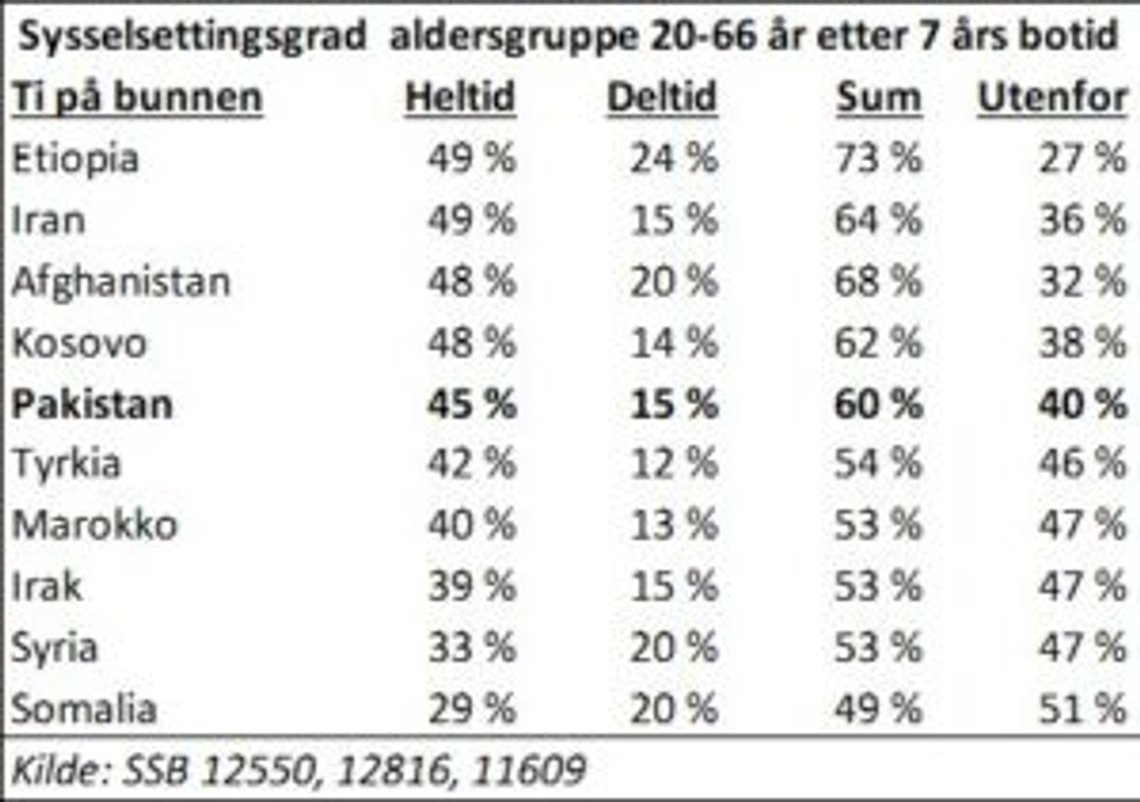
The figures speak clearly. Norwegian Pakistanis are not and do not appear to be becoming well integrated into the Norwegian labour market, even after seven years of residence. The only consolation is that there are five country groups ranking lower; Turks, Moroccans, Iraqis and Syrians, with Somalis at the bottom of the statistics.
Oldest non-Western group
This may perhaps be surprising to many, since the Pakistanis are the non-Western group that has been in the country the longest.
In 1970 there were 162 immigrants from Pakistan in Norway. Today, almost 25,000. These have produced just over 19,000 Norwegian-born descendants.
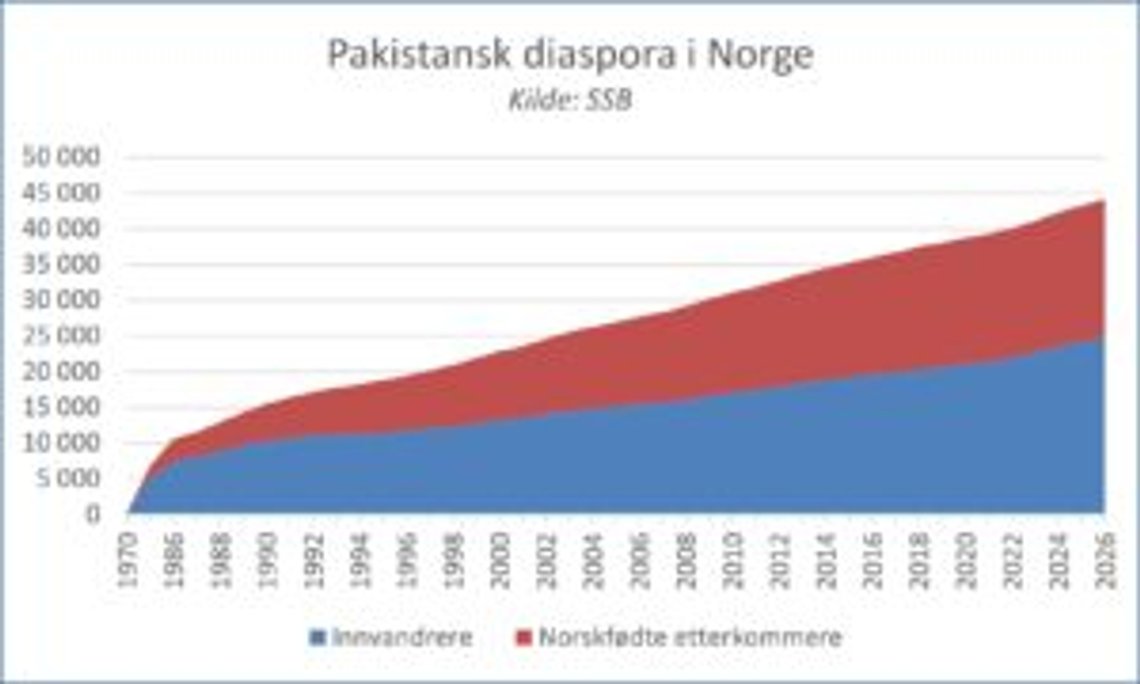
Of the Pakistani immigrants, well over 15,000 are in the 20 to 66 age bracket and have lived in Norway for seven years or more. Seven years’ residence is one of the criteria for obtaining Norwegian citizenship. Fully 4 out of 10 among these stand entirely outside working life, while only 45 per cent hold full-time employment.
For Pakistanis with shorter periods of residence, the picture is worse.
Large difference between Indians and Pakistanis
It is not the case that all non-Western immigrants end up at the bottom of the employment statistics. That may be what Hårek Hansen meant when the TV2 journalists Ulrikke Torgersen, Tone Skaarseth Rørvik and Lars Joakim Skarvøy followed up by asking what Hansen thought about party colleague Himanshu Gulati, who has an Indian background.
Hansen replied: “large difference between Indians and Pakistanis”.
The following table shows the country groups that rank highest in the employment statistics after seven years of residence in the country.
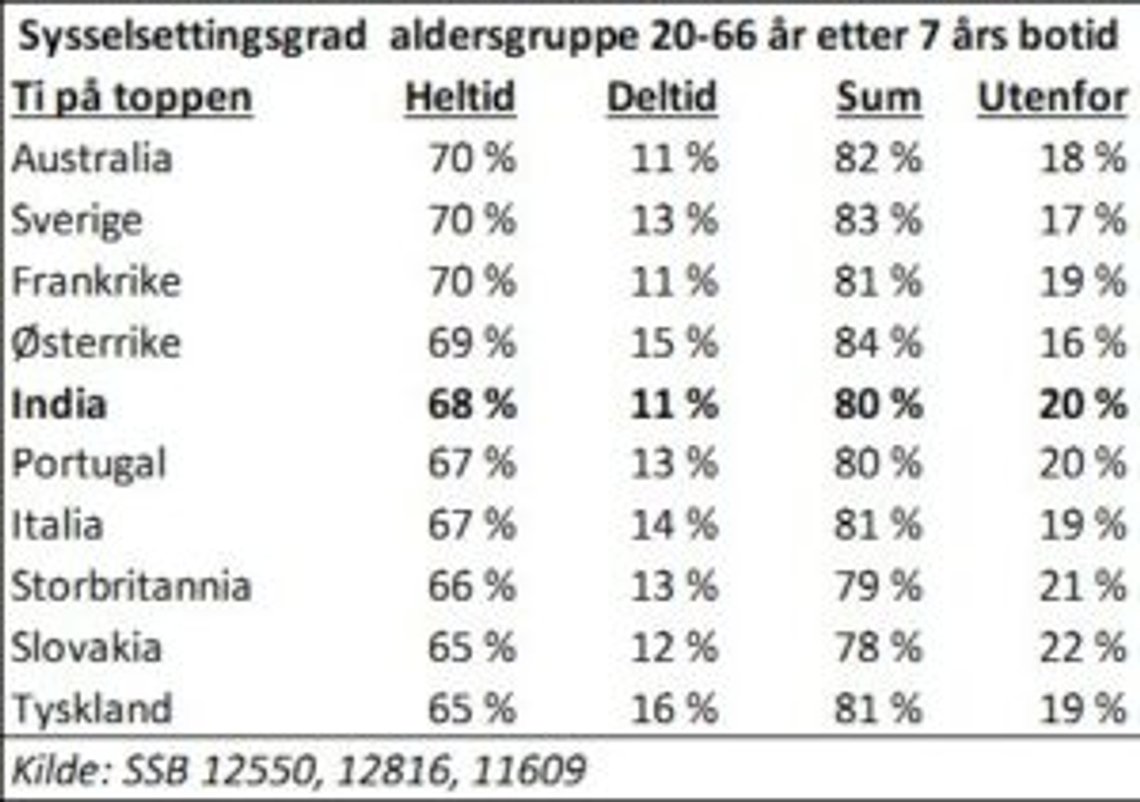
The Indians find themselves in good company. Only 2 out of 10 stand entirely outside the labour market, while 68 per cent are employed full-time. Thus, the conclusion is that there is a large difference between Indians and Pakistanis in the official labour market.
Elden doubts
Defence lawyer Jon Christian Elden has also commented on the matter on social media. He clearly doubts that Aslam Ahsan’s police report against Hansen will end up before the courts. He wrote the following:


