



It has been nine years since terror struck in the heart of Stockholm. On April 7, 2017, the Uzbek national Rakhmat Akilov drove a truck straight into pedestrians on Drottninggatan. Five people were killed, among them 11-year-old Ebba. It should be a date etched into the Swedish consciousness. A national trauma. A turning point.
But what has actually changed? Nothing—except for the concrete lions that now decorate Stockholm’s streets, including Drottninggatan. Lions meant to roar “No terror trucks in our streets!”, but which in practice serve as ride-on toys for children eating ice cream.
Akilov was in Sweden illegally after having his asylum applications rejected. When payments from the Migration Agency stopped arriving in his account, he chose to “give thanks” by killing in the name of the Islamic State.
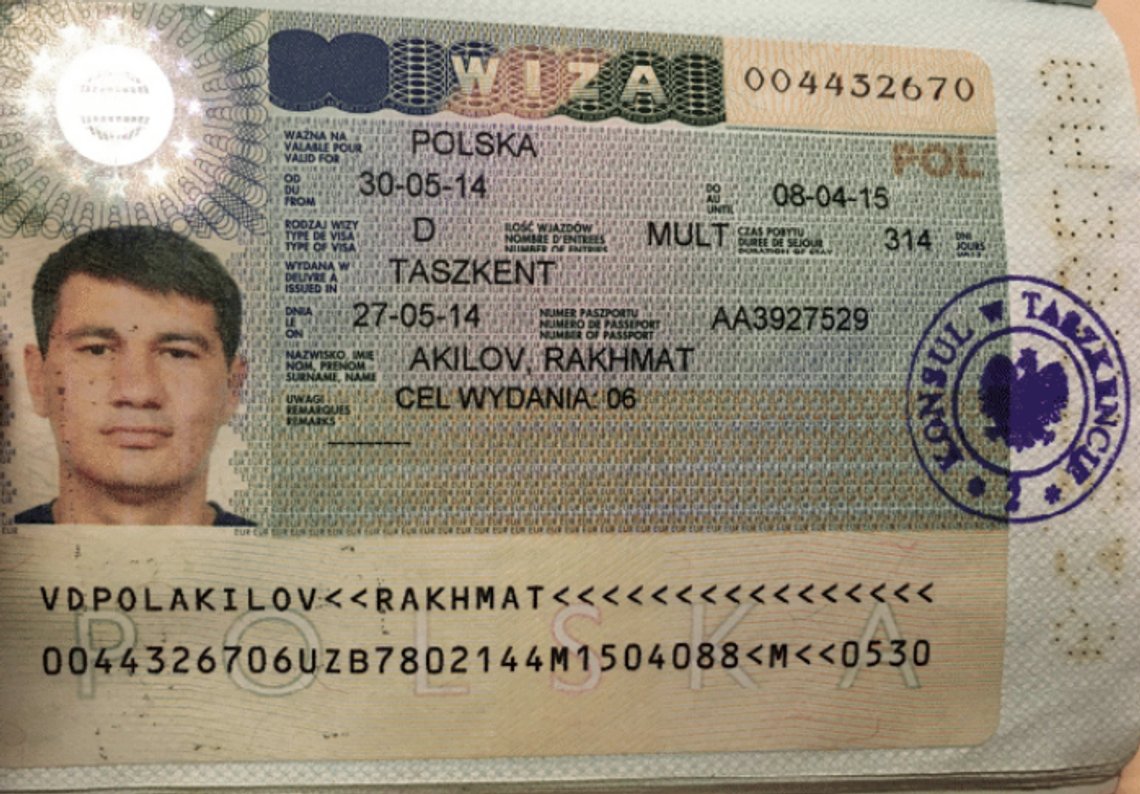
Rakhmat Akilov’s Polish passport. (Photo: Wikimedia Commons)
When the chaos subsided, Sweden could conclude that the nation had been struck by yet another terrorist attack. For Lena Wahlberg (69), Maïlys Dereymaeker (31), Chris Bevington (41), Marie Kide (66), and Ebba Åkerlund (11), life ended that day. Ten others were injured.
A country that chose to move on – too quickly
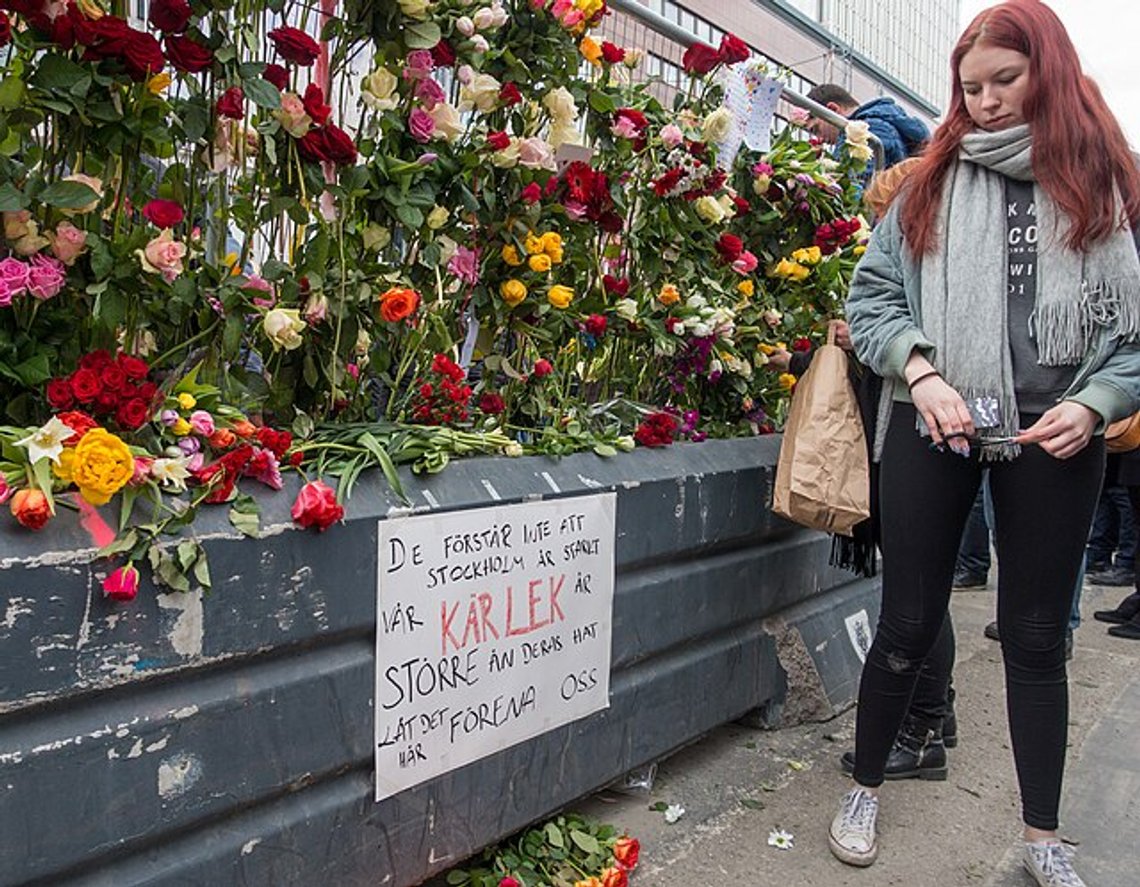
Sweden mourned. Sweden lit candles. Sweden came together. But not in a deafening protest against terror, religious extremism, and uncontrolled migration. Instead, people gathered in a popular and compassionate demonstration against racism.
At Sergels torg, just meters from where people were crushed beneath the terrorist’s truck, crowds sang songs about love, drew hearts, and decorated police cars with flowers.
Photo: Wikimedia Commons
Photo: Wikimedia Commons
And then… Sweden moved on.
Not by addressing the structures that made the attack possible. Not by engaging in a serious discussion about responsibility, naivety, or systemic failure. But by returning to normal as quickly as possible—after first reassuring one another of their anti-racism and their love of multiculturalism.
On last year’s anniversary, the memorial “Fredad plats / Sanctuary” was inaugurated at Sergels torg: a gold-colored bronze blanket with built-in heating elements, laid over one of the square’s walls. Its shape resembles a blanket and is meant to “symbolize protection and warmth throughout life—from cradle to grave.”
The memorial to five victims of terrorism – a heated copper blanket. (Photo: AleWi/CC Attribution-Share Alike 4.0)
Five people were murdered, and their families are forced to carry the grief and loss. Others were permanently injured. Sweden responds with a memorial you can sit against and keep warm when it’s cold.
It is so… Swedish.
Everything that is difficult is wrapped in something soft and warm—so we don’t have to think about what actually happened. So that no one has to be held accountable.
A predictable reflex
There is something deeply troubling about this reflex—but it was predictable.
It is a reflex that has been ingrained in Swedes over decades. Perhaps it began in Härnösand in 1989, when 17-year-old Sara Westin and her friend Sylvia Hoek were murdered by Sara’s Eritrean ex-boyfriend.
The reaction? Sara’s parents organized a demonstration against racism and founded the anti-racist 5i12 movement.
What if Härnösand had responded differently 37 years ago? What if, instead of torchlight marches against racism, there had been marches for safety? For accountability? For a functioning migration system?
We will never know. But I can name one person whose life might have been very different: Stefan Åkerlund.
The silence around the victims
One of the most telling examples of Sweden’s inability to respond forcefully to violence and terror is how Ebba’s father, Stefan Åkerlund, has been treated.
On April 7, 2017, he lost his only child. In a country that claims to stand on the side of victims, his voice should be a natural presence in the public sphere. Instead, he has largely been relegated to expressing himself on social media.
Ebba was 11 years old when she was murdered by the terrorist Akilov. (Photo: Facebook/ Stefan Ebbas Pappa)
On his Facebook page, he speaks about grief, about a lost future, and about how his daughter’s grave is repeatedly vandalized.
Why is his voice not heard more often?
Because Ebba’s father demands accountability. He was angry. He is—and remains—a devastated parent whose child was not allowed to live because Sweden failed to deport a terrorist. His message was not “we must stand up against racism”.
And that message did not make the front pages.
Normalization
At the same time, the “comedian” Özz Nûjen continue to be a recurring figure in public life, despite admitting that he allowed the terrorist to work illegally for him. It makes no difference. Swedes still see his face on theater stages, in TV series, films, and in prime-time family programming.
The contrast is striking: The father of a murdered child is marginalized, while a person connected to an ISIS-supporting killer remains an established media figure.
That says something about Sweden’s priorities.
A fading memory
Perhaps the biggest problem is this: we are beginning to forget.
April 7, 2017 has been reduced to a historical moment—an event that “brought Sweden together for love.” A day when police cars in Stockholm were covered in flowers.
But April 7, 2017 was more than that. It was a warning about what happens when control mechanisms fail, real threats are dismissed, and politicians are allowed to remain naive.
Nor does April 7, 2017 mark an end to anything. The question hanging in the air is uncomfortable, but necessary: Have we learned anything? Or are we simply waiting for the next “April 7”?
A society that silences the pain of victims and replaces accountability with candles or humor reveals the importance it places on choosing the “right” perspective—so as not to risk focusing on the wrong things.
A society that focuses on the wrong things quickly falls asleep again—and may wake up to something far worse.
The memory of Ebba Åkerlund deserves more than this.


