

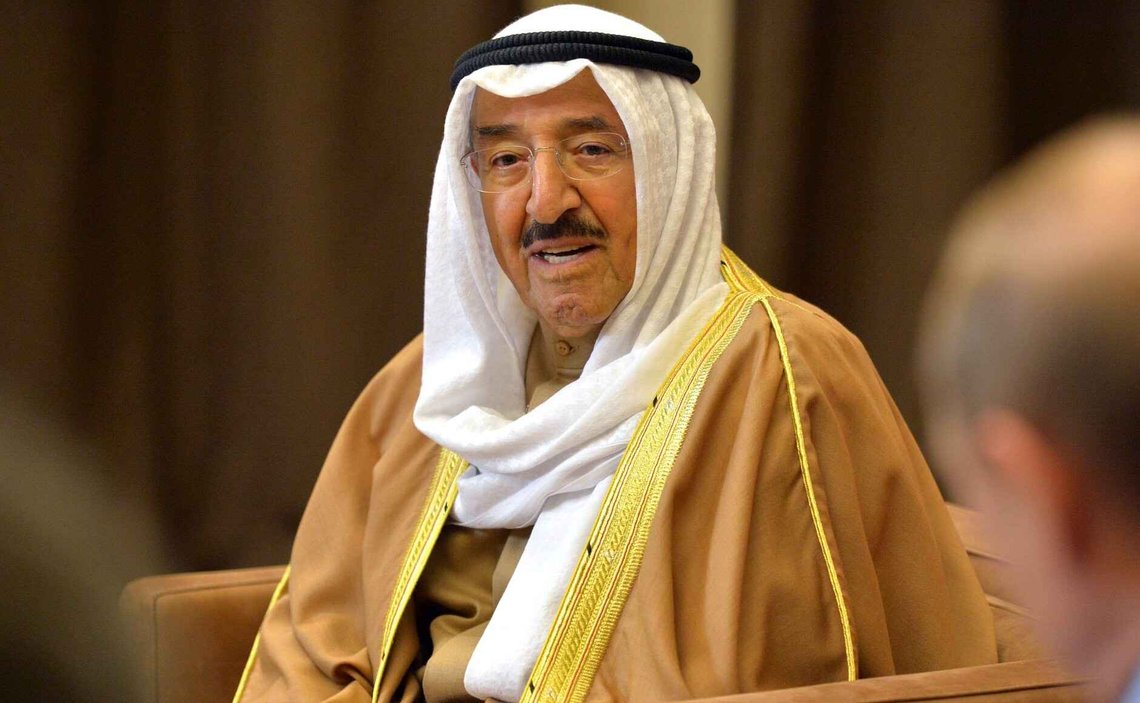


Emir Sheikh Mishal Al-Ahmad Al-Jaber Al-Sabah has vowed to “return Kuwait to its original people, clean and free of impurities.”
Between 50,000 and 200,000 people have losing their Kuwaiti citizenship since September 2024 – in the last 16-17 months. The Kuwaiti authorities claim that this is necessary to combat fraud in the nationality register.
A Kuwait free of impurities
Sheikh Mishal (85) took over as emir in December 2023, following the death of his half-brother Sheikh Nawaf. In May 2024, he suspended parliament and several articles of the constitution, including those governing citizenship. This paved the way for new laws allowing for the reconsideration and revocation of citizenship without trial or appeal.
At least 50,000 people, and as many as 200,000, have lost their Kuwaiti citizenship in just 16 months during an ongoing crackdown.
The denaturalisations in the Gulf state began in September 2024 after the Emir of Kuwait, Sheikh Mishal Al-Ahmad Al-Jaber Al-Sabah, who came to… pic.twitter.com/UqTXAC8gDb
— Visegrád 24 (@visegrad24) February 2, 2026
Kuwait has a population of around 4.9 million, a third of whom are Kuwaiti nationals. The rest are mainly guest workers. Citizenship gives access to benefits such as free healthcare, education and subsidised housing, making the issue politically charged.
In a speech during Ramadan in March 2025, the Emir emphasised the need for national reforms. He promised to “hand over Kuwait to its original people, clean and free of the impurities that have clung to it”.
The rhetoric was interpreted as the start of a hard line against illegal immigration, corruption and dual citizenship. The speech followed legislative changes that allowed for the revocation of citizenship for “moral depravity”, “threats to state security” and criticism of the emir.
Between 50,000 and 200,000 affected
The government stopped publishing total figures for citizenship revocations in September 2025. The figures below are based on estimates from independent sources.
At least 50,000 people have been stripped of their citizenship since September 2024. The estimates reach up to 200,000 when family members are included. Among these are more than 26,000 women who have been granted citizenship through marriage.
Emir Sheikh Mishal’s campaign is generally supported by “indigenous” Kuwaitis, but it undermines Kuwait’s reputation as a relatively liberal Gulf state. The policy is criticised for being arbitrary, in violation of human rights and international conventions against statelessness.
Kuwait has not signed the Universal Declaration of Human Rights (UDHR), but often refers to the UDHR as the basis for its human rights policy.
The two declarations overlap to some extent, but while the UDHR makes no reference to religion, the CDHRI bases all rights on Islamic Sharia and declares that “The Islamic Shari’ah is the only source of reference for the explanation or clarification of any of the articles of this Declaration”.
Critics of the CDHRI argue that it restricts freedom of religion (no right to convert from Islam), freedom of expression (no criticism of Islam), women’s rights (based on gender roles in Sharia) and criminal law (allows amputation and stoning under Sharia) – as well as prohibiting apostasy.


