

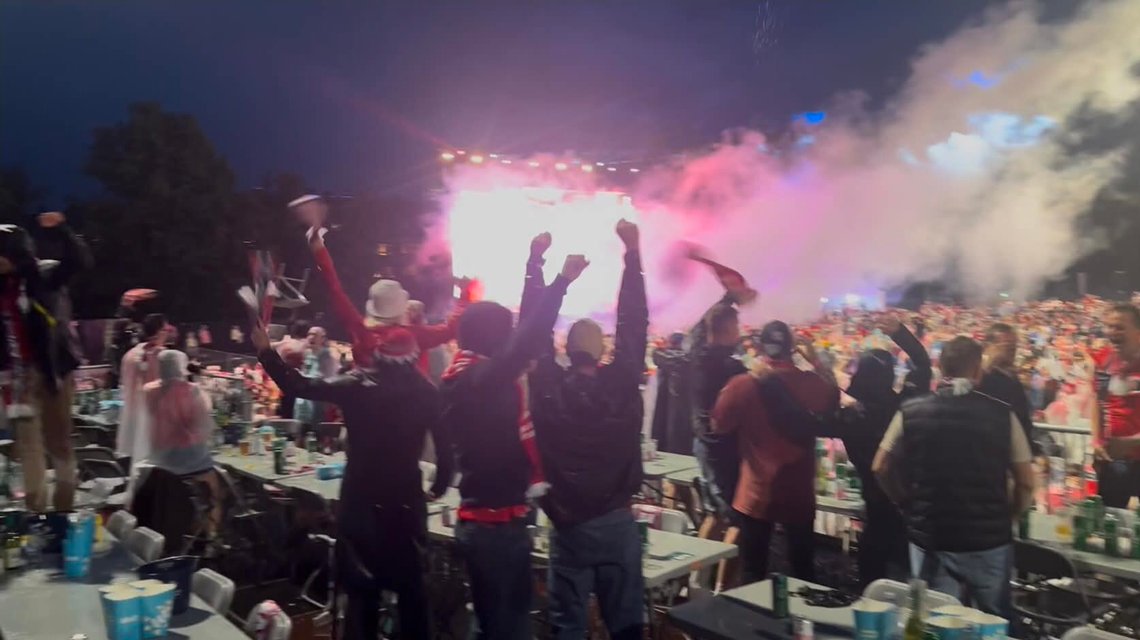


Something happened during the FIFA World Cup. Something stirred among the people, among the nation, after it had long resembled a shapeless mass. Suddenly it assumed form, and it was permissible to be Norwegian again. It is politically unpalatable to say so, but we see what we see, and not even the gatekeepers have dared to suppress the movement, which encompassed hundreds of thousands of people.
Ordinarily, the media and politicians would have declared that such manifestations of nationalism were undesirable, but they did not dare. The connection between what happened in the United States and people back home was too strong. There was the external front and the home front. The emotions were too powerful, and they grew stronger with every match.
Football itself is above criticism. It is permissible to be patriotic. But the difference between the Norwegian team and most others was obvious: could Norway have drawn upon its Viking heritage and rowing if the players had resembled the average of the European teams?
There, the proportion of players from Africa and the Middle East is so great that concepts such as “English” and “French” have become outdated. The teams are unrecognisable to anyone with even a little memory. But they reflect the demographic changes in those same countries, and from the perspective of the authorities, this is a desirable development. For them, the teams therefore constitute a confirmation of their own project: to create an entirely new nation that is no longer is a nation, but a new community built around words.
The power of recognition: Nations are built on identity and recognition. The others look like us, and we have a long history together. The Vikings symbolise this.
The passion and patriotism must have surprised both the media and the politicians. They did not know that people could mobilise such enthusiasm.
One only needs to walk through the city – in this case Stavanger – to sense that something entirely out of the ordinary is taking place. Down at the waterfront, the atmosphere is already boiling by around 6 p.m. People dress in the national colours. Whereas 17 May has become a parade of bunads (Norwegian national costumes), red, white and blue suddenly became what everyone wanted to wear and display. The images speak for themselves: from north to south, from east to west, Norwegians came together to celebrate and allow themselves to be inspired.
It ended in disappointment, partly because of a French referee who at times disrupted the match with incomprehensible interventions. At this level, it should not be possible to make so many controversial decisions. With a different referee, it is not inconceivable that Norway could have won the match.
So what will remain after this tournament? Erling Braut Haaland says that the World Cup has changed Norway. We shall see. Now everyday life returns. Many have stretched their credit cards to the limit in order to take part in the celebration. Norway has become a country of inequalities. Some can afford to travel by private jet to the World Cup, some fly on organised trips costing NOK 20,000–30,000, while most have to make do with domestic stadiums and public spaces. Nor was that free of charge.
But the public is left with a feeling, an experience, and many memories. We do not know whether this was the beginning of something new, as Haaland says, or whether everyday life will take over and people will return to their familiar routines.
Something happened. Something great.
It is said that a nation that stands together is invincible. When, by contrast, it ceases to believe in itself, it perishes.
We shall see. Perhaps the World Cup gave Norwegians a taste of something they will not easily forget.


