



International law is good to have, but in major crises and conflicts it is realpolitik and power that rule. The same applies to alliances and bonds of solidarity. They are shaped by the course of history and the outcomes of conflicts, but in the final instance it is the interests of the great powers that decide.
That small countries, such as Norway, seek to compensate for what they lack in military capabilities with moral rhetoric is understandable. But it is risky if we organise ourselves militarily as though it is morality, and not power, that rules.
That was, however, precisely what the state-bearing parties, the Labour Party (Ap) and the Conservative Party (Høyre), did when they dismantled the national defence at the turn of the millennium and reduced it to a fraction of what it had previously been. History has shown that this is risky, and not far-sighted foreign policy.
For when it comes down to it, it is not UN resolutions and international law that regulate relations between states in international politics. International law failed to prevent the First World War. The League of Nations failed to prevent the Second World War. And the UN has been of little use in preventing the many wars and the many violations of international law since then.
And that small countries such as Norway seek security in alliances is likewise nothing new. In order to avoid being drawn into the warfare of the great powers, the small countries of Northern Europe sought from the time of the great naval wars in the 17th century onwards to gather their resources in alliances, first and foremost through the so-called Leagues of Armed Neutrality.
The policy of neutrality presupposed the will and ability to defend neutrality, that is to say first and foremost a strong national defence. Norway possessed that in 1905 and in 1914. It contributed to the dissolution of the union with Sweden proceeding peacefully. And it contributed to keeping Norway out of the First World War.
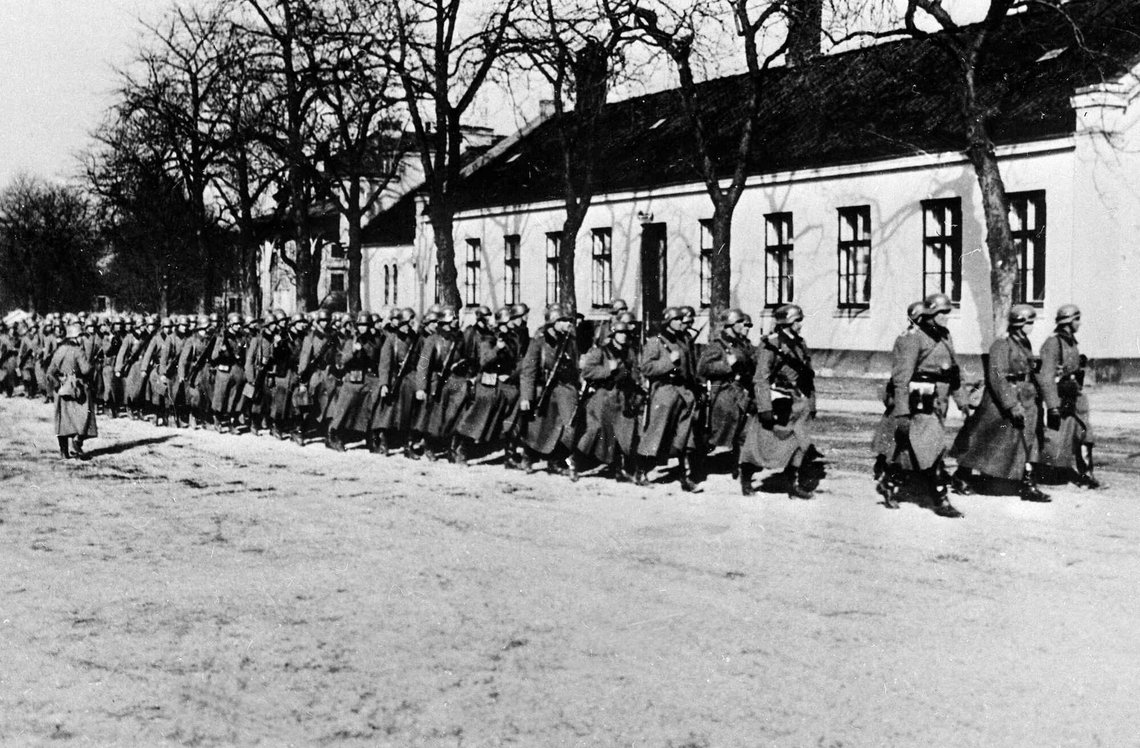
But in the interwar period the defence was neglected. The Nygaardsvold and Mowinckel governments allowed it to decay. The result was that Germany on 9 April 1940 was able to occupy Norway with a small and lightly equipped invasion force of scarcely ten thousand men.
Made wise by damage suffered, Norway sought security in NATO after the Second World War. When the American material support ceased after the Cold War, however, government and parliament once again allowed the defence to decay. This time with reference to solidarity in NATO and that the United States would in any case come to our aid. Large parts of the base structure and approximately 85 per cent of the Armed Forces’ capabilities were dismantled.
That small countries attempt to compensate for what they lack in military capacity by joining together in neutrality leagues or in alliances with great powers is understandable. But to dismantle one’s own defence and leave the country’s security entirely in the hands of others is risky.
But that was precisely what the governing parties, the Labour Party and the Conservative Party, did when they assumed that solidarity in NATO was total and the American security guarantee indisputable, when Defence Reform 2000 was implemented at the turn of the millennium.
There is a clear parallel in Norwegian foreign policy between the failed neutrality policy of the interwar period and the so-called “engagement policy” that Norway initiated at the beginning of the 1990s, with its exaggerated faith in solidarity in NATO, international law, and a rules-based world order.
At both crossroads the national defence capability was dismantled. In 1940 in faith in the League of Nations. In 2000 in faith in the United States. It bears witness to escapism, denial of reality, and a lack of historical consciousness of considerable dimensions.
In the corridors of the Ministry of Foreign Affairs, people still speak in capital letters about international law, a rules-based world order, and the importance of Norwegian peace mediation. Little is said about the many violations of international law in which we ourselves have been complicit.
It may suffice to mention the bombing of Serbia in 1999, the 21-year occupation of Afghanistan which began in 2001, the invasion of Iraq in 2003, and the bombing of Libya in 2011. All with Norwegian military participation and with reference to the importance of showing solidarity with the United States. All without, or with questionable, UN mandates.
International law does not exclude the use of military means in international crises. The UN Charter admittedly presupposes the approval of the Security Council. Purely formally, it should therefore only be the UN Security Council that has the right to wage war. But only one of the innumerable conflicts in the long history of the UN has occurred in the manner the Charter permits.
The Korean War from 1950 to 1952 became a UN operation because the Soviet Union refrained from attending when the matter came up for decision. De facto, little is therefore changed. States have the right to wage war, but in accordance with the international law of war. It imposes strict requirements concerning the protection of the civilian population, prohibits a range of weapons systems, and has its own rules concerning the treatment of the wounded, prisoners of war, and so forth.
Nevertheless, this law too is subjected to frequent violations on a large scale once wars first break out. International law provides for courts that are to adjudicate in cases where the international law of war has not been observed. But here too it has proved that power quickly creates another law. The courts tend to become the victor’s tribunal over the defeated party.
Much is said about a rules-based world order and the excellence of international law in the Ministry of Foreign Affairs, but little is said about the fact that international law presupposes that a state, in order to be treated as a legal subject in the sense of international law, must be capable of defending its own territory.
International law legalises states as the central actors in the international system. A state is entitled to recognition and may be admitted to the UN, but only once it is capable of administering a territory. To be capable of defending one’s own territory is one of the fundamental requirements of a state.
That is the core of the state’s sovereignty and implies that the state’s foremost obligation towards the international community is defence. When that is fulfilled, the state is an international legal subject and its exercise of power lawful.
Consequently, international law is not “an alternative to defence”. On the contrary, international law presupposes that the state commands sufficient defensive power, both to prevent encroachments by other states against its own territory, and to prevent other states’ use of that same territory for attacks against third parties, as now during the proxy war in Ukraine.
Article 51 of the UN Charter is particularly central. It grants states both the right and the responsibility to safeguard their sovereignty by maintaining a credible national defence. Article 3 of the NATO Treaty goes even further. It entails an explicit obligation for each member state to maintain and develop an adequate national defence.
It is a fact that Russia violated international law when Ukraine was invaded in 2022. It is also a fact that we ourselves have participated in violating international law several times. We also violate international law by having dismantled our own defence and no longer being capable of defending our own territory. It may therefore be discussed whether our defence policy does not conflict with our obligations under international law.
In any event, in practical terms we are at least as exposed to provocations and attacks now as in 1940, and we may probably expect both “visits” and “inspections” from several quarters and of many kinds if relations between the great powers deteriorate further.
International law can never exempt us from the cost of maintaining our own defence. That is a grave misunderstanding of which today’s Norwegian politicians and defence planners have been guilty since before the last turn of the millennium.
International law and the international legal order may mitigate and contribute to resolving lesser crises and conflicts, but are of little worth where existential territorial conflicts are concerned. The same applies to alliances with great powers.
In the world of realities, international law is good to have, but no guarantee of peace, and the designations “friend” and “enemy” are more fluid than we like to believe. Norway is exposed by its geographical position. If we are not capable of defending ourselves, someone else will do so, friend or enemy.
Our careless relationship to international law and the security-policy corner into which we have painted ourselves is especially the responsibility of the Labour Party and the Conservative Party. We have become far wealthier than in the 1930s, but not much wiser, and not more secure.


