

One may well be Danish even if one has a different ethnic background. It is, however, more difficult to become Danish.
Danishness is a cultural determination. Naser Khader has ethnic origins in Syria, yet he is more Danish than many ethnic Danes. His courageous efforts for Danish traditions of freedom and his long, uneven path from Islam to Christianity bear witness to this.
There is something immoral in saying that a person such as Khader cannot become Danish. Yet only a very small proportion of persons with a different ethnic background become Danish in the manner of Naser.
In other words: those who reject the significance of the ethnic for Danishness avoid all the difficult discussions. Blood is thicker than paper; one does not become Danish by obtaining a passport. But it must also be added that ethnicity does not determine Danishness either, even though ethnicity plays a very significant role.
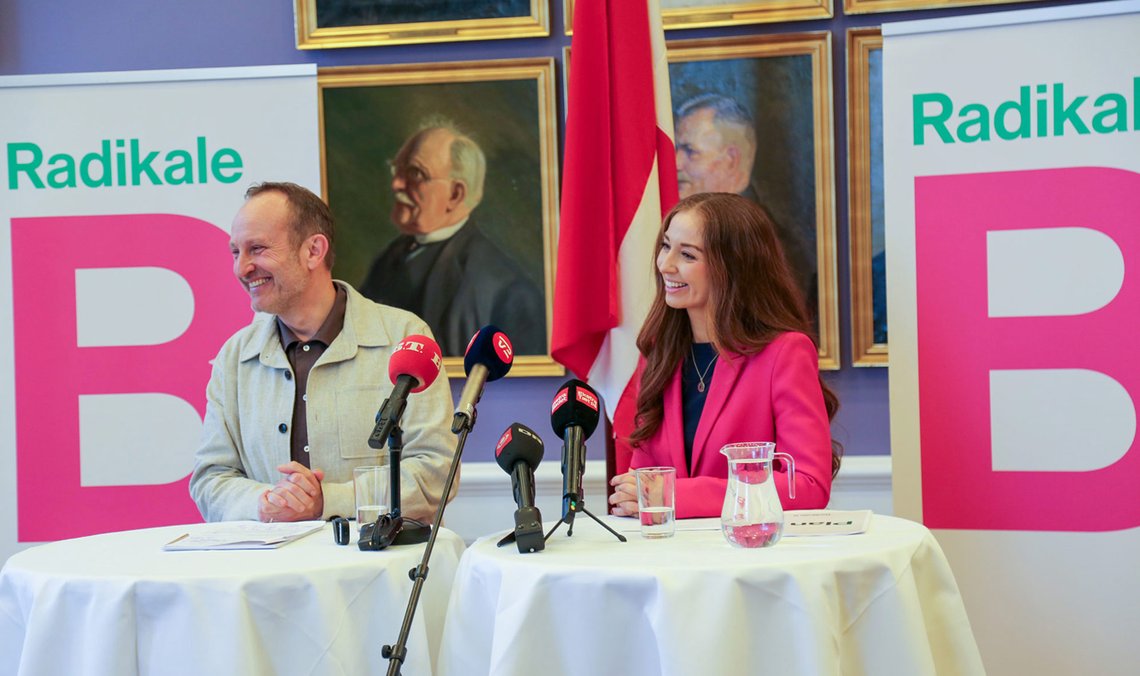
Of course, Samira Nawa from De Radikale can become Danish, but her ethnic origin in Afghanistan makes it more difficult. And it is morally justified—indeed, necessary—to discuss, as Christian Marcussen, Eva Gregersen and Eva Selsing do, whether a politician who evidently appeals to Islamism is Danish. She is, after all, contributing to the undermining of Danish culture.
What is ethnicity?
Within the folk community (folkefellesskapet), there exists an ethnic element that is deeper, more unchangeable, and less accessible to political engineering than we care to admit.
Ethnicity and culture have grown so closely together that, in practice, they can rarely be separated. A debate on integration that consistently ignores this is based on an illusion.
Ethnicity is, however, neither purely biological nor purely cultural.
It encompasses common descent, collective memory, language, religion, and what one might call embodied customs: the manner in which one moves, gestures, and perceives the world, which is transmitted from generation to generation without being consciously chosen or linguistically articulated. The body is the archive of culture, as the phenomenologist Maurice Merleau-Ponty would have said.
The decisive feature of ethnicity is not merely what it entails. It is that it is not chosen.
One chooses one’s religion, one’s political convictions, one’s friends. But one does not choose one’s people, one’s ancestors, one’s lineage.
This unchosen element distinguishes ethnicity from culture, understood as something that can be acquired and discarded.
The folk community is more than a concept
For Edmund Burke, the nation is not merely an imagined community, a construction, or a political project. It is rather a pact between the generations, between the dead, the living, and the unborn. The common ancestors are not merely a national mythology. They are concrete biological origins whose inheritance we administer, though not exclusively a bloodline; adoption, birthright (innfødsrett), baptism in the established church, for example, may inscribe a person into this chain.
In addition comes an argument from evolutionary psychology: human beings are predisposed to favour genetic relatives.
In this context, nationalism may be understood as an extended form of kinship solidarity. It is the love of the near, the familiar, the biologically related, channelled beyond the family and into the larger popular community. That is, a biological tendency that has been civilised.
The most striking historical example is the Jews.
No other people has preserved so robust a collective identity over so long a period and under such extreme conditions. The explanation lies precisely in the interweaving of religion, culture, and biological continuity. In other words, an identity that was strong enough to survive diaspora, persecution, and pressures of assimilation over millennia. The ethnic element was not without significance here. It was decisive.
The limits of assimilation
But what is good for an immigrant group is often detrimental to the host society.
Many, particularly Arab immigrants, maintain close transnational networks within clan cultures. One marries cousins or brings spouses from the country of origin. This means that the pressure of assimilation is continually counteracted from within. The young, who may be in the process of finding their footing in Danish culture, are drawn back by the normative demands of the family and the collective identity.
The role of ethnicity in this is indirect, but real. It is not biological determinism to observe that ethnicity and culture for these groups are deeply interwoven.
The collectivism of the Arab family, the honour code, and the law-religion are not coincidentally Arab. They have emerged in and with this people, this geography, this history, and these specific conditions of life. To demand cultural assimilation is, in reality, to demand that people detach themselves from a way of life that is rooted more deeply than political will.
What we owe one another to say aloud
Some immigrants with an entirely different ethnic background succeed in becoming Danish. But the exceptions are not the rule.
The liberal conception of the fully malleable human being is naïve, but also politically harmful; it creates expectations that reality most often does not fulfil, and because it makes it impossible to conduct an honest conversation about what assimilation requires and can achieve.
A people is not something constructed. It is an inheritance. And inheritance entails obligation. It binds both those who bear the inheritance and those who seek to assume it.


