

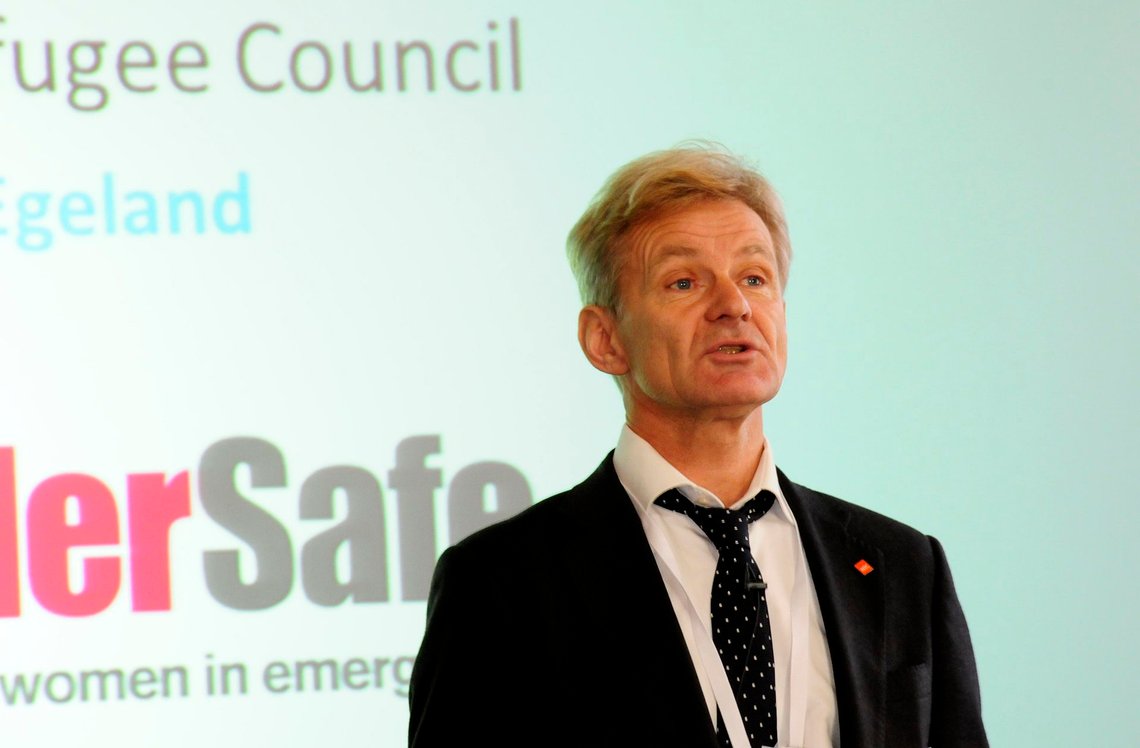


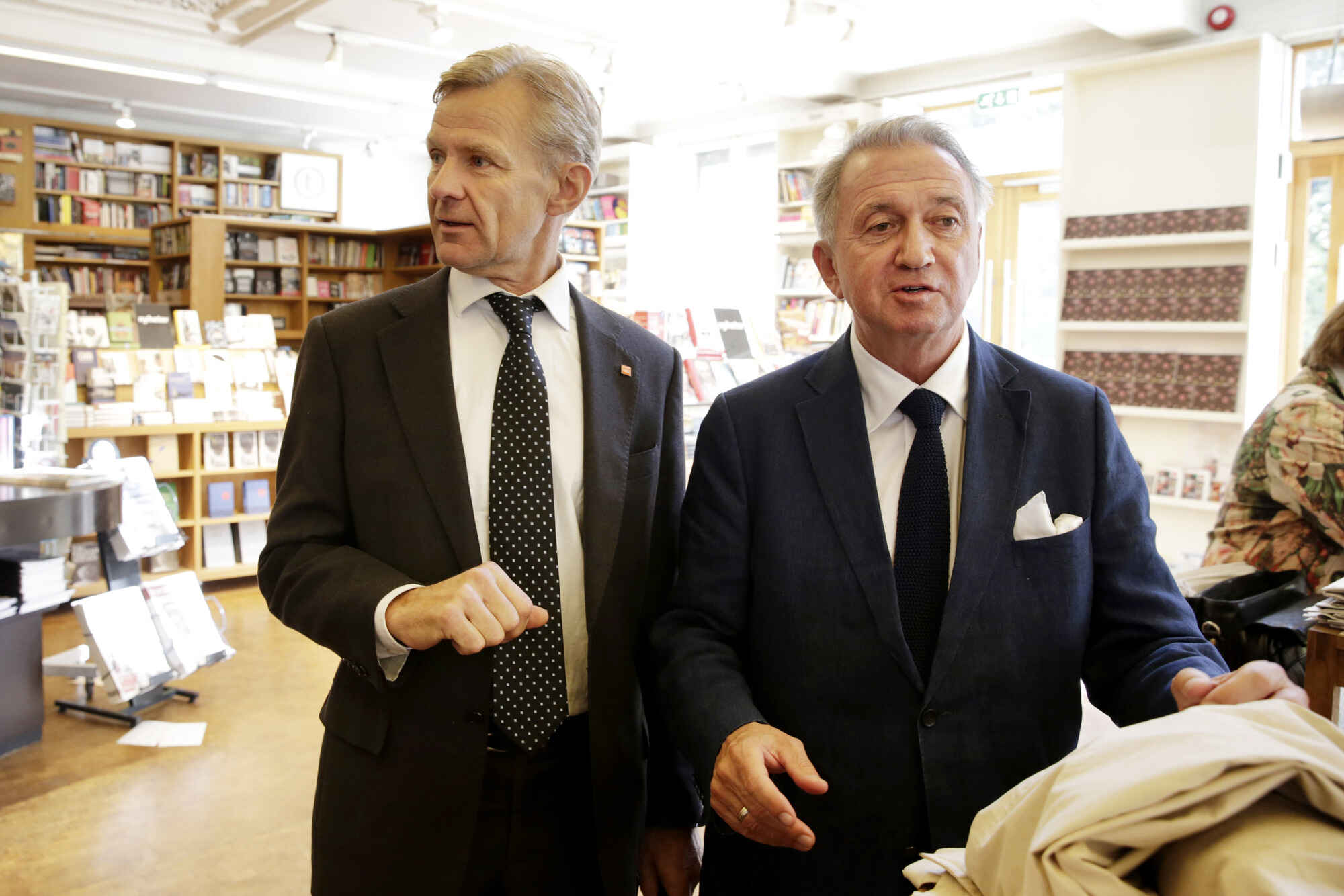
 Jan Egeland and Terje Rød-Larsen during the 20th anniversary of the Oslo Accords on 13 September 2013. The anniversary is marked with a conference at Litteraturhuset in Oslo.
Photo: Håkon Mosvold Larsen / NTB.
This year’s TV-aksjonen goes to the Norwegian Refugee Council (NRC) – Flyktninghjelpen. This comes in handy, as the important contributor USAID has been dismantled.
But the shortfall will hardly be covered by NRK’s television viewers. The state will probably have to contribute even more. The advertising campaigns are already under way. Whether television viewers will be persuaded remains to be seen. The 2024 accounts show that 37.5 øre of every krone goes to salaries. The TV-aksjonen funds are to go to Gaza and other countries in the Middle East and Africa.
“From ruins to hope”, states Secretary General Jan Egeland (Ap) of the Norwegian Refugee Council (NRC) – Flyktninghjelpen – on the NRK TV-aksjonen advertising poster. “Never before have more people been displaced by war and conflict, and never before have so many been dependent on assistance to obtain a home. But there is hope, and there are solutions”, he adds.
 Screenshot of Jan Egeland: NRK TV-aksjonen.
The well-known podcaster Ole Asbjørn Ness has stated that Jan Egeland and his spouse Åslaug Haga (Sp and former Fornybar Norge) are “Norway’s most expensive married couple”. Now Egeland is out asking for money again.
“This year, the TV-aksjonen goes to NRC Flyktninghjelpen. Together, we shall give more than 400,000 people displaced by war and conflict in Syria, Gaza, Sudan, Chad, DR Congo and Afghanistan the opportunity to create a home and a new future”, says Camilla Gilje Thommessen from TV-aksjonen on another advertising poster in the same series.
Hardly sufficient
Over the past ten years, TV-aksjonen has raised between NOK 230 and 415 million. This will hardly be sufficient to fill the gap following the discontinuation of USAID. The accounts of the Norwegian Refugee Council (NRC) for 2024 show that NRC received more than NOK 1.5 billion from BHA – Bureau for Humanitarian Assistance, which was a sub-agency of USAID. The latter agency was, as is well known, dismantled last year by the Trump administration due to corruption and lack of results.
The American contribution was surpassed only by Norwegian state funds, which in 2024 amounted to NOK 1.8 billion through the aid budget, distributed between direct funds from the Ministry of Foreign Affairs (Utenriksdepartementet) and funds from Norad. The third largest contributor was the European Commission’s Directorate-General, with almost NOK 1 billion.
37.5 per cent to salaries
The Norwegian Refugee Council’s accounts for 2024 showed total revenues of NOK 9.29 billion. Of this, NOK 9.28 billion was spent. The notes to the accounts show that NOK 3.48 billion went to salary and pension costs, and other social costs.
This corresponds to 37.5 per cent of the organisation’s budget, which pays 15,000 employees in 40 countries. What the outcome of this global operation is remains unclear. Egeland himself receives a salary from NRC of around NOK 2 million per year.
The accounts also show that at the beginning of 2025 the organisation had current assets of more than NOK 4.1 billion, of which cash holdings amounted to nearly NOK 2.2 billion. At the same time, the balance sheet showed short-term liabilities of NOK 3.3 billion. This means that NRC Flyktninghjelpen holds free funds of approximately NOK 800 million, corresponding to the entity’s book equity.
Rød-Larsen’s closest associate
Jan Egeland has kept a low profile after the Epstein files were revealed. He and Terje Rød-Larsen have had substantial cooperation primarily linked to the Oslo Process (Oslo-kanalen) in the early 1990s, which led to the Oslo Accords between Israel and the PLO in 1993.
Egeland was State Secretary in the Ministry of Foreign Affairs (Utenriksdepartementet) under Minister of Foreign Affairs Thorvald Stoltenberg and later Johan Jørgen Holst. He was central in facilitating and supporting the process from the ministry’s side, including logistics, approval and follow-up of the secret meetings in Norway.
The three Norwegian key figures in the secret negotiations were typically described as Jan Egeland, Mona Juul and Terje Rød-Larsen. The images from the signing in 1993 often show them together. Twenty years later, in 2013, they met again at Litteraturhuset in Oslo to mark the 20th anniversary of the Oslo Accords.


