

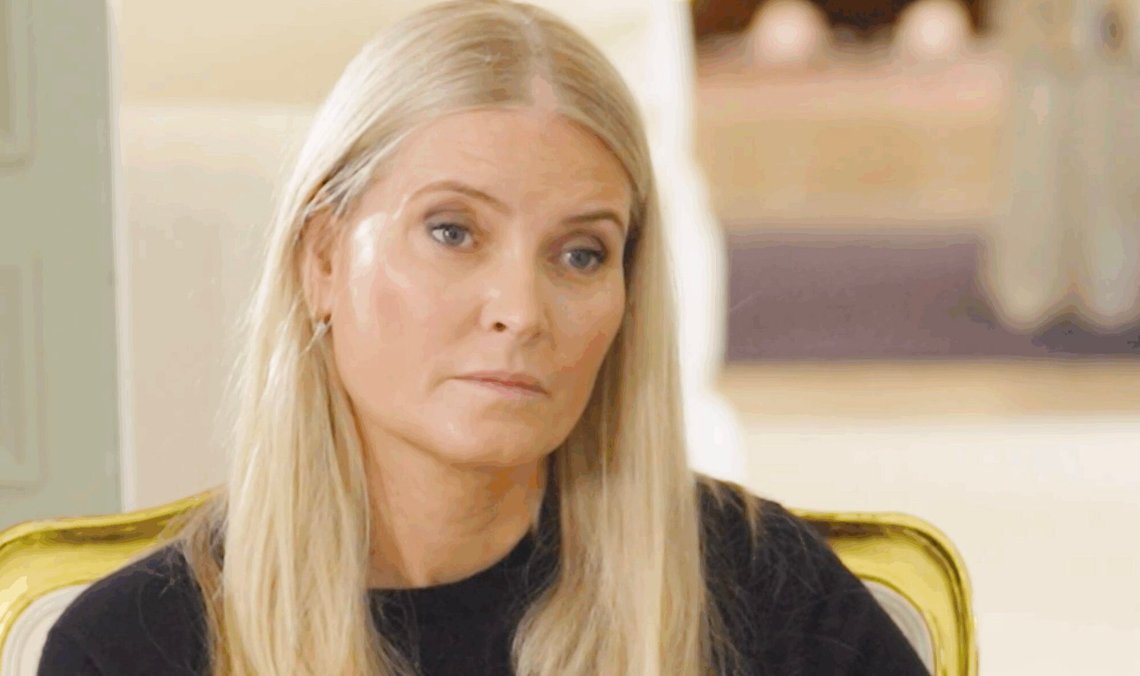
Did Mette-Marit pass the test? Given the circumstances: yes. She struggled at the outset in the interview with Petter Oulie-Hauge, who held all the cards. She gave some very poor answers to important questions, such as when she said that she had googled Epstein, and that what she found did not look very good. But then she recovered and asserted herself as royal, and Haakon said: – I cannot manage without her. If I am to do the job—or the project, as Mette-Marit called it—I must have her by my side.
We saw something of Mette-Marit’s strength in several of her responses to Oulie. She used her platform as a royal to mark distance from Oulie. – This is none of your concern, she replied several times. – This belongs to the privacy of private life.
The counter-question is, of course: but does the royal family in fact have any private life? Are they not on duty 24/7?
Mette-Marit managed to say that neither the Ministry of Foreign Affairs (UD) nor the Police Security Service (PST) had anything to do with their circle of acquaintances.
Here Oulie could have pressed Mette-Marit hard: Document has revealed that the consulate in New York complained to the Ministry of Foreign Affairs (UD) that they continually had to provide escort services for Mette-Marit. She appeared at short notice. At night she slipped out without the bodyguards knowing where she was. This is a serious breach of the contract she has as a royal. But NRK did not wish to pursue this story. There is much they did not raise that could have made the interview far more difficult for the Crown Princess.
She was allowed to define what she wished to answer.
NRK partly undermined itself by failing to acknowledge the asymmetry in the balance of power: the one who holds private emails has the advantage. They were never intended for publication, and when Mette-Marit was asked what she meant by Paris being well suited to infidelity, she responded entirely correctly that it would be quite wrong to require her to answer this, as it was part of a private “banter”—a conversation about this and that.
NRK and Norwegian media display a prudishness with regard to the royal household that runs entirely counter to what they themselves practise, both publicly and—yes, precisely—privately.
Media, politicians and the elite generally have a morality entirely in line with Mette-Marit’s, and their children touch Marius’ wild life.
The difference is that she ended up in the net of one of the largest entrapment operations of our time, in which celebrities were drawn in. It took place over many years, and hundreds of people were involved.
Oulie/NRK refrain from mentioning as background that several intelligence services were involved. That Epstein’s career is inexplicable without a major X-factor: powerful forces protected him and helped him forward. He was untouchable.
There was a reason why he returned to high society immediately after his release in 2009: the indictment had been reduced from a federal offence involving 34 girls to a state charge with only two victims, one of whom was a minor. In today’s America, that was a trivial matter. Bill and Hillary Clinton could associate with Epstein without difficulty. Many others had done worse. Ehud Barak and Prince Andrew could come and go in the most splendid private residence in New York.
Epstein’s wealth was overwhelming: his own aircraft, an apartment in Paris, a ranch in Texas, a house in Palm Beach and—the crown jewel—Little Saint James.
Enough to dazzle even the richest and most prominent celebrities.
A few weeks ago, Les Wexner was interviewed for five hours by the congressional committee, led by James Comer. Wexner made Epstein power of attorney over his entire fortune of several billion dollars. That is, he had full control. How did he meet Epstein? During a visit to Florida. Virtually in the street, through a friend who said that Epstein was good with money.
Anyone who sees the answers understands that Wexner is lying. The answers are so weak that one would not think it possible. But those who know the truth about Epstein will not speak. They know what happened to him. Yet this aspect—that people are afraid to say what they know—is not addressed by NRK.
Of course Mona Juul and Terje Rød-Larsen will never say what they know. And NRK and Norwegian media will accept the cover stories.
At the same time, they dig up pieces that may fit into the larger puzzle.
Mette-Marit also knows more than she gives the impression of. She is no longer the little girl from Southern Norway who took part in wild parties. She has been around. She knows. That is why she refuses to name the friend who introduced her to Epstein.
She breaks into tears when she mentions the fate of all the girls. But that did not concern Epstein alone either. He was not the only one engaged in what he was doing.
During the four-day stay in Palm Beach, Epstein came to visit, and a situation arose that made Mette-Marit feel unsafe. She had to call Haakon. He remembered the situation well. Neither of them wished to go into what it entailed, other than that it was boundary-crossing.
Did it have anything to do with the photograph taken of her on a sofa together with another woman? Oulie asks. No comment.
Mette-Marit breaks into tears several times. She feels sorry for herself. That is not becoming for a royal.
At the same time, she shows a strong side. She is extremely strong-willed and by no means characterised by the somewhat plaintive tone to which we have become accustomed. Mette-Marit must cease appealing to the audience’s sympathy. She is perfectly capable of standing on her own feet.
She has now disgraced herself. Emphatically. But if the media continue to hammer away, antipathy may perhaps swing into sympathy. This also applies to Marius. Everyone can see that he is a bastard. But it is, as the Americans say: he’s our SOB—son of a bitch, bastard.
The same applies to Mette-Marit. She has significant weaknesses. She lacks the noblesse oblige that royals are expected to possess. Mary in Denmark and Kate in the United Kingdom have it. But they have been bred and raised for it from birth. Mette-Marit is merely an ordinary girl from Southern Norway.
This may be difficult to accept. She is a piece of Norway anno 2026. One need only look at oneself in the mirror.
The Standing Committee on Scrutiny and Constitutional Affairs (Kontroll- og konstitusjonskomiteen) is to appoint members of an independent commission that will investigate Epstein’s connections to the Ministry of Foreign Affairs (UD) and the apparatus of governance. Who commands the necessary trust? Do honourable people still exist in this country?
Mette-Marit concluded by saying that it would be regrettable if her conduct were to weaken trust in the institution. It has done so. But she is not alone. It is sufficient to look across Slottsparken to the Ministry of Foreign Affairs (UD). But Støre will never admit that he is in the same boat as Mette-Marit.
But he is.
PS: Did Mette-Marit pass the test? She will become queen. Haakon said that he cannot manage the job without her. We saw a glimpse of her strength, which also manifested itself in arrogance.
The royals can say: this far, but no further.
Mette-Marit did so many times, and Oulie withdrew.
It is the privilege of the royals, which she abused. The royal household’s circle of acquaintances must tolerate full scrutiny.
Here Mette-Marit failed. Has no one told her this?
Hevder kritisk sak om Mette-Marits New York-reiser ble stoppet: – Jeg fikk ordre


