

China attempted to influence the election in the United States in 2020, but when Trump won, the intelligence community did not want Trump to be informed of it. The prevailing attitude was that they despised Trump’s China policy and did not wish to give him ammunition.
Justthenews.com has uncovered reports from the intelligence ombudsman which both reveal how negative attitudes towards Trump dictated the intelligence services’ conduct towards him and concealed the fact that China attempted to influence the election. China did precisely what the intelligence services and the Democrats alleged that Russia did, but without the information becoming public. That is problematic on several levels.
It is an absolute requirement that the services do not pursue their own policy, but do what they are tasked to do: deliver impartial information. The day the intelligence services begin to determine who is to receive information, they have violated the premises of their mandate. It is sabotage.
Analysts in the American intelligence community attempted to conceal evidence of Chinese influence efforts from President Donald Trump during the 2020 election. The analysts stated that they did not want their intelligence to be used by “the vulgar guy in the Oval Office” to pursue a policy towards China with which they personally disagreed.
The portrayal of Trump as erratic and unpredictable feeds into how the intelligence services operate: they can use it as a pretext to deny him information that would be to his advantage. Thus the intelligence services begin to assume a political role. They intervene in the political process.
The revelation appears in a January 2021 report written by and with commentary from someone who has never previously been described: analysis ombudsman Barry Zulauf, who conducted a review of the intelligence community’s handling of Russian and Chinese interference attempts during the 2020 election. Among his conclusions was that intelligence analysts downplayed China’s actions because they despised the “vulgar” Trump and did not wish to support the Trump administration’s policies and priorities towards China, which they “personally disagree with”.
There is no such thing as intelligence analysts disagreeing with the President’s policy. That constitutes refusal of service and grounds for dismissal. But when it aligns with the Democrats’ and Obama’s and Biden’s policy, it becomes even more serious.
Was Biden’s victory a demonstration of what the Democrats and Hillary claimed about the 2016 election: that Trump was elected thanks to Russian influence? In both cases, it is the Democrats and the intelligence community who are the actors, and Trump who is the object and powerless.
The Democrats have merged with the intelligence services, and the intelligence services are politicised.
Already early in 2020, the intelligence services knew that China was attempting to influence the election. They had hacked into the voter rolls. But the intelligence services remained silent. If it became public, Trump would be able to exploit it to his advantage. Or even worse: perhaps the intelligence services did not object to Chinese influence?
Just the News reported this week that the U.S. intelligence community has known since early 2020 that Beijing also gained access to U.S. voter registration data and used this information to conduct polling related to the presidential election between Trump and the then former Vice President Joe Biden.
China was active on multiple fronts.
There is credible evidence that cyber hackers linked to the Chinese government and Chinese troll farms on social media targeted the U.S. presidential election in 2020 and attempted to undermine Trump during the campaign against the now former President Biden. There are also indications that Chinese intelligence and law enforcement authorities – China’s Ministry of State Security (MSS) and the Ministry of Public Security (MPS) – also played a role in 2020.
This was what the FBI and Bob Mueller accused Russia of, and a dozen diplomats were expelled in the aftermath of 2016. But none Chinese in 2020, even though everyone knew that China did not want Trump.
Zulauf – an experienced intelligence officer – wrote in his January 2021 report: “Given the analytic differences in the way analysts for Russia and China examined their targets, the China analysts appeared to be reluctant to assess Chinese actions as undue influence or interference. These analysts appeared reluctant to advance their analysis of China because they tended to disagree with the administration’s policy, effectively saying: I do not want our intelligence to be used to support this policy.”
Zulauf discussed his report in a podcast later that year, where he cited an analyst working on Chinese interference efforts who had essentially said: “I do not want my analysis to go to the White House, where the vulgar type … in the White House will use it to pursue a policy towards China that I personally disagree with.”
Several within the American leadership envisaged a kind of cohabitation with China in which China was the factory and the United States the technological superpower. But over time they would hand over the baton to China. Industrial jobs had already been moved to China.
But this was a policy conducted over the heads of American voters. They saw that factories were being closed, but they did not know that this was happening according to a plan.
The claim that Trump was in Putin’s pocket was a conspiracy Hillary launched to cover up her own email scandal. When the CIA, the Department of Justice, the FBI and the White House embraced it, it became something far more serious: an attempt to influence the election by using Russia as a scare, playing on old Cold War notions.
An article in the Journal of Intelligence Conflict and Warfare reproduced a 2023 speech by Zulauf stating that the intelligence analyst had allegedly said: “I do not want my intelligence to be sent to the White House, where it will be used by the vulgar person in the Oval Office to support a policy against China that I personally disagree with.”
“Dr Zulauf further noted the various errors in this line of thinking – intelligence belongs to the community, not to an individual analyst, and further, although analysts have the right to like or dislike particular leaders, they do not have the right to allow that to alter the intelligence products they present,” the journal article states.
Zulauf’s review also found that claims of Russian interference and Chinese interference were assessed according to different standards, meaning that Russia may have undertaken measures that were regarded as influence or interference efforts, whereas if and when China undertook the same or similar measures, these Chinese measures would likely not have been regarded as influence or interference efforts.
“Due to varying collection and insight into hostile state actors’ leadership intentions and domestic election influence campaigns, the definitional use of the terms ‘influence’ and ‘interference’ and associated confidence levels are applied differently by the analytic communities for China and Russia,” Zulauf wrote in his report.
The ombudsman found that “the terms were used inconsistently within the analytic community”, and that “failure to explain these definitions is contrary to Tradecraft Standards.”
The moment one departed from the norms and standards of the intelligence services, one had in practice carried out a silent coup.
But the deviation/reorientation provoked reactions. After all, there were analysts who sat observing the raw data that came in, and saw what came out. They therefore wrote their own assessment.
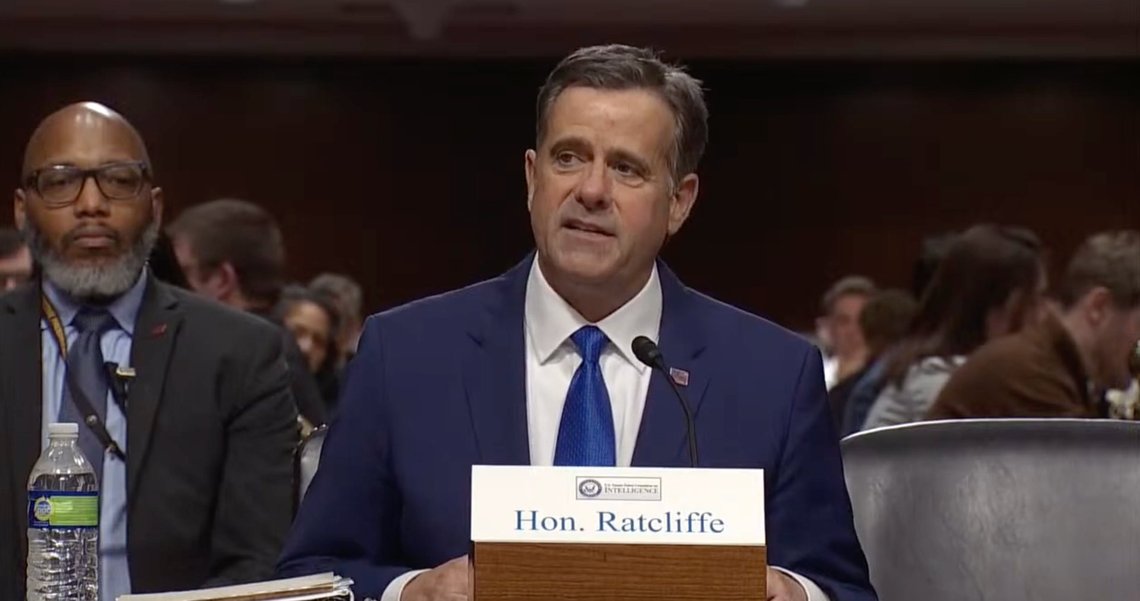
The analytic ombudsman noted that several national intelligence officers in October 2020 produced a “memorandum with alternative analysis” “which expressed alternative views on potential Chinese activities to influence the election”. Zulauf said that “these alternative views encountered significant resistance from the organisation”, but that the then DNI chief and current Director of the Central Intelligence Agency, John Ratcliffe, agreed with the dissenting alternative views which held that China had in fact attempted to influence the 2020 election to undermine Trump’s candidacy.
When the intelligence services’ analysis of the election was presented in March, the conclusion was that China had not attempted to influence the election, because one did not wish to end up in the same situation as Russia after 2016.
“Beijing probably assessed that Russia’s attempts to interfere in the 2016 election significantly damaged Moscow’s standing and relationship with the United States, and may have feared that Washington would expose a Chinese attempt to undertake similar measures to influence or interfere in the election, and punish Beijing.”
Here the intelligence services were sitting on both sides of the table. They knew that the Russian influence was a hoax, a falsehood, but could use it in their narrative that China had learned. They thus functioned as cover for China’s interference and acted as China’s extended arm.
In 2020 the pandemic was a weapon China could use against Trump, while Trump referred to the virus as the “China virus”, to which the press reacted. They considered it racist.
China attempted to convince Americans that China handled the pandemic far better than Trump, and Anthony Fauci was not interested in his ties to the laboratory in Wuhan becoming public.
In August 2020 it emerged that China had mass-produced false driving licences that could be used as ID in the autumn election. The Democrats changed the rules so that one could vote by post, in unguarded ballot boxes, vote on behalf of others, etc. All were measures that opened the door to fraud.
Last year, FBI Director Kash Patel submitted to Congress a long-hidden 2020 intelligence report expressing concern that China had plans to mass-produce fake U.S. driving licences in order to carry out a plan to influence the election in Biden’s favour by means of fraudulent mail-in ballots.
The FBI intelligence report was sent as unverified advice to U.S. intelligence agencies on 24 August 2020. It was then suddenly withdrawn in September 2020 – the day after the then FBI Director Chris Wray testified before Congress that he had seen no attempts at large-scale election fraud.
The raw and unverified intelligence report bore the explicit title “Chinese government production and export of fraudulent U.S. driver’s licences to Chinese sympathisers in the United States, to generate tens of thousands of fraudulent mail-in ballots for U.S. presidential candidate Joe Biden, in late August 2020.” The report was soon withdrawn, and intelligence agencies were asked to delete the information before they had the opportunity to properly investigate the claims.
U.S. Customs and Border Protection (CBP) had stated in July 2020 that “fraudulent driver’s licences […] continue to be found by CBP officers” at Chicago O’Hare International Airport. From January to June 2020, CBP reported that its officers had “seized 1,513 shipments of fraudulent documents – totalling 19,888 counterfeit U.S. driver’s licences”, and that “the majority of these shipments originated from China and Hong Kong”. The CBP press release did not directly link the fraudulent driver’s licences to potential attempts at election fraud.
Now the Democrats are fighting tooth and nail in the Senate against the Safe Act law, which will ensure that one must have ID in order to vote. 80 per cent of Americans are in favour of the law. Nevertheless, the Democrats oppose its adoption. Trump has said that it is a matter of life or death for the election in November.
Democratic states have issued driving licences to illegal immigrants, also to professional drivers who cannot even speak English. This has resulted in several fatal accidents.
But the Democrats do not care.
Power is more important.


