




It is 4.15 pm and the woman with severe dementia has already been put to bed for the night.
This is how relatives describe everyday life at the Uranienborghjemmet care home in Oslo, and the opposition is now demanding that the city council answer for this.
Rødt, Ap, SV and MDG want an open hearing in the city council. The background to this is more than 220 pages of reports of irregularities from the care home, which has been run by the private company Smartlegen since May 2025.
“When reports of neglect keep coming in time and again, it is not enough to simply offer new assurances that everything will improve,” says Rødt’s group leader, Siavash Mobasheri.
He points out that the reports began to emerge as early as the summer of 2025, shortly after Smartlegen took over. On 1 August, a doctor wrote that there were too few nurses, that wound care was being delayed and that residents were being put in wheelchairs simply to save time. The doctor called for a crisis team.
It didn’t stop there.
One family reports that their mother was left soiled in her own faeces on several occasions. Another relative says that their mother was in severe pain for almost a full day without receiving any relief. A few days later, she was dead. And the reports of concern state that three staff members are responsible for 98 residents throughout the night, and that it can therefore take an hour for someone to arrive when the alarm goes off.
Ap’s group leader in Oslo, Marthe Scharning Lund, does not have many kind words to say.
– The fact that elderly people are left lying in their own urine for hours, go hungry and are put to bed at 4.30 pm is a scandal. This is utterly undignified,” she tells Dagsavisen.
But it is worth looking at who is saying this. Lund herself was Oslo’s City Councillor for Health from February to October 2023, following eight years of Labour Party rule in the city.
Christine Elvenes, director of the Smartlegen care home, does not recognise this picture. She says that the company’s own surveys show satisfied residents and relatives, that no one has fixed mealtimes, and that there have been no cuts to either meals or the food budget. She believes the discrepancies relate to isolated incidents, but she is happy to attend a hearing.
So too is Oluf Ulseth (H), the city councillor for health. He says he is not satisfied.
Uranienborghjemmet was run by the local authority until Smartlegen took over on 1 May 2025. The non-conformity reports that have now been submitted say nothing about what the situation was like before that time. Smartlegen itself states that quality deteriorated following the takeover, attributing this to the fact that many experienced staff members resigned. Twelve permanent staff members refused to transfer to the new management and resigned three days beforehand.
However, the Uranienborg Care Home is not the only municipal care home in Oslo to have come in for criticism. When the Ombudsman for Civil Affairs visited Stovnerskoghjemmet in March 2022, under the Labour Party administration, they found just one care assistant on night duty for three wings. The Ombudsman described this as a risk to residents’ safety.
Health Councillor Ulseth also claims that the number of non-compliance incidents at Uranienborghjemmet is on a par with that seen at municipal care homes in Oslo.
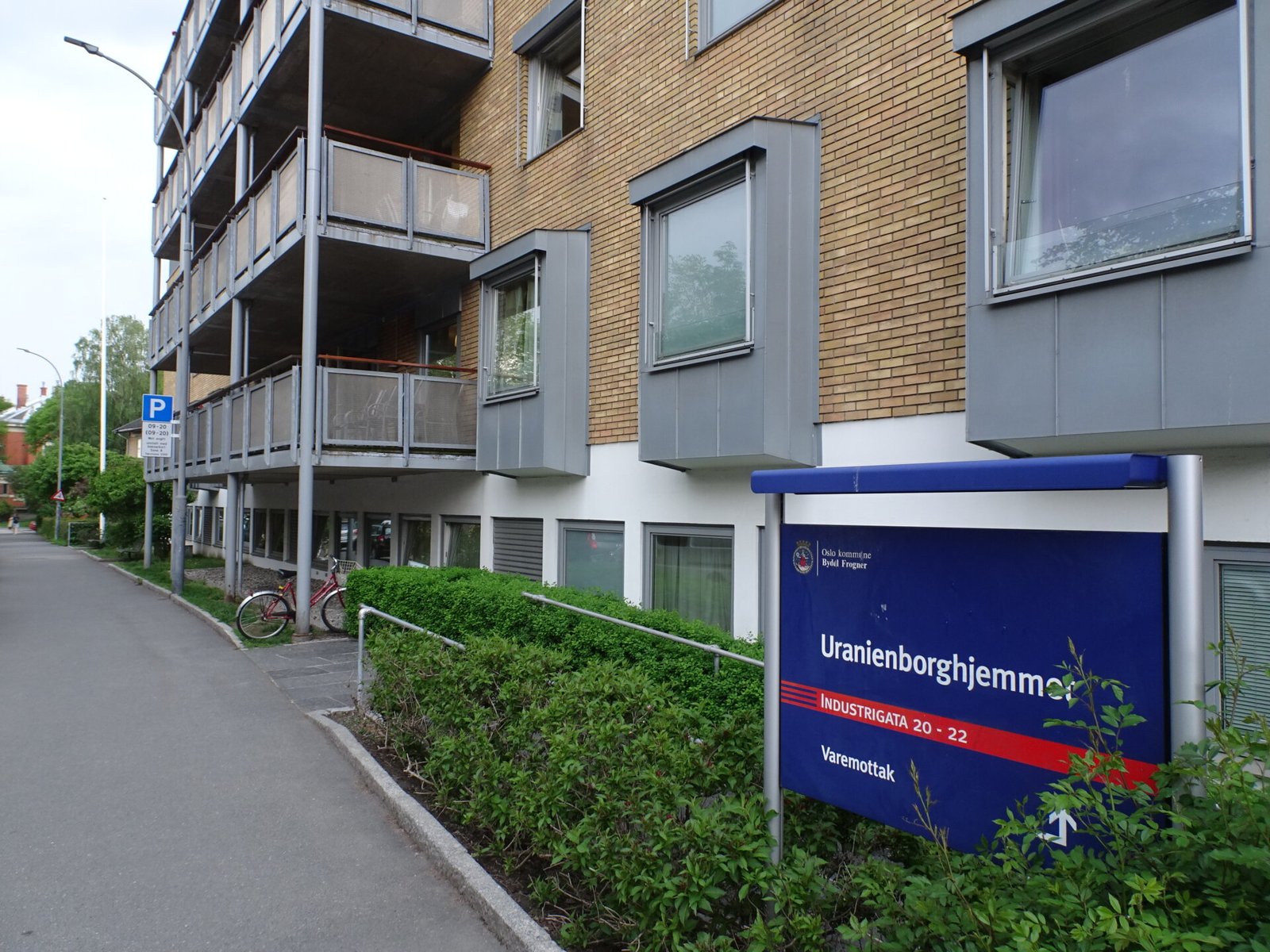
Uranienborghjemmet. Photo: Wikimedia Commons
Oslo and the Uranienborg Care Home are far from the only ones. When the Red Cross surveyed 190 care home residents across 30 care homes in 11 municipalities, 99 replied that they had personally experienced or witnessed neglect. Most often, this involved neglect, such as a lack of exercise and insufficient social interaction. The sample is not representative, and residents with dementia were not included.
The Norwegian Board of Health Supervision states that there is a ‘high risk of neglect’ towards frail elderly people. There are significant differences between municipalities, and these can become even greater when funds are scarce and staff are hard to reach.
The Norwegian Pensioners’ Association recognises this situation. In a survey of local associations and senior citizens’ councils in 174 local authorities, nearly two in three say that the local authority cannot afford care and support services. 44 per cent believe there is a shortage of nursing home places. Almost nine in ten say it is difficult to recruit qualified staff.
The local authorities run the care homes. However, it is the state that determines how much funding they receive to run them.
In the 2027 national budget, the government is proposing over four billion kroner for the ‘Eldreløftet’ initiative.
At the same time, the government plans to send 85 billion kroner to Ukraine next year as well. Most of this will go towards military aid. This October, the government also set itself a new target of NOK 30 billion in annual climate funding by 2035.
Kristian Eilertsen of the Progress Party (FrP) calls the ‘Eldreløftet’ initiative a ‘bluff for the elderly’ and believes Norway needs 23,000 more care home places by 2035. Kai Steffen Østensen of the Labour Party responds that the government is taking action, and that healthcare is a public responsibility.
The Pensioners’ Association is not convinced. The association states that only 500 new places have been built in five years, whilst the need is around 1,900 per year. The Housing Bank’s grants are not being fully utilised, as the local authorities cannot afford to run the places.
“It is a serious matter when so many people feel that the local authority does not have sufficient financial resources,” says union leader Erna Ansnes.
Ulseth points out that the shortfalls mainly date from before the city council intervened this summer. The Nursing Home Agency believes that Smartlegen has implemented appropriate measures.
‘But it is too early to say that operations are where they should be,’ says the health councillor.


