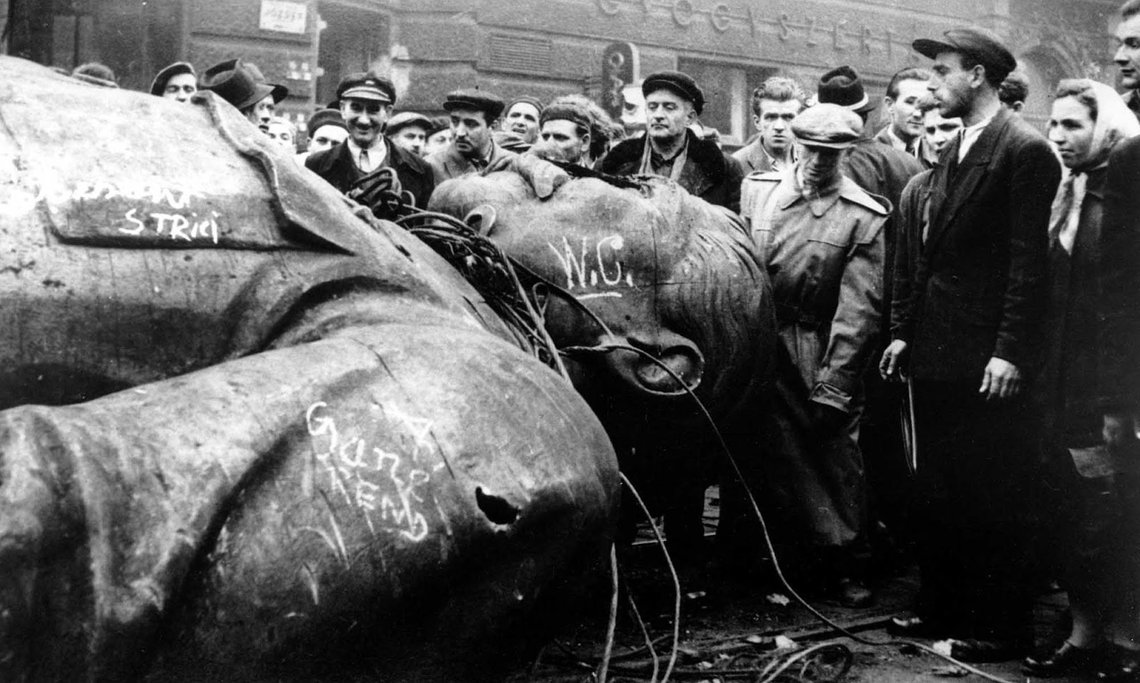


On 23 October 1956, a spontaneous popular uprising broke out in Budapest. It began as a student demonstration in support of reforms in Poland. Within hours, it developed into a nationwide uprising against the country’s Soviet-controlled communist regime.
For two weeks, the Hungarians held the city and large parts of the country, before the Red Army’s overwhelming military might crushed the uprising. The uprising is one of the most dramatic chapters in the annals of the Cold War – a symbol of hope and brutal repression.
The Stalinist iron fist
For the undersigned, the events of Hungary in 1956 were part of my childhood education through my father, who, having been released from National Socialist captivity in 1945, constantly highlighted Hungary in 1956 and Czechoslovakia in 1968 as the most significant events in post-war European history right up until the fall of the Wall in 1989.
Today, my father would have turned one hundred. His story is part of our history
After the Second World War, Hungary, along with the rest of the Eastern European countries, came under the control of the Soviet Union. The Communist Party, led by the hardline Stalinist Mátyás Rákosi, seized full control through electoral fraud, terror and nationalisation. From 1948 until the mid-1950s, the country was characterised by mass arrests, forced labour, show trials and an omnipresent secret police force (ÁVH).
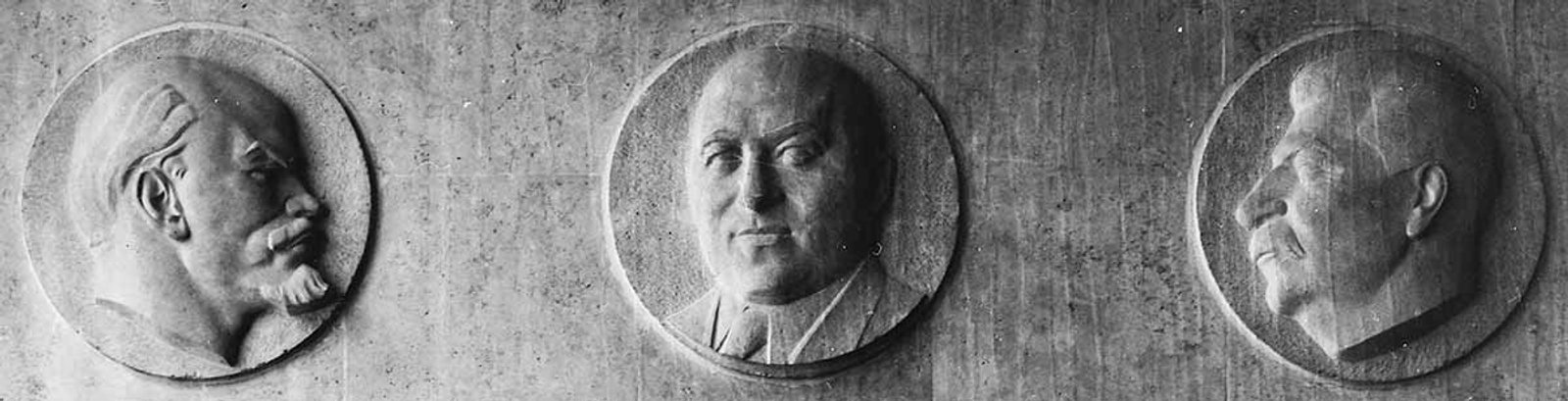
Lenin, Rákosi and Stalin cast in concrete. Photo: Fortepan — ID 91348 Donor: UVATERV
Rákosi was nicknamed ‘the bald murderer’. He called his method ‘salami tactics’: opponents were eliminated, in true socialist fashion, layer by layer, until only the hard-line party core remained. Thousands of critics of the regime, officers, intellectuals and ordinary farmers were arrested, tortured, executed or sent to concentration camps.
Cardinal József Mindszenty, Primate of the Catholic Church and a unifying figure for the nation, was arrested in 1948, brutally tortured and sentenced to life imprisonment in a notorious show trial. Church schools were closed, monasteries dissolved and priests persecuted. Agriculture was ruthlessly collectivised, industry was geared towards the Soviet Union’s military needs at the expense of consumers’ – and all opposition was crushed.
He wrote a single sentence before they came for him. Then he vanished from the world that knew his name.
On 26 December 1948, the day after Christmas, József Mindszenty stood inside the archiepiscopal palace at Esztergom. Outside, engines idled in the cold. The cars had been… pic.twitter.com/9Nsf9RkeeS
— Sr. Mary Joseph Calore, SSCJ (@sscjusa) 1 May 2026
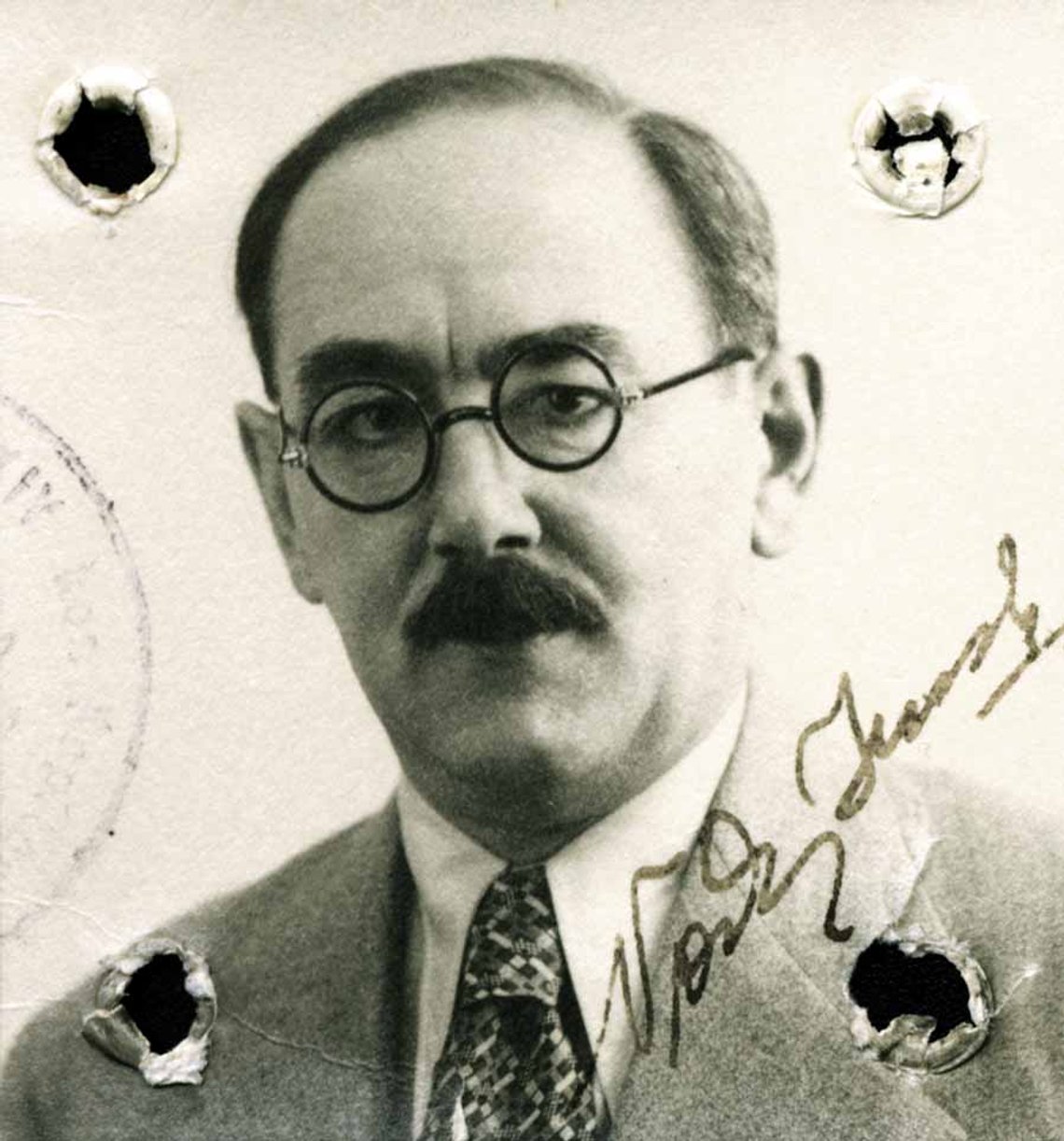
Imre Nagy. Photo: Fortepan – ID 74226
Following Stalin’s death in 1953, there was a certain degree of relaxation. Imre Nagy, a more reform-minded socialist, served as Prime Minister for a short period, but Rákosi and the hardliners removed him from office in 1955.
In February 1956, Nikita Khrushchev’s secret speech, in which he condemned Stalin’s crimes, sent shockwaves throughout the Eastern Bloc. In Poland, this led to the Poznań riots in June, and when Władysław Gomułka took over as party leader in the summer of 1956, the country gained a degree of national autonomy.
The Hungarians followed developments in Poland closely. Rákosi’s position was weakened, and in July 1956 he was replaced by Ernő Gerő – a hardliner himself, but one who failed to establish the absolute control that Rákosi had enjoyed.
Less socialism, more freedom
On the afternoon of 23 October 1956, thousands of students gathered in Budapest to show solidarity with Poland. They carried Polish flags and demanded democratic reforms. The demonstration grew rapidly. People flocked to join, and the procession moved towards the parliament and the radio building. During the march, the demands became more radical: Free elections, the withdrawal of Soviet troops, the abolition of the ÁVH, the reinstatement of Imre Nagy, less socialism, more freedom.
When the demonstrators attempted to have their demands read out on the radio and broadcast, they were met with gunfire from the secret police. Several were killed, and the news spread like wildfire. During the night, fighting broke out in Budapest. Workers, students and soldiers seized arms depots. The Soviet monument to Stalin on Felvonulási tér (Parade Square) was toppled and destroyed.
The Hungarian Revolution of 1956 was a major uprising that took place in Hungary against the Soviet-backed government led by the Hungarian Communist Party. The revolution, which began on 23 October 1956, was triggered by a series of political and economic grievances, including… pic.twitter.com/SgHGKDugVv
— Historic Vids (@historyinmemes) 20 June 2023
The rebels raised the Hungarian flag with the communist symbol cut out – the famous ‘hole in the middle’.
1/5
THE MOST PRECIOUS
TREASURE OF THE HUNGARIANS!23 OCTOBER 1956. HUNGARY
REVOLUTION &
FIGHT FOR FREEDOM!
The mass demonstration in Budapest on 23 October was turned into an armed uprising by the hostile reaction of the Communist Party leadership pic.twitter.com/EndNIZvGCt— Ladislaus (@Leslie1899x) 22 October 2025
The government faltered and Gerő asked Moscow for help. On 24 October, Soviet soldiers marched into Budapest. This strengthened the Hungarians’ resolve to resist – large numbers of Hungarian soldiers defected to the rebels.
Surprisingly, it appeared that the revolution had triumphed …
In an attempt to calm tensions, Imre Nagy was brought in as Prime Minister on 24 October. He initially tried to stick to the party line, but was quickly swept along by events. On 28 October, he declared a ceasefire, promised reforms and demanded that the Soviet forces withdraw. Surprisingly, the Soviet soldiers began to withdraw, and for a while it looked as though the revolution had triumphed.
In the days that followed, Hungary experienced an explosion of freedom. A multi-party system was reintroduced, political prisoners were released and workers’ councils took control of factories. Freedom of the press flourished. The radio broadcast open debates. In the provinces, local Communist authorities were overthrown. On 1 November, Nagy declared that Hungary was withdrawing from the Warsaw Pact to become a neutral country modelled on Austria.
When the empire was challenged, it responded with tanks
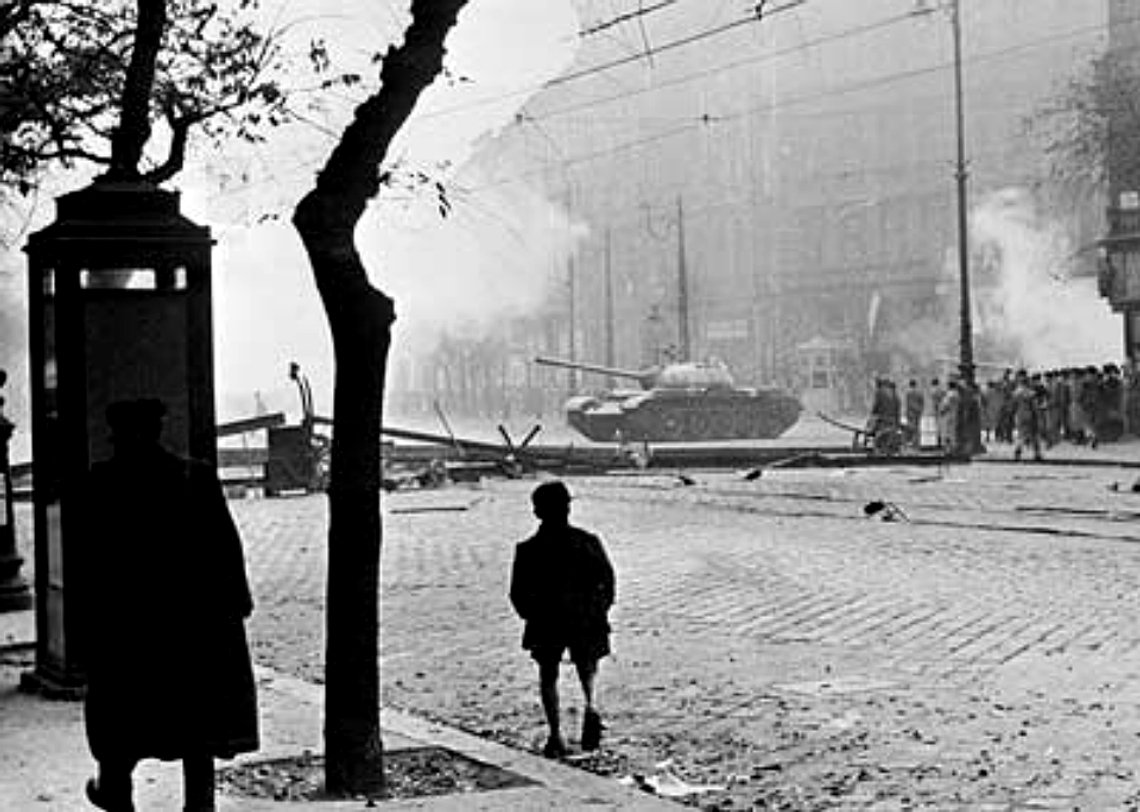
Photo: CIA, Wikimedia Commons
But Moscow had never intended to let Hungary go. Early in the morning of 4 November, the Soviets launched their second invasion. The street fighting was desperate; the rebels fought T-54 tanks with Molotov cocktails and firecrackers.
#OTD 1956: #Soviet troops enter #Hungary to put an end to the Hungarian revolution against the Soviet Union that began on 23 October. Thousands are killed, many more are wounded, and nearly a quarter of a million flee the country. #ColdWarHist pic.twitter.com/UaI9tulCIa
— Politics & Contemporary History at Salford (@SalfordUni_PCH) 4 November 2018
Imre Nagy sought refuge in the Yugoslav embassy, together with a number of his colleagues. János Kádár, who had initially supported the reforms, formed a new pro-Soviet government and labelled the uprising a ‘counter-revolution’. The resistance continued for several days, and was particularly strong in working-class districts such as Csepel, but it was doomed to failure – and what followed was a cold and systematic reprisal.
Aftermath and bloodshed
Official figures estimate that around 2,500 Hungarians were killed during the fighting, whilst over 20,000 were wounded. Soviet losses were estimated at around 700 men. More than 20,000 people were arrested. Between 200 and 350 were executed, including Defence Minister Pál Maléter. Before the borders with Austria were sealed off with barbed wire and minefields, an estimated 200,000 Hungarians fled – roughly two per cent of the population, many of whom were the country’s best-educated young people. The ÁVH was re-established, but under a new name, and a wave of arrests followed. Over 13,000 were interned and hundreds were executed in the years that followed.
Imre Nagy was lured out of the embassy with the promise of safe passage, but was immediately arrested, transported to Romania and, on 16 June 1958, hanged, along with several of his colleagues. The bodies were dumped in unmarked graves.
The West’s rhetoric of freedom became empty phrases
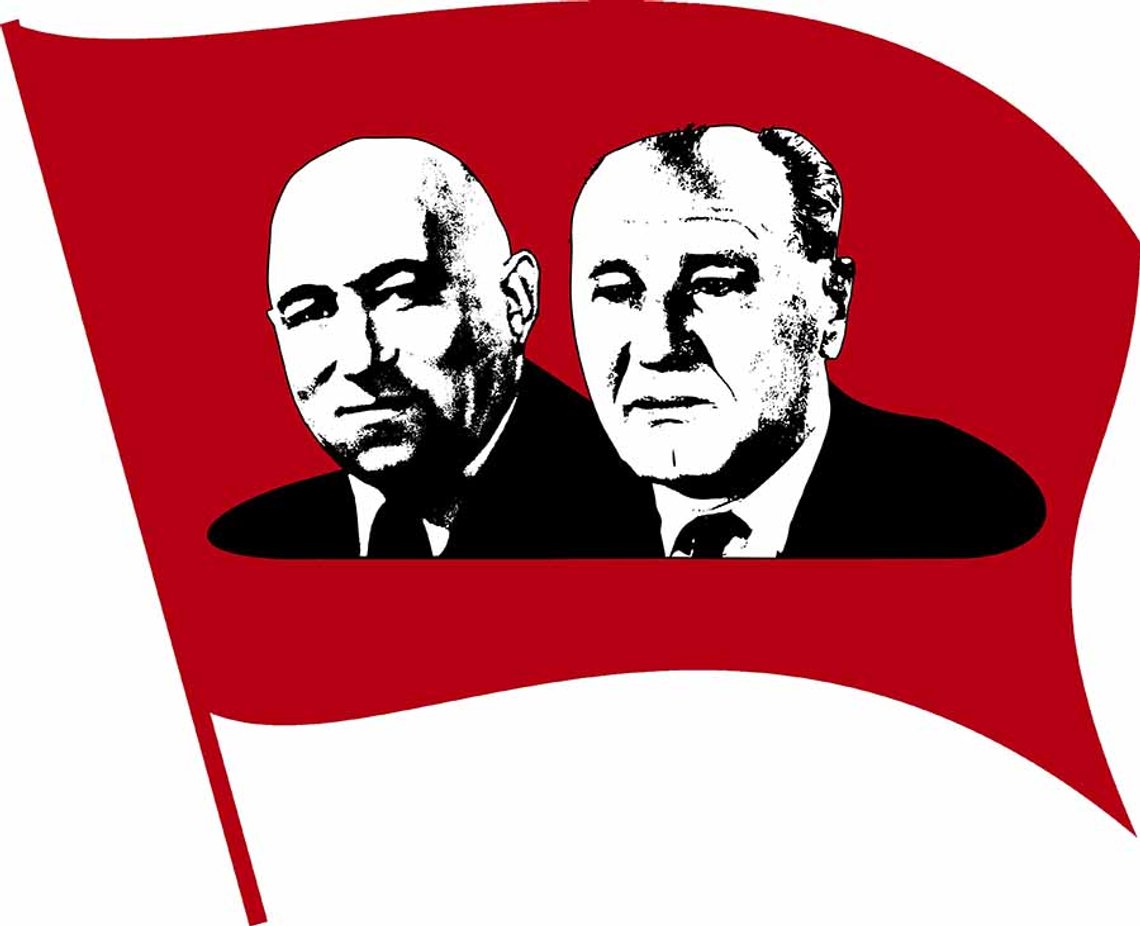
Mátyás Rákosi and János Kádár. Illustration: Jgaray, Oppashi
János Kádár remained in power for over thirty years. Following the initial harsh repression, he adopted a more pragmatic approach – so-called ‘goulash communism’ – which gave Hungarians a higher standard of living than was found in most other Eastern Bloc countries, provided, of course, that they refrained from political opposition.
The Hungarians also learnt a lesson in realpolitik: the West’s rhetoric of freedom turned into empty phrases when confronted by the military might of the Soviet Union.
The 1956 uprising was a crushing moral defeat for the Soviet Union and for socialism/Marxism/Leninism/Stalinism in Europe. The illusion that socialism was a movement driven by the working class was shattered when tanks fired on workers defending their jobs in Budapest. Across the Western world, intellectuals and trade unionists left the Communist parties in protest – a ‘breakaway’ that could not be mended until the socialists of the Western world found new allies in Islamofascism.
Later, when communism fell in 1989, Imre Nagy was rehabilitated and reburied with full honours.
23 October is now a national public holiday in Hungary, a testament to a nation that refused to bow its head to a godless tyranny, a nation that fought for its freedom against impossible odds.
🇭🇺 Honouring the heroes of 1956 worldwide!
On 23 October, Hungary marks the 70th anniversary of the 1956 Revolution. Our diplomatic missions around the world are hosting commemorative and cultural events.
Explore the programmes via the link in the comments. pic.twitter.com/XedeGJAde5
— Ministry of Foreign Affairs of Hungary (@MFAHungary) 20 October 2026