

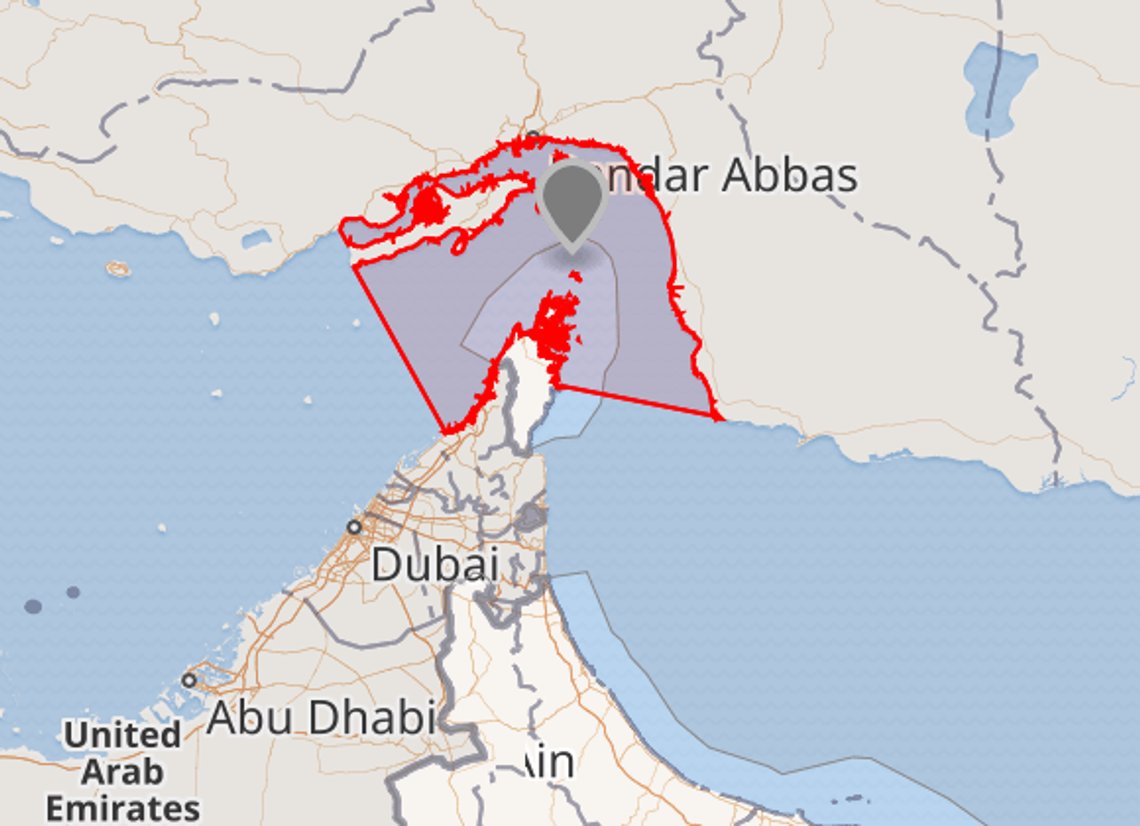


The United States has launched a wave of daytime air strikes on Iran. The renewed attacks are continuing.
The latest US strikes began at around 1.30 p.m. local time, following a series of bombing raids over the past week that largely took place at night.
The United States Central Command (CENTCOM) stated that the operation struck coastal defence systems as well as cruise missile storage and launch facilities on the island of Greater Tunb in the Strait of Hormuz, writes The Telegraph.
Air strikes carried out in broad daylight demonstrate the United States’ complete air superiority, and may in themselves be regarded as an intensified threat.
Earlier today, Iran’s Islamic Revolutionary Guard Corps stated that it had responded to the attacks by launching missiles at US military facilities in Kuwait, Jordan and Bahrain.
Iranian state media reported that logistics, fuel and military equipment facilities used by the US Navy’s Fifth Fleet in Bahrain were among the targets.
There are therefore strong indications that the Iran war is on the verge of escalating dramatically, after a lengthy ceasefire that has failed to produce any significant progress in the negotiations.
Overnight, US President Trump repeated his threats to strike Iranian infrastructure unless Tehran returned to the negotiating table.
“Next week is going to be really bad for them. We are going to knock out all their power stations. We are going to knock out all their bridges, unless they come to the negotiating table and negotiate,” the US President said.
Trump also withdrew his plan to introduce a 20 per cent charge on vessels passing through the strait, a proposal that provoked strong reactions.
An agreement concerning traffic through the Strait of Hormuz was reached in mid-June, but the United States and Iran have been unable to agree on what the agreement actually entails.
The developments have led to a sharp increase in oil prices.
At the same time, the Houthi rebels in Yemen are preparing to close the Bab el-Mandeb Strait on Iran’s behalf. This would pose a serious threat to oil traffic through the Red Sea, which Saudi Arabia, among others, has used as a temporary emergency alternative since the war began.
The Houthis are among Tehran’s most capable proxy fighters, who fight Iran’s battles as paid surrogates, while laying the groundwork for expanding its influence into the Horn of Africa, according to sources in Yemen.
The Houthis will cooperate with al-Shabaab, the Somali Islamist terrorist group. The aim is to inflict further damage on the global economy and increase the pressure on Donald Trump.
This is a deliberate Iranian attempt to control “the other side of the Red Sea” and create a scenario resembling Iran’s grip on the Strait of Hormuz, which lies on the opposite side of the Arabian Peninsula, the source told The Telegraph.
Trump and the Republicans are also under pressure, and will no doubt wish to end the war as well in advance of the November midterm elections as possible.
In the worst-case scenario, Trump risks losing the majority in both the Senate and the House of Representatives, which would create problems for the Trump team during the final two years of Trump’s time in the White House. However, US opinion polls have previously proved rather unreliable.
A clear majority of American voters are dissatisfied with the war in Iran, according to opinion polls as well. High fuel prices in particular are troubling a country dependent on the motor car.


