

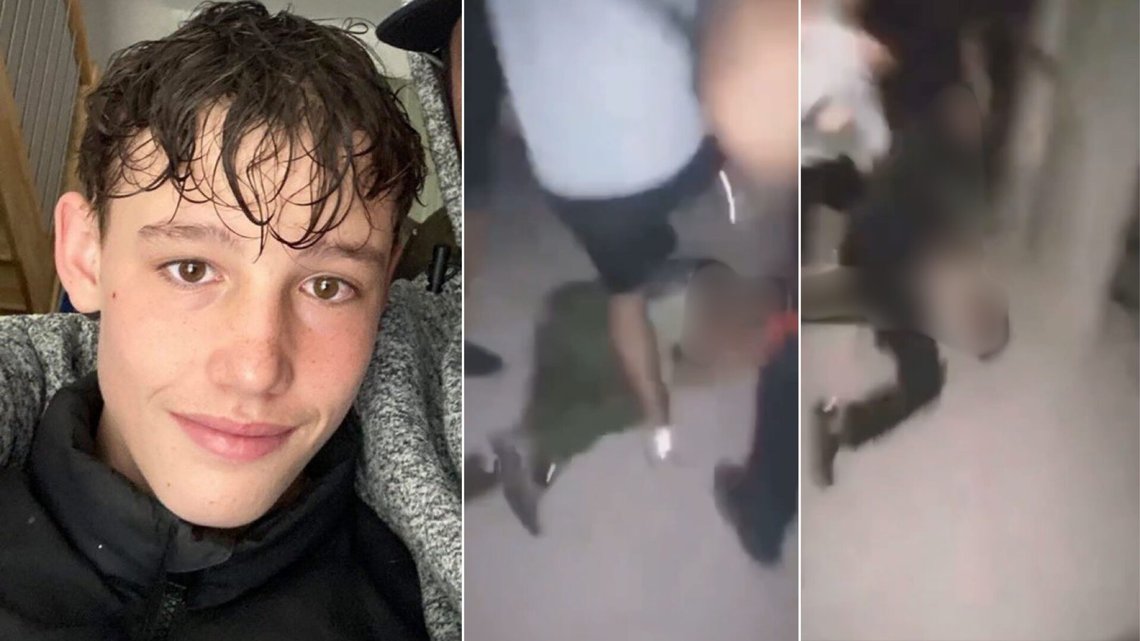


Following the grotesque murder of Louis (17) in Narbonne, France, in June, the country’s child protection system has come under intense scrutiny. It has emerged that three of the five young killers were, or had previously been, in the care of the child protection authorities before the crime.
A report on the child protection system by an official commission of inquiry in April 2025 prompted French parliamentarian Isabelle Santiago, a Socialist, to say that the state is the parent in France that fails children the most. Maud Petit, a social liberal member of parliament, has described the child protection system as “a machine that crushes children”.
But now a new testimony has emerged: Speaking to Le Figaro, a child protection worker in Normandy paints a veritable horror story from inside a child welfare system on the verge of collapse. The question that haunts her is: Does the agency do more harm than good?
Other well-known incidents had already caused concern:
In February, a 13-year-old boy was beaten while lying on the ground screaming, filmed by other children at a children’s home in Châlons-en-Champagne.
Last December, another video shocked France. It showed an eight-year-old boy, bare-chested, sitting on a chair while a care worker cut his hair as punishment at the Jenner home in Paris.
But the French media normally do not investigate the issue in depth:
They do not report on the suicides of neglected teenagers, the lack of child psychiatric care, the overcrowding in certain residential homes, the dramatic shortage of carers, the phenomenon of prostitution among young girls in foster care who are regarded as prey by criminal networks … All these phenomena are described by the experienced journalist and documentary filmmaker Claude Ardid in his gripping investigative book La Fabrique du malheur (Éditions de l’Observatoire, 2025). With unsparing clarity and deep empathy, he recounts shattered lives, such as that of Méline, 11, the daughter of a heroin dealer, who was harassed at the institution where she had been placed and hanged herself in her room.
In some French départements, recruitment into prostitution takes place in a majority of children’s homes, Ardid says.
The authorities appear not to want to know too much about what happens to the 400,000 children for whom the state is responsible:
“There has never been any political will to quantify violence in institutions,” laments Michèle Créoff, lawyer and former vice-president of the National Child Protection Council.
The child protection worker whom Le Figaro calls Lili describes a catastrophic staffing situation within the service. There is a shortage of personnel, many quickly burn out, and the constant turnover of staff, many of them poorly qualified, prevents children from receiving the care they need.
“You cannot imagine what it means for a child to have a child protection worker for only two weeks,” she says. The lack of continuity means that the children soon no longer know who is actually responsible for them.
Work with families and the development of a care plan for the child, which lies at the heart of her profession, also suffers as a result. “Restoring ties with a parent in order to facilitate the child’s return to the family where possible does not happen overnight. If child protection workers change every week, it becomes complicated. Long-term plans cannot exist under such conditions,” Lili laments.
“The child’s individual care plan, a document that makes it possible to tailor their pathway, has been prepared for only 20 per cent of children in foster care, even though this has been a legal requirement since 2007,” confirms Michèle Créoff.
The job is not for amateurs who come and go:
“These are not only children who have been abused or neglected, but also children with severe behavioural disorders, oppositional behaviour, violence and disabilities.” Like Louis, who had attention deficit hyperactivity disorder (ADHD), around one quarter of the children monitored by the child protection services have a disability.
But the system prefers not to know about the problems:
Since she started, she has often returned home in the evening “covered in bruises” after dealing with major crises and behavioural disorders. “Sometimes you have to hold the children down on the floor to stop them attacking the others,” she says. It is a taboo subject that professionals in the child protection sector are reluctant to discuss.
Night staff are often unqualified for the job, Lili says. And many fail to keep track of who leaves late in the evening or during the night. The path to prostitution or violence then becomes very short.
Sooner or later, the bill comes due. Seventeen-year-old Louis paid the highest possible price.
The number of child protection cases in France has increased by 50 per cent over the past twenty years. Le Figaro notes that mass immigration, including unaccompanied minors, forms part of the explanation. That was not difficult to imagine.
The question a Norwegian must ask is whether the conditions being exposed in France also exist in our own country. The public’s appetite for finding out is not particularly great in Norway either. The days of Arne Skouen are long gone. And woe betide anyone who points to the darker sides of multiculturalism or to a state that is failing to do its job.


