

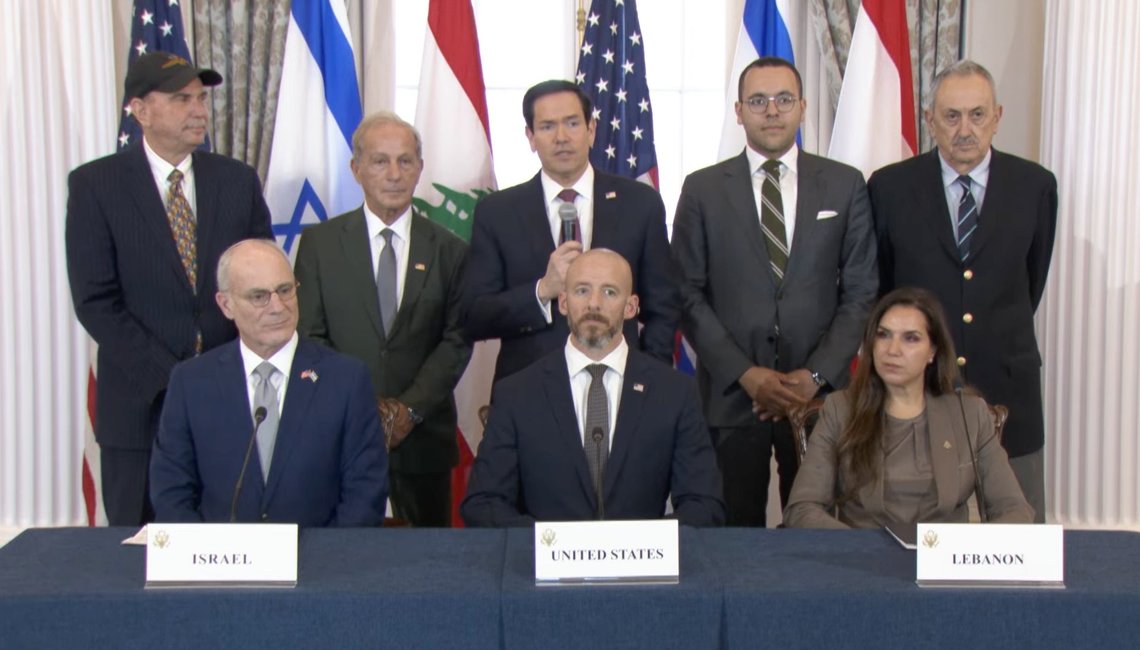
Lebanon and Israel have, through U.S. mediation, reached the first stage of a peace agreement between the two countries. The Lebanese Armed Forces are to disarm Hezbollah, and Israel will only fulfil its part of the agreement once that has happened. If successful, it would mark the end of Hezbollah’s role as a non-state power in Lebanon. Iran would lose its most important card.
Israeli Defence Minister Israel Katz said on Saturday that the U.S.-backed framework agreement between Israel and Lebanon “constitutes a strategic blow to the Iranian axis.”
“The important principle established in the agreement is that there will be no redeployment of Israeli forces in southern Lebanon and no withdrawal so long as the Hezbollah terrorist organisation has not been disarmed throughout Lebanon and the security of the residents of the north is guaranteed,” Katz said in a statement. “This is the fundamental condition that Prime Minister Benjamin Netanyahu and I pledged to uphold, and we are honouring it.”
“The agreement also deals a strategic blow to the Iranian axis. Iran tried to force an Israeli withdrawal from Lebanon through threats and pressure on the United States – and failed,” Katz continued.
“Instead, a framework agreement has been established, signed by the United States, Israel and Lebanon, which mandates the disarmament of Hezbollah throughout Lebanon and makes it clear that Lebanon’s future will no longer be dictated by Iran and Hezbollah,” he added.
Katz also said: “Should Iran attempt to attack Israel in order to prevent the implementation of the agreement, we will strike back with great force and demonstrate the existing disparity in power between us,” adding that he and Netanyahu “have instructed the IDF to prepare for an extended stay in the security zone, and to be ready to protect IDF soldiers and eliminate threats to the communities in the north.”
Lebanon has now chosen sides. It no longer wishes to remain an appendage of Hezbollah and Iran. For the first time, it has broken free from Hezbollah’s grip.
Secretary of State Marco Rubio said on Friday that Hezbollah, “Iran’s most dangerous proxy, has repeatedly dragged Lebanon into devastating wars against the will of its government and people, most recently in March this year,” after Operation “Epic Fury” was launched.
“They have built up an extensive military infrastructure in Lebanon, launched tens of thousands of rockets and drones at Israeli cities, and played a key role in the destruction of Syria,” Rubio said of the terrorist organisation. “Hezbollah also plots attacks against Americans, supports narcotics trafficking networks that fuel violence in our hemisphere and in the United States, and directly threatens American citizens and interests around the world.”
Rubio added that “the governments of Israel and Lebanon made a bold decision to agree on a framework that creates a realistic path out of the endless conflict,” and that “this agreement establishes a clear and structured process for restoring Lebanon’s sovereignty, disarming Hezbollah and dismantling its terrorist infrastructure, while enabling Israel to return to its borders as soon as the threat to its citizens has been removed.”
Hezbollah has reacted strongly.
Hezbollah leader Naim Qassem on Saturday criticised the U.S.-backed framework for peace and security between Israel and Lebanon, calling the agreement a capitulation to Israel, according to a Reuters report.
Qassem issued a statement describing the agreement as “invalid” and criticising the provisions linking Israel’s withdrawal from southern Lebanon to the disarmament of Hezbollah, claiming that it supports Israel’s military presence and crosses “all red lines”, Reuters reported.
“We did not leave the battlefield under the most difficult circumstances, and we will not leave it,” Qassem reportedly added.


