

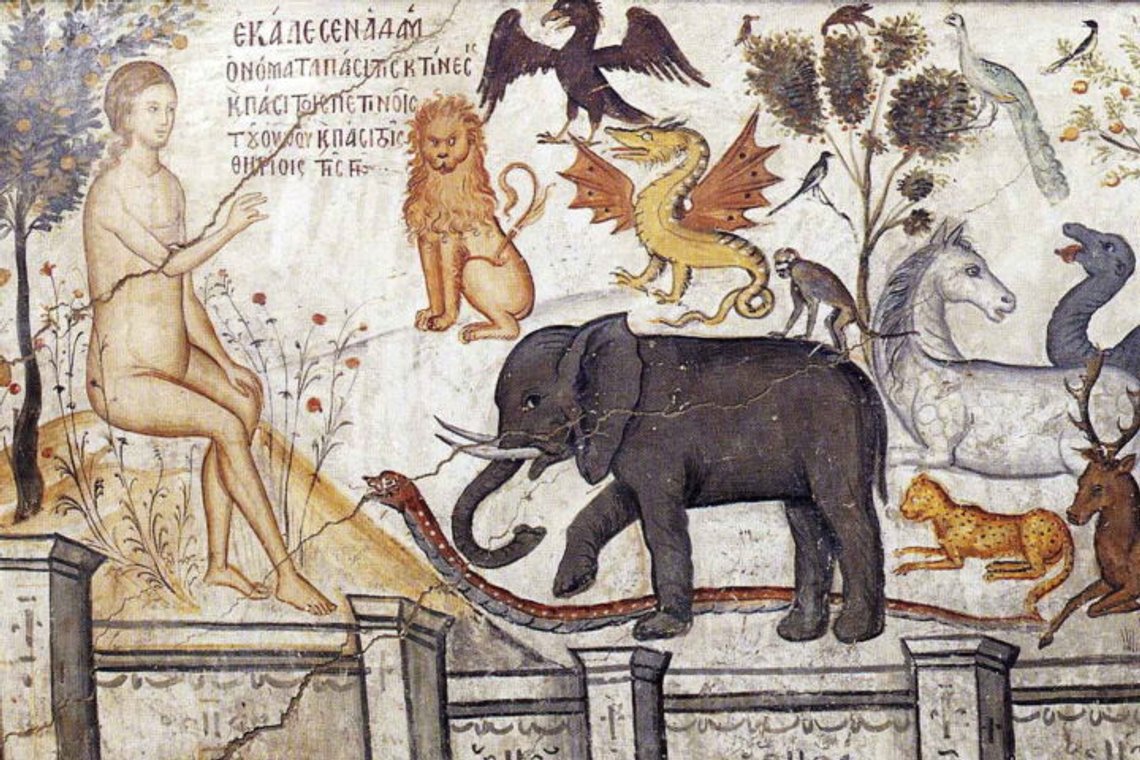
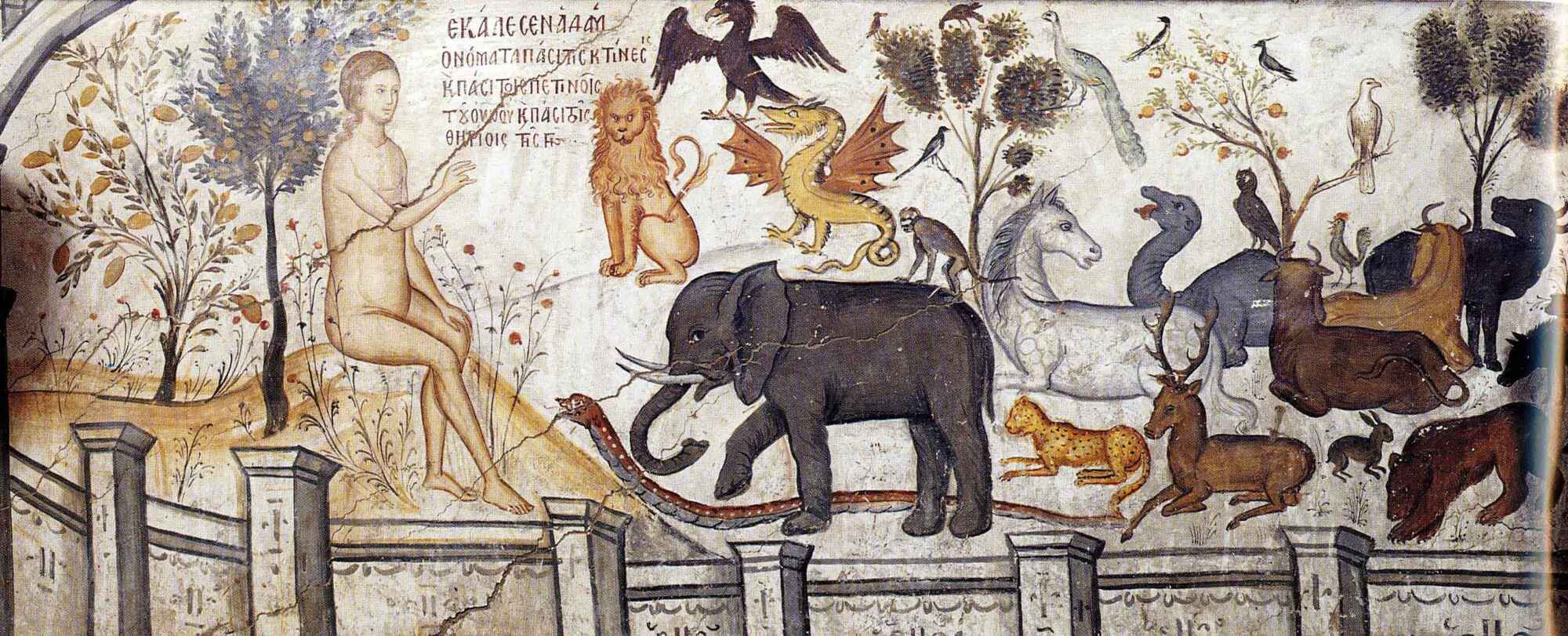
 Theophanes the Cretan (1490–1559), “Adam Naming the Animals”, fresco in the Monastery of Agios Nikolaos Anapafsas, Meteora, Greece.
26 Then God said, “Let us make mankind in our image, in our likeness, so that they may rule over the fish in the sea and the birds in the sky, over the livestock and all the wild animals, and over all the creatures that move along the ground.” 27 So God created mankind in his own image, in the image of God he created them; male and female he created them. 28 God blessed them and said to them, “Be fruitful and increase in number; fill the earth and subdue it. Rule over the fish in the sea and the birds in the sky and over every living creature that moves on the ground.”
Genesis 1:26–28
We are now in what, in the church year, is called Trinitytide. More precisely, the Fourth Sunday after Trinity.
From a political perspective, there are few questions more fascinating than the significance of faith for society’s political institutions.
In classical Christian belief, it is not possible to grant the state complete freedom, even if it is the majority that has given it the legal basis for its actions. God’s will, that is, the limits of morality, also concerns the state. For the Triune God is not an absolute ruler, but a holy triune fellowship. He is a God with a clear purpose: He desires that man, whom He created in His image, should encounter Him as the point of departure of love, and for that purpose dictatorship or absolutism is not a suitable arrangement.
When faith is a part of our lives, it is natural to draw certain boundaries between what Luther calls the temporal regiment, that is, the public sphere or the state, and the spiritual regiment, that is, the Church.
Even if, for example, a state takes over the educational system of society, it cannot fill the schools with whatever content it wishes. It cannot become master over areas that, at the deepest level, belong to the spiritual regiment. If it does so, it becomes corrupted as a state.
Bishop Eivind Berggrav discusses this subject in the lecture “When the Coachman Is Mad”. The lecture was delivered in the spring of 1941 at clergy and parish gatherings and was intended to clarify a difficult Protestant understanding concerning “obedience to the authorities”.
In 1941, Norway was occupied by Germany, and Nazism was the ethical foundation of the state. The coachman was mad, as Eivind Berggrav so aptly described it. We are not in such a situation today, but there are certain similarities that we cannot ignore, and the question for us is the same as the one Eivind Berggrav posed then. How are we to conduct ourselves in relation to a state that perceives itself as the point of departure of ethics and that invades the spiritual regiment with demands regarding how we are to understand faith and ethics?
Berggrav writes that God has established a sharp distinction between the regiment concerned with order and the regiment concerned with souls. The reason is that if this distinction is not maintained, Satan will be the one who benefits. He will be able to rule in both kingdoms. If the state seeks to take control of souls, it enters God’s domain, and if the Church seeks temporal power, it becomes possessed by evil. Berggrav believes that the danger is equally great for both. Both bishops and government may come to serve the Devil.
Eivind Berggrav is extremely precise when he speaks of Satan’s speciality:
He points out that the satanic is the lust for power in all its forms and manifestations, power for the sake of power without ethical norms, the will to power apart from God’s will, and power without right.
Therefore, the power of the majority does not become more ethically acceptable when the question under discussion is abortion or the introduction of radical gender theory into society. It becomes a dictatorship of the majority, just as wrong as a dictatorship of the minority or absolutism.
Berggrav believes that God’s division of the regiments serves the cause of peace and freedom. The Church and the authorities cannot do without one another if peace and freedom are to be maintained.
The state should not seek to direct souls, but should base its legislation on the value that God says man possesses, and it is the Church that is to guide the state in such matters. In the same way, the Church should not interfere in temporal matters.
Berggrav feared a state that wished to be total, as we see today. The majority of states in the West today grant themselves the right to demand that people submit to a given understanding of reality. But then, according to Berggrav, we unleash the Devil. He believes that such a state claims the radiance of the holy and places itself in God’s stead.
This is a form of state that we see emerging ever more clearly in the West. Right is no longer the point of departure for power. When power comes before right, we are in the kingdom of evil. Luther calls it tyranny, and the state of tyranny is like a mad coachman or a runaway horse.
The question then becomes how we, as citizens, are to relate to this.
Berggrav was clear in his advice: Whoever remains silent becomes complicit in the abuses. He betrays the task that we have all been given.


