

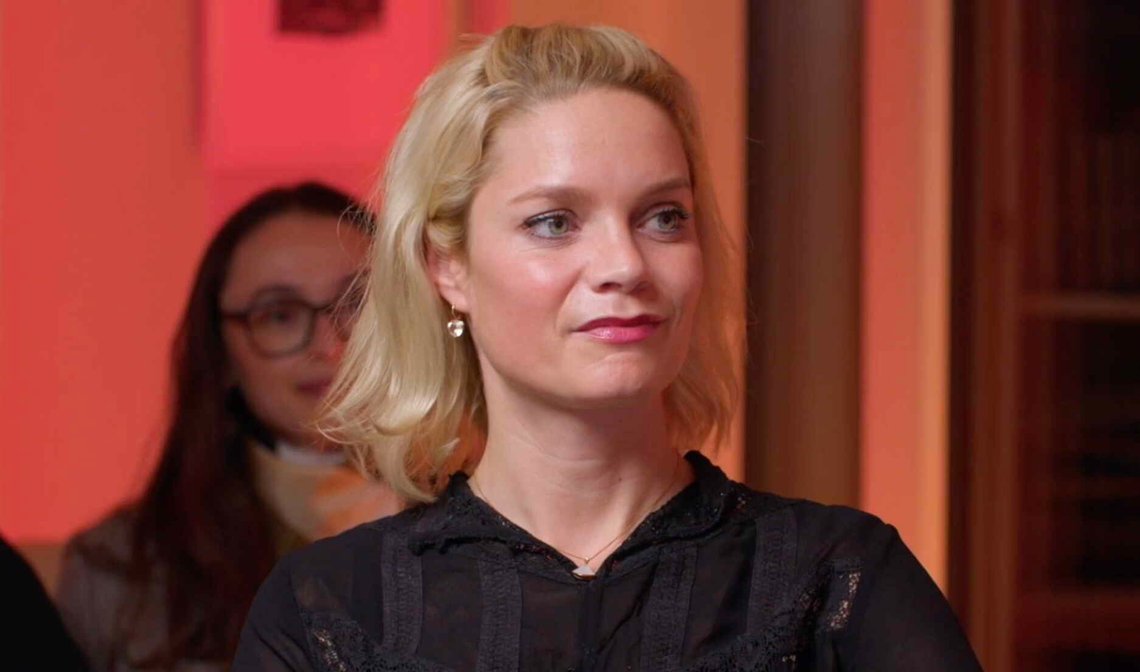


In a new book by the investigative journalist Liv von Boetticher, resigned German police officers recount how Germany is in the process of being lost as a result of failed immigration policy.
It is in Wir verlieren dieses Land (We Are Losing This Country), which was published during the past week, that the well-known RTL journalist summarises testimonies she gathered after meeting countless police officers throughout Germany. The book immediately rose to the top of the bestseller list in its genre on German Amazon.
In an interview with news editor Kerstin Rottmann in Die Welt on Friday, von Boetticher says that the police experience a loss of control and a sense of powerlessness, and feel abandoned by the authorities.
Among police officers, migration is a topic everywhere. “We have a problem with crime committed by foreigners,” runs a recurring refrain, and von Boetticher quotes a high-ranking police officer as saying that “Germany lies open to robbery and rape”, and that migrants often get off lightly after committing serious crimes.
Such statements are, however, made only anonymously and with recording equipment switched off. The police officers are afraid of being labelled right-wing extremists.
Some have the feeling that they are engaged in Sisyphean labour, von Boetticher relates:
There was a female officer who, I believe it was eight times, had checked the same person during an attempt to cross the border. The man, who came from Turkey, essentially told her every time that he was bored in the camp and wanted to go to Germany. And the ninth time, the man mentioned the word “asylum”. And then, she told me with astonishment, she had to forget the previous eight occasions and initiate the measures she was legally obliged to carry out. And from that moment on, there was no longer any “way out”. That person is, so to speak, “in the game”, and from then on in the country. I was speechless. And I asked her: “Do your superiors know this?”
What was the answer?
“Yes, of course, we report all of this upwards,” she said. That means that we actually possess a great deal of information about the status quo. But those who experience this first-hand have, because of their positions as civil servants, hardly any opportunity to speak openly about it. In addition comes the filter imposed by the press office.
The investigative journalist has previously exposed how language certificates are falsified and how Afghans with asylum in Germany travel on holiday to their home country, the latter something the police find difficult to prove because data protection rules prevent them from examining suspects’ telephones.
The persistently high level of immigration and the granting of citizenship make it difficult to keep pace with developments.
Several officials, including very senior officials from German security authorities, have told me: One ought really to review the naturalisations granted during the past five years retroactively and, for the time being, suspend them, as well as the granting of residence permits and everything that requires language certificates and the “Leben in Deutschland” test. This also includes family reunification, among other things. The granting of citizenship is only the tip of the iceberg. The relevant certificates can, as I have investigated, be purchased via TikTok. Or one sends stand-ins who resemble oneself to sit the examination. This was reported to me, for example, from North Rhine-Westphalia.
There are methods for avoiding detection:
It is quite simple: Person A sits the examination on behalf of Person B. The certificate is then genuine – but issued to the wrong person. And the business is flourishing: Recently, an official told me that the police were present at an examination centre during a test, and when the candidates saw this, they went to the lavatory during a break and disappeared. Not a single examination candidate returned. This has happened several times. And when we published my investigation, a police officer told me that he thought he would receive a telephone call from the Interior Minister of North Rhine-Westphalia the following day, asking: “Are we aware of this problem?” But nothing happened; no enquiry was made. So here too, nothing has happened. And that frightens me.
Some have lost hope that matters can be put right at all:
Some police officers have also told me, verbatim: “We have already lost this country” or: “This country is finished.”
Von Boetticher herself has not lost all hope:
This is a process that is unfolding, and theoretically there is still a chance to achieve a reversal. But it must happen quickly.
One of your sources made the following prediction: “We may have ten years left before the situation goes completely out of control.” Do you agree with that?
Well, one can discuss whether it will take that long.
Germany ought to learn from Trump, she believes:
Where there is a will, there is also a way. And all the problems the police officers have mentioned to me can also be solved through creativity. Donald Trump, for example, froze aid to Guatemala, Honduras and El Salvador in 2019 because, in his view, those countries were doing too little to prevent migration to the United States – the measure produced results. In the case of Syria, Afghanistan and various African states, similar methods could, in my opinion, be considered.
But an experience she had together with a police officer in Stuttgart demonstrates that Germany is far from employing an iron hand:
At the railway station, we encountered a man from Africa. He had no valid papers on him, had previously been in prison, yet steadfastly refused to go to the appropriate immigration authority. And in the end, the police officer said something to the effect of: “Yes, OK, I have now told you that you must go there, but there is nothing more I can do, so have a nice day.”
Von Boetticher also advocates tougher penalties, and she recounts that Afghans, in a sense, agree with this as well, since sharia laws would, in their view, have a deterrent effect.


