

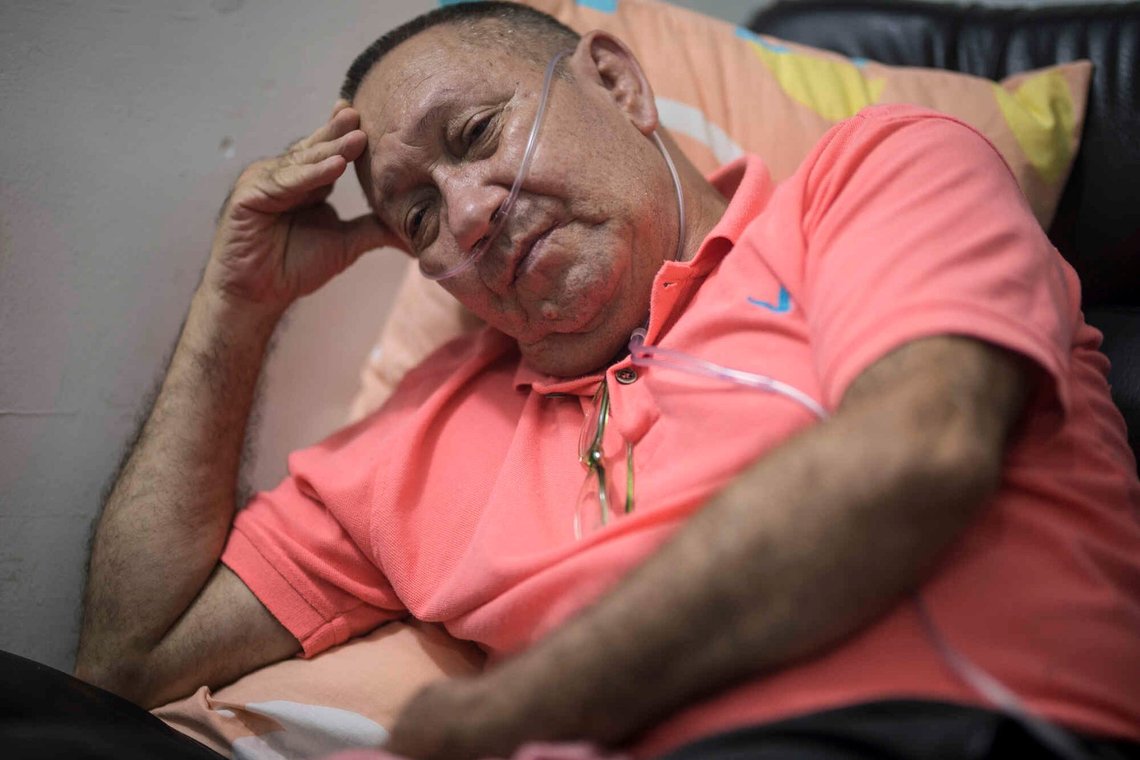
Active euthanasia is often presented as the most humane response to unbearable suffering. But a society’s moral maturity is measured not only by its capacity for compassion. It is also measured by its ability to protect human dignity when suffering is greatest, dependence deepest, and utilitarian reasoning most tempting.
A debate that has entered Norwegian politics
The debate on active euthanasia is no longer a marginal phenomenon in Norway. In March 2026, a private member’s bill was submitted to the Storting proposing an investigation into whether and in what manner the right to self-determined life termination could be incorporated into Norwegian law. The matter has been referred to the Standing Committee on Health and Care Services and demonstrates that the issue is now being treated as a genuine legislative matter, not merely as an ethical thought experiment. At the same time, the Norwegian Medical Association has devoted considerable attention to the question and has described it as a profoundly ethical, not merely technical, dilemma.
It is not difficult to understand why the issue provokes such strong reactions. When a person is in severe pain, suffering from anxiety, breathlessness, a sensation of suffocation or a total loss of control, it seems intuitively merciful to ask whether that person should not be allowed to go. Precisely here lies the strongest argument for active euthanasia: not in hardness, but in compassion. And precisely for that reason the debate must be conducted with all the greater intellectual and moral seriousness. What springs from compassion may nevertheless have consequences that exceed the original intention.
The decisive distinction
In Norwegian law and medical ethics, a decisive distinction still exists between allowing death to come and actively causing it. The Norwegian Directorate of Health states that a patient may refuse treatment when there is no prospect of recovery or improvement, but only a certain extension of life that in reality prolongs an ongoing dying process. This provision is justified by respect for the patient’s right to a natural and dignified death. Active euthanasia, on the other hand, is not permitted.
This distinction is not semantic but normative. One concerns refraining from futile treatment and providing relief at the end of life. The other concerns redefining death from an existential and medical endpoint into a legitimate, planned instrument. When the Norwegian Medical Association emphasises that doctors should not perform euthanasia, this is therefore not an expression of a lack of empathy, but of a particular understanding of the profession’s moral mandate. Healthcare is to relieve suffering, provide care and accompany the dying; it is not to be transformed into an institution whose task also includes ending life.
Christian ethics and the inviolable value of human beings
Here Christian ethics has a particularly clear voice. The Church of Norway describes human dignity as the inviolability of human life and the equal value of all human beings, and emphasises that the concept is rooted in Jewish and Christian teaching. This is more than a pious formulation. It is an anthropological and normative fundamental principle: human beings do not possess value because they are healthy, autonomous, productive or inexpensive to care for. Human beings possess value because they are human.
The Church of Norway has also over time treated euthanasia as a fundamental ethical question. In the Church’s own educational material on life and death, reference is made to extensive work undertaken in connection with the General Synod (Kirkemøtet) of 1998, the purpose of which was precisely to illuminate euthanasia from several perspectives while also drawing attention to what can give life quality even in its final phase. This is an important point: Christian ethics does not respond to suffering with indifference, but with active assistance to life. It seeks to protect life without denying the reality of suffering.
This distinction is equally clear in Catholic ethics. Katolsk.no emphasises that one may not take a person’s life, regardless of motive, but that neither is one obliged to employ every conceivable means of prolonging life in its final phase. This is an important clarification at a time when opposition to active euthanasia is often incorrectly portrayed as a demand for maximum treatment at any cost. Christian ethics, on the contrary, upholds both the sanctity of life and the right to refrain from disproportionate treatment.
The limits of autonomy
A central argument for active euthanasia is autonomy: the right to determine one’s own life and death. This argument is serious and cannot be dismissed with facile slogans. Yet autonomy in the medical-ethical sense never exists in a vacuum. Choices are made in light of fear, pain, depression, hopelessness, relational bonds and the experience of being a burden. Therefore, the question of euthanasia is never merely a question of individual freedom; it is also a question of asymmetric vulnerability. The most vulnerable do not choose under the same existential conditions as the strong.
Here Christian ethics serves as a corrective to the modern notion that self-determination is always the highest good. Human beings are not merely autonomous individuals but relational beings, bound to others and held accountable within communities. When society opens the door to death being offered as a legitimate solution, it does not merely reshape the options available to individuals. The entire cultural understanding of dependence, weakness and the need for care is altered. What is formally offered as freedom may in practice be experienced as expectation.
Demography, dementia and the silent utilitarian ethic
This debate cannot be conducted in isolation from social developments. Statistics Norway’s population projections show that Norway will become significantly older in the decades to come. The Norwegian Institute of Public Health simultaneously reports that approximately 101,000 people currently live with dementia in Norway, and that the number is expected to more than double by 2050. This means that far more families and institutions will face long-term care trajectories characterised by frailty, cognitive decline and extensive care needs.
It is within this landscape that active euthanasia must be assessed. For when a right is established in a society simultaneously characterised by resource scarcity, staffing challenges and growing care burdens, a danger arises that is seldom articulated openly but nevertheless operates culturally: the silent utilitarian ethic. No one need explicitly say that certain lives are “too costly” before elderly people, those with dementia, the seriously ill or those with extensive care needs begin to wonder whether they burden their loved ones or society more than they ought. The most serious danger is therefore not necessarily coercion from above, but internalised pressure from within.
The Norwegian Council for Nursing Ethics expressed a related concern when it warned that legalisation could undermine the right to have needs and the welfare state’s responsibility to provide assistance to all. This is an insight that deserves greater attention. When death becomes a legitimate response to suffering, society’s obligation to bear the suffering person may gradually weaken, not necessarily in legislation, but in mentality.
The experiences of countries that have gone before
Supporters and opponents of active euthanasia often employ international experiences polemically. This is of limited value. Yet such experiences should not be ignored either. In the Netherlands, 10,341 cases of euthanasia were reported in 2025. In Belgium, 4,486 cases were recorded the same year, corresponding to approximately 4 per cent of all deaths. Canada reported that medically assisted death accounted for 5.1 per cent of all deaths in 2024. These figures do not prove that every legalisation necessarily leads to moral collapse. But they do demonstrate that what is introduced as a narrow exception can become a substantial and institutionalised component of a country’s death practices.
The most important issue in principle, however, is not volume alone, but the dynamic itself. Once death has been established as a legitimate course of action, the next question becomes unavoidable: why precisely these criteria? Why not other forms of suffering as well? Why only terminal illness and not also dementia, psychiatric conditions or complex ailments of old age? Legal boundaries are not static. They are challenged, interpreted and pressured. In this way a gradual shift in norms emerges.
When liturgy follows the law
In this context, it is thought-provoking that Dagen recently reported on a Dutch pastor, Pieter Post, who has developed a liturgy for use while patients receive euthanasia. It was not a Norwegian priest but a Dutch pastor whom Dagen wrote about. Precisely for that reason the case is so illustrative: it demonstrates how something initially introduced as a legal permission can later acquire pastoral language, religious framing and ceremonial form. The path from permission to ritualisation is shorter than many imagine.
For a Christian public, this is deeply serious. When liturgical language begins to accompany an act against which the Church has historically warned, it is not merely a sign of pastoral care, but also of theological confusion. Liturgy shapes not only words; it shapes the understanding of reality. If ecclesiastical language is employed to accompany active euthanasia, there is a danger of conferring sacred legitimacy upon a practice that precisely breaks with the concept of life as an inviolable gift.
Public opinion is more nuanced than it sounds
It is true that many Norwegians express support for the legalisation of euthanasia. Yet research also shows that public opinion is far more nuanced than public rhetoric often suggests. The Michael study on Norwegian attitudes demonstrates that the population is most positive towards physician-assisted suicide in cases of terminal illness with a short life expectancy, while very few support euthanasia for mental illness or weariness of life. The study also emphasises that a large proportion of respondents occupy a middle position and do not embrace extreme positions. This is important: many react with compassion when confronted with the most difficult cases, but that does not mean they automatically support broad or principled legalisation.
Among doctors, scepticism is more pronounced. A study published in the Journal of the Norwegian Medical Association found that 36.1 per cent of Norwegian physicians completely reject the legalisation of euthanasia, and that an overwhelming majority would seek conscientious objection rights if euthanasia were to be permitted. This should not be dismissed as conservatism. It may just as easily be read as a warning from those who stand closest to the end of life and therefore understand the field’s vulnerabilities better than most.
What a society owes its weakest members
Christian ethics is not blind to suffering. It does not romanticise pain and does not demand maximum treatment at any cost. But it maintains that the answer to suffering cannot be to make the sufferer the object of a legitimate act of killing. Instead, it insists upon relief, care, presence, freedom of conscience and faithfulness. This is what, in the deepest sense, distinguishes a society that safeguards human dignity from a society that gradually begins to define dignity in terms of quality of life, functionality and utility.
The question, therefore, is not merely whether we can open the door to active euthanasia. The question is what happens to our moral culture if we do so. Who will be the next to begin perceiving themselves as superfluous? Who will protect those who no longer have the strength to argue for their own value? And what happens to a society when it no longer asks first and foremost how the suffering person may be borne, but how suffering may be ended by ending the sufferer?
Ultimately, the strength of a society is measured not by how efficiently it can organise death, but by how faithfully it protects life when life has become difficult to bear. It is here that Christian ethics still possesses its necessary and countercultural voice.
References
1. Stortinget, Document 8:264 S (2025–2026) – Private Member’s Bill on the Investigation of Self-Determined Life Termination.
2. The Norwegian Medical Association, National Council Meeting 2025: An Informative Debate on Euthanasia.
3. Norwegian Directorate of Health, Section 4-9: The Patient’s Right to Refuse Healthcare in Special Situations.
4. The Church of Norway, Human Dignity.
5. The Church of Norway, A Question of Life and Death and Reflection on Euthanasia (General Synod Materials).
6. Katolsk.no, Euthanasia and Respect for Life and Declaration on Euthanasia (1980).
7. Statistics Norway, We Are Becoming More Numerous, But Also Older.
8. Norwegian Institute of Public Health, Dementia and Health Among Older People in Norway.
9. Michael Journal, Norwegians’ Attitudes Towards the Legalisation of Euthanasia.
10. Journal of the Norwegian Medical Association, Attitudes Towards Euthanasia Among Doctors in Norway.
11. Dagen, Pastor Launches Euthanasia Liturgy.


