

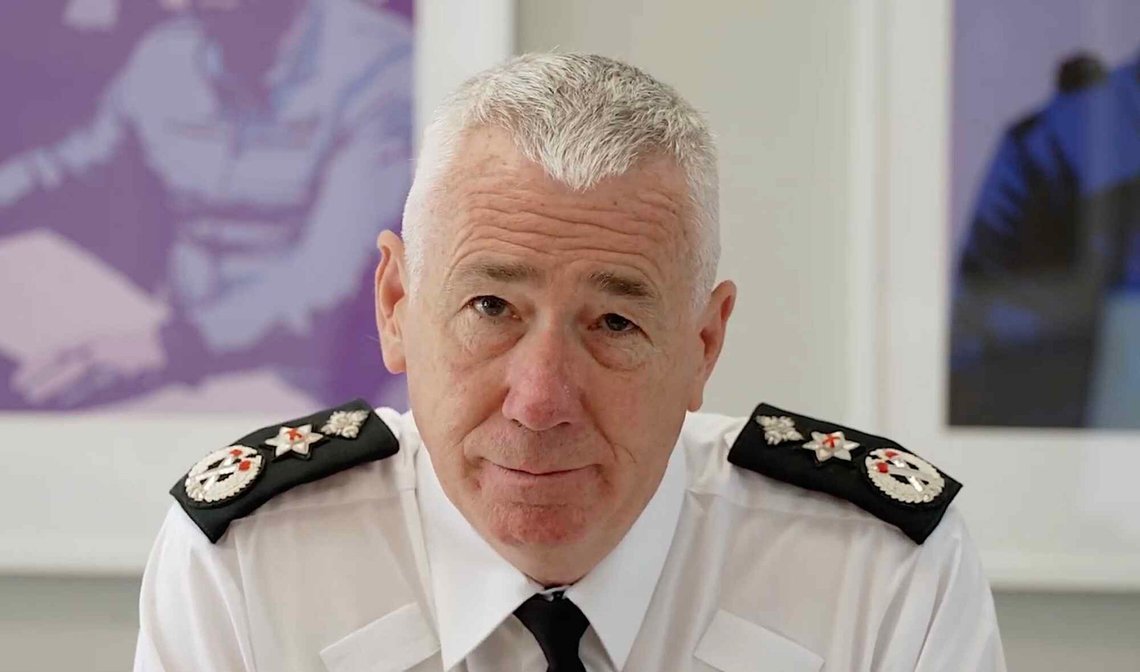


Violent demonstrators rioting in the aftermath of a Sudanese man’s attempted murder with a knife in Belfast on Monday will have their lives changed forever once the police have done their job, warns Northern Ireland’s Chief Constable Jon Boutcher.
The protests have been intense in the Northern Irish capital following the attempted murder, in which a man in his forties sustained a number of serious injuries. Cars have been set on fire and criminal damage has been inflicted on the property of innocent people, reports The Times.
Northern Ireland’s most senior police officer says that the violent unrest in Belfast is “an enormous act of self-harm committed by thoughtless idiots who are really only destroying their own future”.
“The police operation last night was about protecting life and trying to protect property,” Chief Constable Jon Boutcher added.
Asked what he would say to parents this morning, he told BBC Good Morning Ulster: “Your children, grandchildren, nieces, nephews, people you care about in this community, young lives – please know where they are today, tonight, tomorrow.
“Make sure they understand that this is not the way forward.”
Boutcher drives the point home:
The lives of violent demonstrators “will be changed forever” as police continue arrests and prosecutions.
“They will not be able to do the jobs they want, and their futures will be ruined in ways they simply do not understand.”
The attitude of the authorities towards what is often downplayed as “collateral damage” during other protests is apparently quite different when people’s reactions concern black-on-white violence.
For the rebellious youths of Belfast, the question is also whether their lives are being changed forever by mass immigration.
The Times allows an 80-year-old former parliamentarian to place the blame for the unrest in Belfast on “foreign actors”:
Edwina Currie told Times Radio: “There is a conspiracy going on here – a big one – and I do not care whether it is Elon Musk or the Russians behind it. It needs to be dealt with … by cyber experts and secret agents and all that.”
“Somebody is promoting violence on our streets, and they do not need much of an excuse to do it. All it takes is one or more disturbed individuals committing an open murder in the streets for this to happen.”
The big bad wolf is once again Elon Musk:
Elon Musk has reiterated his support for Restore Britain in the wake of Monday’s alleged knife attack carried out by a Sudanese immigrant.
The owner of X wrote: “Only Restore Britain can save Britain. It is the only way.”
Sir Keir Starmer is one of several politicians who accused Musk last week of “whipping up division” in the wake of the Henry Nowak demonstrations.
Musk’s latest post quoted a post by Rupert Lowe, the leader of Restore Britain, who blamed Reform UK politicians for the suspect’s entry into Britain in 2023.
Lowe wrote: “Who was Immigration Minister at the time? And when the man was granted leave to remain in our country? Reform’s Robert Jenrick. Who was Home Secretary? Reform’s Suella Braverman. They were responsible for our borders.”
Some say that the violence following the attempted murder distracts attention from genuine problems associated with immigration:
The “real fears in working-class communities” about the risks associated with immigration are being “overshadowed” by violent protests, Northern Ireland’s former First Minister has said.
Arlene Foster told Times Radio that local services were already struggling, and that immigration could place them “under even greater pressure”.
However, she said that their concerns had been “removed from the agenda” following last night’s “depressing” scenes. Foster added that politicians had been wrong to “mock” people’s fears of “foreign cultures”, saying: “No attempt is being made to deal with the differences they bring with them.”
She urged people to bring the unrest to an end and said: “Please do not become involved in violence on our streets.”
The question being raised is whether younger members of the working class in the British Isles place greater faith in violence than in politics.
The Emerald Isle has seen violence as a political instrument before, above all prior to Ireland’s independence from Britain in 1921.


