

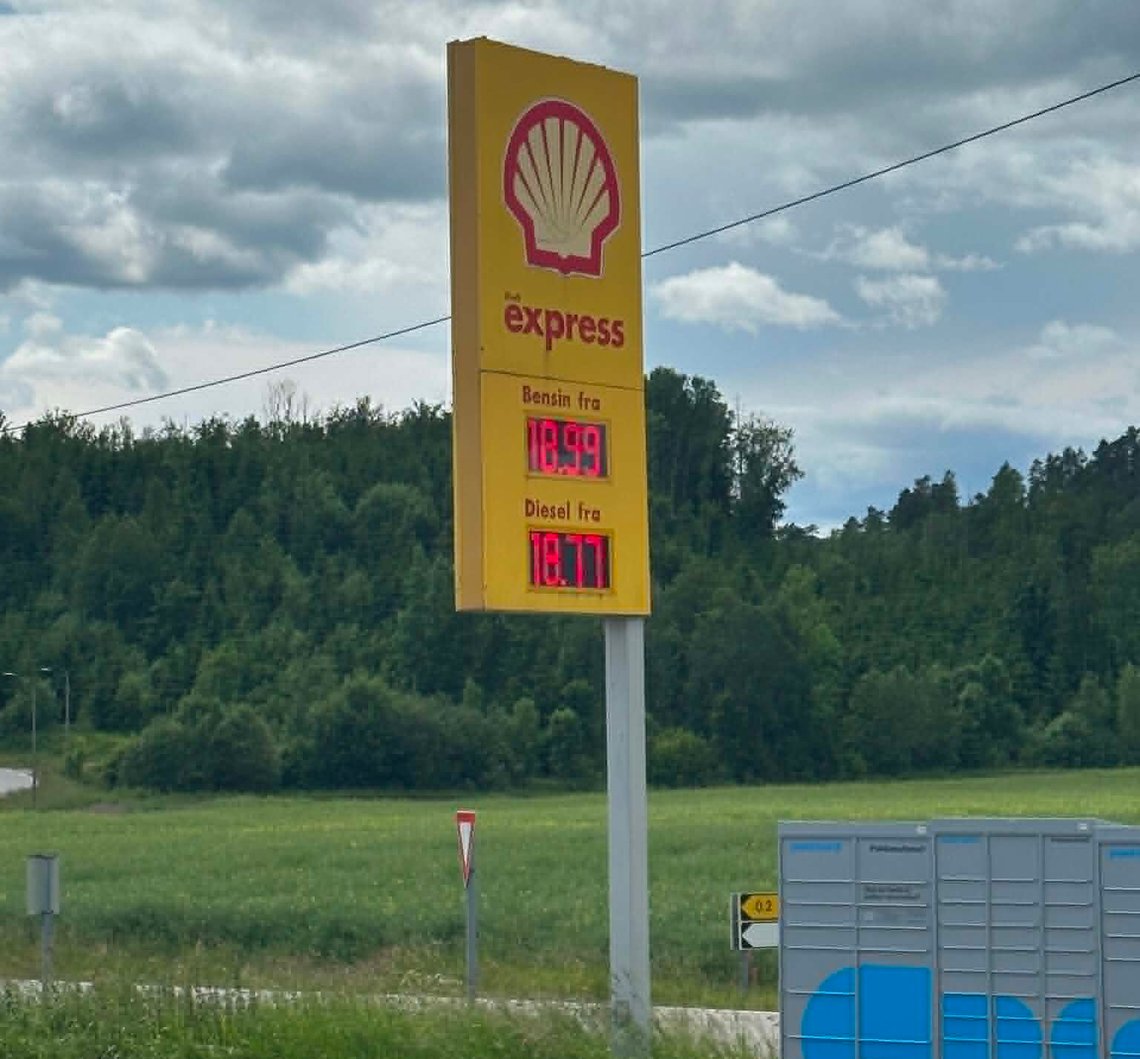


The authorities have difficulty holding two thoughts in their heads at the same time. They have pushed the green transition for two decades and subsidised the shift to electric cars with NOK 40 billion a year. Then one no longer needs petrol and diesel. Petrol stations have consequently been shut down one after another, so that Norway has gone from 4,000 stations to 730 staffed stations today. Then the authorities discover that this may affect emergency preparedness!
They have whipped up a preparedness psychosis over the past five years, and suddenly someone realises that in a genuine crisis it may not be easy with electric cars in a long, cold country.
One must say that is planning! How could it have taken twenty years before this realisation struck?
In the major cities, the authorities are more concerned with cycle lanes than with accessibility and security of supply. In a real crisis, the immigrant-dense districts will be transformed into something we have seen in films — “Escape from New York”, for example — but which we do not like to talk about.
The authorities have been more concerned with topping the statistics of countries that have “managed” the transition to electric cars and replaced the dirty fossil-fuelled vehicles. It is easy to win with a bottomless treasury. The state spends NOK 40 billion a year subsidising the transition to electric cars. Where does the money come from? It comes from the sale of oil and gas, dirty energy sources that are taboo and are to be phased out. The government calls this policy smart. Is it not rather cunningly stupid? The population believes it is participating in an experiment for the future, while in reality it is being dazzled by green PR.
If the state were rational, it would set limits on the green madness, but it does not. Bulldozers and tanks are to run on electricity. Long-haul transport and aircraft too!
That will be something to deploy against the Russians in Finnmark in wintertime!
Then someone at the Norwegian Defence Research Establishment (FFI) begins looking at the number of petrol stations in this country and discovers that they are shrinking to the same extent as the death of retail shops.
Where will people be able to refuel in a crisis situation?
Then the alarm goes off. Then the authorities discover that there is something called 2 plus 2, and that the answer is still 4.
The authorities will not be defeated by the Russians. They will be defeated by their own lack of logical ability.
They have lost before a single shot has been fired.
On average, ten petrol stations have been shut down every month since 2020. If the decline continues, it could weaken Norwegian preparedness, according to the Norwegian Defence Research Establishment.
430 petrol stations have ceased operations since 2020, which means an average of ten closures every month, writes Nettavisen.
According to an analysis from Menon Economics, Norway risks having only 730 staffed stations in 2034. In 2012, the number was 1,200 stations. In 1969, Norway had more than 4,000 petrol stations.
The Norwegian Defence Research Establishment (FFI) believes that fuel supply could constitute a weak point in Norway’s preparedness.
The Enterprise Federation of Norway (Virke) is concerned about the development.
Virke’s adviser on business policy, Phillip André Charles, believes that the framework conditions for petrol stations are too strict. Today’s regulations leave no room for competition and instead amount to a “regulation-driven phase-out”, he says.
Centre Party MP Geir Pollestad shares Virke’s concern and believes measures are needed to secure the stations’ competitiveness.
State Secretary at the Ministry of Trade and Industry, Ragnhild Sjoner Syrstad, replies that preparedness is not poor.
– We have good access to fuel in Norway, and this applies throughout the country. We have robust systems for the supply of goods and services, not least because of close and good cooperation between the authorities and business and industry, says Syrstad. (NTB)


