

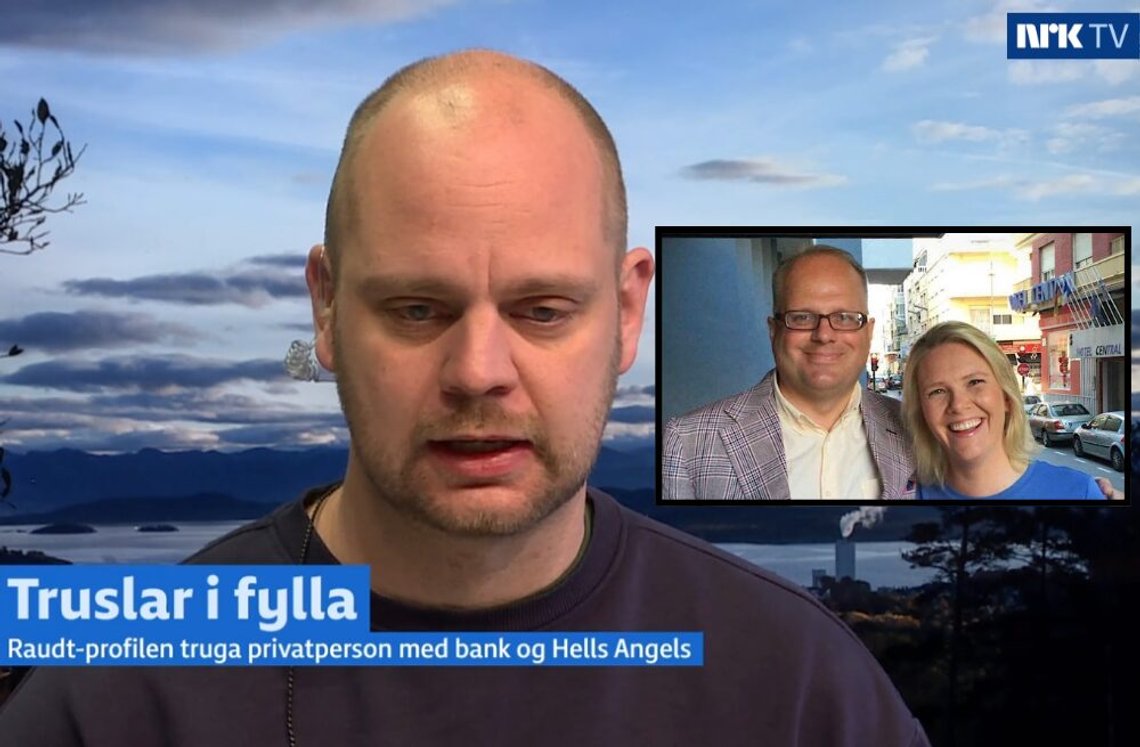


Two public figures do something unfortunate while intoxicated. One sends threatening messages to an ordinary citizen, the other uses words that the moral police regard as racist, without having threatened anyone.
The first, Mímir Kristjánsson, quickly receives a reprimand, is met with broad understanding, and his case is considered closed. The second, Hårek Hansen, is pilloried, convicted in the court of public opinion, fired from his job and expelled from his party.
I see a glaring double standard in how the media, politicians and commentators have handled these two cases. I have therefore sent questions to Mímir Kristjánsson, Sylvi Listhaug and Leif Tore Lindø of Stavanger Aftenblad.
Lindø represents many Norwegians from all walks of life who thought Mímir deserved forgiveness, and that the entire matter surrounding his drunken outburst was “a storm in a teacup”.
A letter to Mímir Kristjánsson, Sylvi Listhaug and Leif Tore Lindø
I am the US correspondent for Document and am contacting you with questions regarding the cases of Mímir Kristjánsson and Hårek Hansen.
I am writing an article about what I perceive as a striking and troubling double standard in the way the media and politicians have handled two cases in which public figures behaved irrationally under the influence of alcohol.
Leif Tore Lindø is not directly involved in the cases, but as a journalist he commented on the Mímir case and represents many Norwegians from all parts of society who supported Kristjánsson, called for forgiveness and believed that he had been punished enough.
I am contacting you on my own initiative and not in collaboration with the editorial staff at Document.
Questions for Mímir Kristjánsson
When the Hårek Hansen case emerged and you saw the aftermath and the widespread condemnation, what did you think about the handling of your case compared with Hansen’s?
Have you or anyone in Rødt, including secretary Reidar Stisland or party leader Marie Sneve Martinussen, discussed or commented on the controversy surrounding Hårek Hansen? If so, what is the general view?
What do you think about Sylvi Listhaug firing Hårek Hansen, compared with how your own party leaders handled your case? Do you yourself think you got off lightly? Do you think Hansen deserved to lose his job and be expelled from the party?
Some people on social media wrote that you were on NRK P2 at the end of March defending drunkenness and everything that comes with it. I cannot confirm this. You allegedly claimed that alcohol creates a healthier and warmer society, because when people make fools of themselves while drunk, they are usually forgiven. If you said this, do you still mean the same thing today? Should Hårek Hansen be met with the same understanding?
A central difference between the cases is that your incident involved direct threatening messages sent to a private citizen, whereas Hårek Hansen’s non-threatening comment was recorded by journalists. What do you think about TV 2’s tactics in the Hårek Hansen case? What would you think if a similar method were used against you or someone in your party while you were out drinking and intoxicated?
On NRK’s Politisk Kvarter it was mentioned that you had said you could not guarantee that it would not happen again. If this is true, some may interpret it as meaning that your remorse and apology to the man you threatened were hollow. What is your response to such accusations?
Questions for Leif Tore Lindø
You wrote the column “Storm in a Large Teacup” in Stavanger Aftenblad, and said on NRK’s Politisk Kvarter that Easter is a time for comebacks and forgiveness, and that Mímir should receive that. You referred to a verse from the Bible – “where sin abounds, grace abounds all the more” – and suggested that a more merciful approach is preferable to the harsh treatment we have seen in other cases. Subsequently, TV 2 released the Hårek Hansen case. Would you show the same forgiveness and leniency towards Hansen, or do you believe FrP handled his case correctly?
You also said that Mímir was in fact being sufficiently punished by being dragged through the media. Hårek Hansen has faced an even worse media storm, and he was fired and suspended from his party. What are your thoughts on the media’s handling of Hansen’s case compared with Mímir’s? Do you support TV 2’s “undercover” methods, and are they in line with the Code of Ethics of the Norwegian Press (Vær Varsom-plakaten)?
After the Hårek Hansen case, you wrote the commentary “Death on DM” in Stavanger Aftenblad, in which you strongly condemned threats and hate speech directed at politicians online. You described your Facebook feed as being full of “Norway First” groups where people “freely jazz about traitors to the nation, rats and what ought to be done to whom”. You wrote:
The sum total is that people who have taken on public office and work in public service are subjected to harassment and threats. It is utterly insane, it is painful, and it is potentially dangerous. Such a message can be enormously dramatic for the person receiving it. It is also a warning sign for a functioning democracy, both the one we have today and, not least, the one we are to have tomorrow.
But in Mímir Kristjánsson’s case, it was a sitting politician who sent direct threats to an ordinary citizen who has had a difficult time after being threatened by the Rødt politician. Why do you believe we should be more forgiving towards Kristjánsson than towards the “Norway First” types you criticise? What does it do to our democracy when a politician threatens a citizen?
Questions for Sylvi Listhaug
You and the Progress Party took extremely strong and immediate measures against Hårek Hansen. Why did FrP choose such extreme measures against Hansen? What is your view on the enormous disparity in how the two cases have been treated?
I cannot find anywhere that you have commented on TV 2’s tactics, a clear breach of the Code of Ethics of the Norwegian Press. Have you, or any leaders in your party, done so? If yes, is this something you intend to raise in the political debate?
Do you also fear that TV 2’s methods have now opened the door for journalists increasingly to use hidden recordings and launch malicious campaigns against anyone they dislike, potentially on behalf of politicians or members of opposition parties? In light of the Mímir Kristjánsson and Hårek Hansen cases: are you concerned that FrP and party members will become a primary target for such methods going forward?
In my experience, the emails often go unanswered, but they are nevertheless read, and occasionally I do receive replies. Some of them condescending, such as when a Norwegian US expert last year wrote that he refused to answer “a propaganda machine”. But if they merely read them, half the job is done.


