

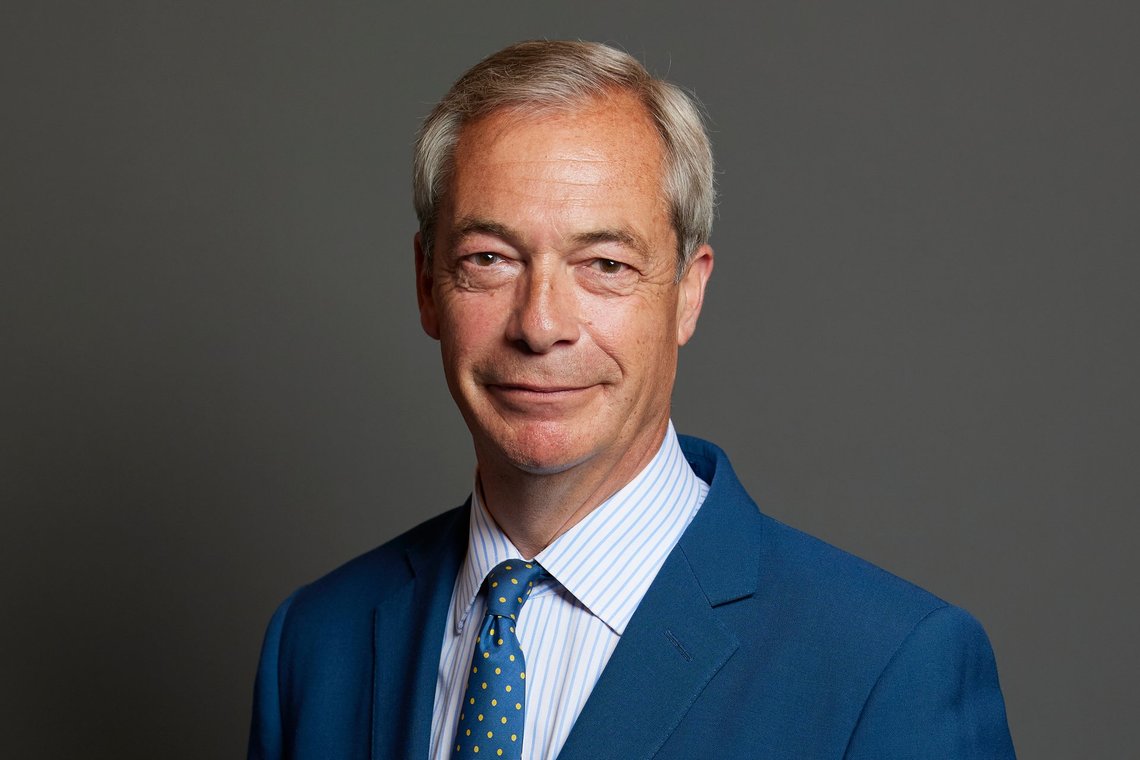
In the local elections that have just taken place in the United Kingdom, it is clear that the country is undergoing a seismic political shift. The old two-party system, with the Liberal Democrats as a satellite, is history. The winner is unmistakably Reform UK, which has surged forward, at the expense of both Labour and The Conservative Party. The reason is simple: The British have had enough of taking everyone else into consideration. Critics call it Trumpism and hate rhetoric, but for working-class Britons who have been overlooked for years, it is merely a natural consequence of the elites’ embrace of everything other than British rights.
Although these were not parliamentary elections, the election became a test for Labour and Keir Starmer – a test they failed spectacularly. This was not unexpected. Keir Starmer is often described as the country’s most unpopular prime minister ever. “Keir Starmer’s a wanker” is sung whenever crowds gather, such as during football matches, across the country. “Two-tier Keir” is another unflattering description, referring to how the authorities under Labour treat those who disagree with Labour and imprison political opponents. It is difficult to describe Starmer politically. He is authoritarian and definitely on the Left, but not popular among the youth, who instead vote for the Green Party under Zack Polanski. Nor has he succeeded in getting the economy back on its feet, but this is hardly surprising when he raises taxes and duties that make it increasingly difficult to conduct business. Perhaps most serious: He promised to “smash the gangs”, that is, the people smugglers who organise the boats transporting illegal migrants across the English Channel, and he has failed in that as well, quite the contrary.
There has also been turmoil surrounding Starmer personally, and the scandal surrounding the appointment of Peter Mandelson, who had strong connections to Jeffrey Epstein, is merely one of many. Lord Alli, a friend who lent his flat to the Prime Minister and bought clothes for both him and his wife Victoria, is another. There is also an ongoing court case in which three young men of Ukrainian origin are charged with arson on properties connected to Starmer. Starmer survives by grace – and so does Labour as a party.
The focus has revolved around everything other than what ordinary Britons care about. They are patriotic, but are not permitted to be proud of their own country. On the contrary, it is Muslims who are “the face of Britain”. As colleague Arnt Jensvoll writes, “in a speech reportedly delivered on 3 March this year during a Ramadan Iftar event, Keir Starmer praised Muslims for being ‘successful, brilliant and creative people who have made an enormous contribution to Britain’s history through their kindness, their art and education. They are the face of modern Britain. They are exceptional people’.”
Keir Starmer: – Muslimer er det moderne Storbritannias ansikt
That Labour is now paying the price at the ballot box is therefore entirely their own fault. They did not take the hint when the campaign “Raising the Colours” spread throughout the country, with British and English flags waving everywhere in villages and larger towns.
Nor did they take the hint when people demonstrated outside migrant hotels following sexual assaults by asylum seekers, or when Tommy Robinson gathered what were possibly millions in the streets of London during the Freedom Rally in September last year.
Lost faith in the Tories
The Conservative Party has also partially closed its eyes to what is happening. Although the leader Kemi Badenoch is both capable and says the right things, this has not prevented prominent party colleagues such as Danny Kruger and Robert Jenrick from leaving the party in favour of Reform UK. Parts of the Tory party are still so-called “wet Tories”, that is to say liberal, EU-friendly and pro-immigration people who hate what Nigel Farage stands for. And after 14 years in power, during which the country was driven virtually into the ditch, the voters lost confidence in what is the world’s oldest political party. Nevertheless, there are small glimmers of hope for the party – they managed to regain Westminster from Labour, among other things.
And although the media greatly hyped The Green Party in advance, there was no green (or red-green, if one considers the political message) revolution. Progress, yes, but no electoral landslide. The party was founded 35 years ago and won 584 seats, while Reform, founded seven years ago, won 1453. Although they courted Muslims, there were many more conservative Muslims who voted for their own Muslim candidates – possibly they found The Green Party far too liberal on issues such as LGBT rights, for example.
It was Reform UK that could claim victory in many places. The party’s advance gave them control of their first borough in London, Havering, and they defeated the Tories in, among other places, Essex and Suffolk, and took over local councils from Labour in, among others, Barnsley, Wakefield, Sunderland and Gateshead. Newcastle-under-Lyme went from the Tories to Reform.
Historic shift
Nigel Farage’s first comment after the election was: “What has happened is a truly historic shift in British politics. We have become so accustomed to thinking about politics in terms of Left and Right, but what Reform is able to do is to win in areas that have always been Conservative, while at the same time we are proving in a major way that we can win in areas Labour has dominated since the end of the First World War.”
Reform performed clearly best in areas that voted for Brexit in 2016. And this accords with the political currents that have grown since then. For despite Brexit, the British have long awaited the return of their national sovereignty. The United Kingdom is no leader on the global stage, but a follower. They say “please do” every time Ukraine asks for money and support, they wish to give away the Chagos Islands and even pay for doing so, and the country has received more than 180,000 boat migrants, undocumented (for the most part) young men with unknown backgrounds, over the past five years. Young, British, white boys are told that they are misogynistic and are vilified in “Adolescence” – the Netflix series that demonises young boys – while offenders of Pakistani origin are the real problem.
The local elections in the United Kingdom also show that the propaganda no longer works. People do not care about being called fascists, populists or far-right. They know that they are not racists, but they do not bother voting for the mainstream parties in order to prove it. Instead, they vote for their own interests. And that is precisely how it ought to be in a democracy.


