

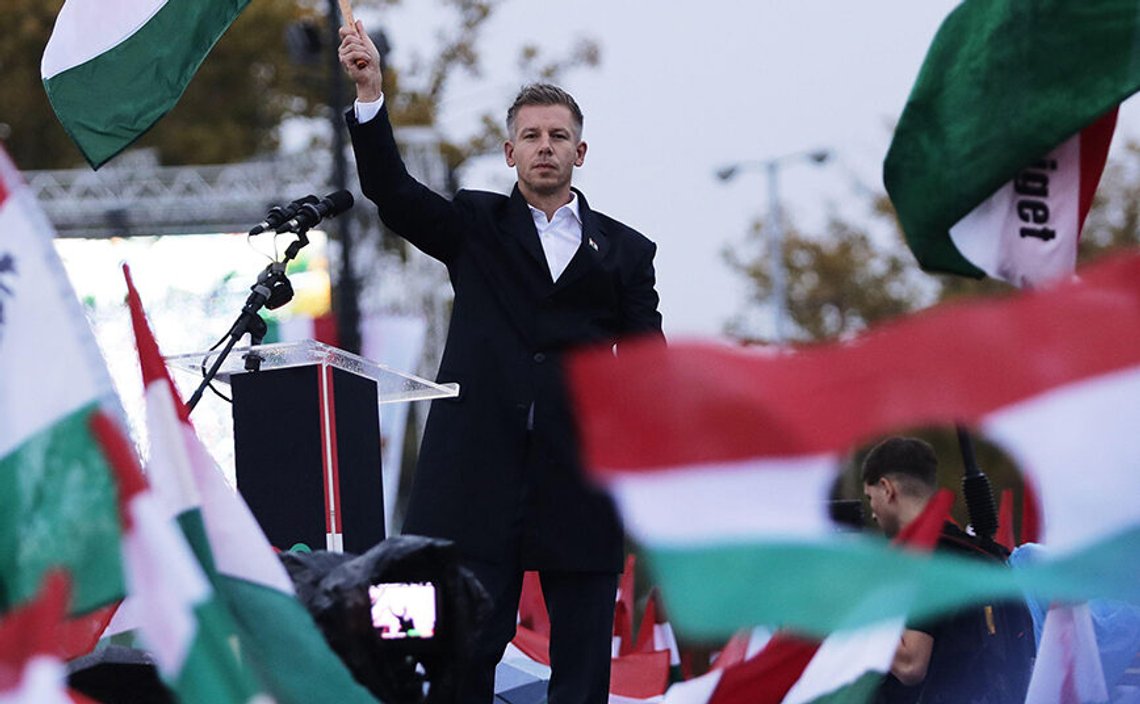
A change of power has taken place in Hungary. The country’s newly elected Prime Minister Péter Magyar has been sworn in.
– I stand here because millions of Hungarians decided that they want change, Magyar said in his speech to the National Assembly in Budapest on Saturday.
NTB describes the change of power as historic, and in Brussels the EU leadership believes that the eternal conflicts with the rebel Hungary are over.
But even though Magyar is more willing to cooperate with Brussels, he is still conservative, and will hardly open the borders to Muslim immigration.
– Being Hungary’s prime minister comes with an enormous political and human responsibility, Magyar said in his speech after taking the oath.
The Prime Minister said that he would work with patriotism every day throughout the year in order to live up to the example of predecessors such as Lajos Batthyány, Imre Nagy and József Antall, writes Magyar Nemzet.
Magyar repeated his accusations that Hungary has become the most corrupt country in Europe, and openly threatened Hungary’s president in his speech.
– It is time to leave, Mr President, while you still can!
The Tisza party, which Magyar represents, is regarded as far more Russia-critical and EU-friendly than Orbán’s party Fidesz, writes NTB. But Magyar, too, is concerned with those Hungarians who are on Ukrainian soil.
Hungary’s new prime minister has indeed criticised the Russians’ attacks on Ukraine, but he has also opposed an accelerated process for Ukraine’s admission to the EU.
Magyar støtter ikke hurtigbehandling av Ukrainas EU-søknad
Magyar now promises changes after years of economic stagnation and strained relations with allied European countries.
For many years Orbán has been criticised for undermining Hungarian democracy. Norway’s Foreign Minister Espen Barth Eide (Labour Party) called it “a victory for democracy” when Magyar and Tisza won the election in Hungary. (NTB-AFP-AP)
Since I spend a great deal of time in Budapest, the effects of the regime change may perhaps be felt personally. Personally, I do not expect such major changes, but time will tell.
The local population, which in the capital to a large extent has voted for anything other than Orbán, fears Muslim immigration above all else. Among others, several from the city’s large local Jewish population have expressed this in conversations with the undersigned.
Others, both socialists and Magyar voters, likewise do not want open borders, and certainly not too great a submission in relation to Brussels. In a year or two we shall know more.


