

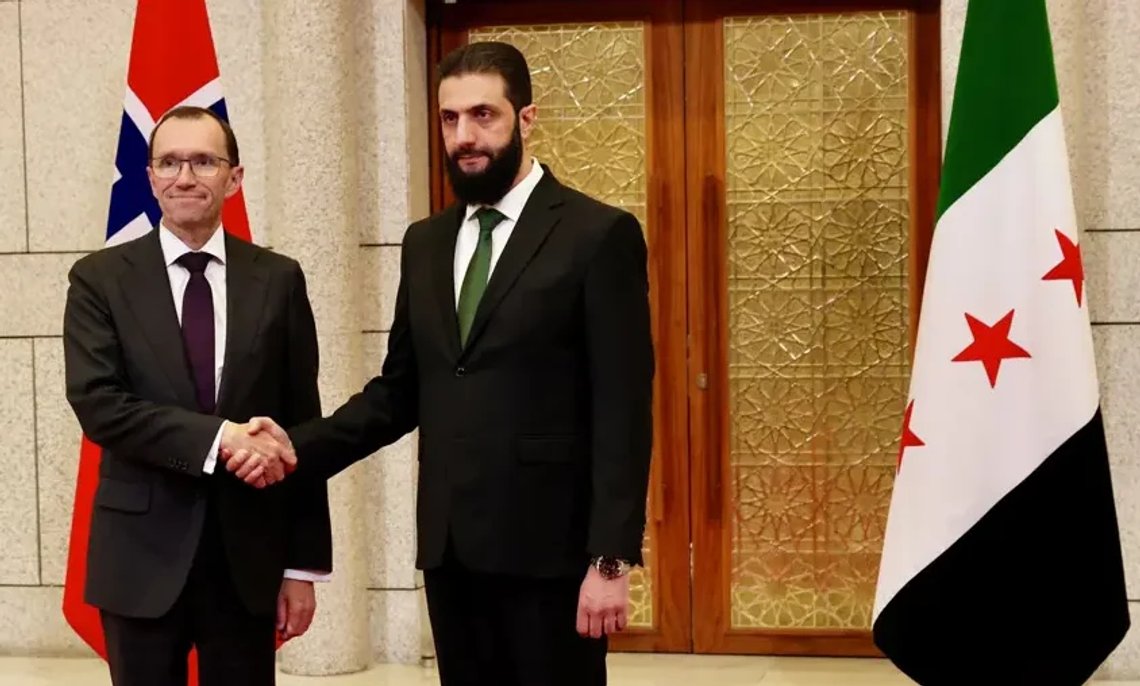
The new tightening of family immigration is being sold as strict. But asylum seekers or refugees are scarcely affected. Because they receive exemptions.
The Storting majority is increasing the maintenance requirement for family immigration to 4 G, which is more than NOK 520,000. But UDI’s own figures from 2019 to 2024 show that the largest immigrant groups are scarcely affected, because the exemption for refugees remains in place.
The Centre Party, the Progress Party, the Conservative Party and the Christian Democratic Party secured a majority in the Storting on Wednesday to raise the maintenance requirement for family reunification from 3.2 to 4 times the basic amount in the National Insurance Scheme.
With today’s basic amount, this means that the reference person in Norway must earn NOK 520,000 a year in order to bring family to the country. After the National Insurance Scheme’s annual adjustment on 1 May 2026, the amount lands at around NOK 546,000.
In the political rhetoric, the decision is being sold as a powerful tightening. The reality of the regulations and the statistics tells a different story.
Family immigration to Norway
Maintenance requirement is the income requirement that must be met in order to bring family members to Norway.
The reference person is the person who is resident in the country, and must meet the requirements.
Flight background is used as a term for all those who have been granted residence on the basis of asylum or as refugees.
The exemption no one touches
The maintenance requirement does not apply to the spouse, cohabitant or child of a refugee, if the family was established before the reference person came to Norway, the application is registered within six months after the protection decision, and the applicant appears in person at an application centre within one year. This exemption is authorised in Section 10-8, fourth paragraph, letter a, of the Immigration Regulations.
It is precisely this exemption that the majority retains. The Progress Party wishes to remove the exemption, but does not obtain a majority because KrF votes against it. To NRK, KrF’s Jonas Andersen Sayed states that forcing families to live separately for four years “even if you have sufficient income and without exemptions” is unreasonable.
The result is that the tightening only affects those who were not already covered by the exemption.
The figures 2019–2024
UDI’s table of first-time family immigration permits by the reference person’s residence basis shows that a significant proportion of cases will not be affected by an increase from 3.2 G to 4 G. The figures concern third-country nationals outside the EU/EEA:
The proportion of family immigration where the reference person has flight status has thus increased steadily – from 12 per cent in 2019 to 18 per cent in 2024. These are as a general rule exempt from the maintenance requirement.
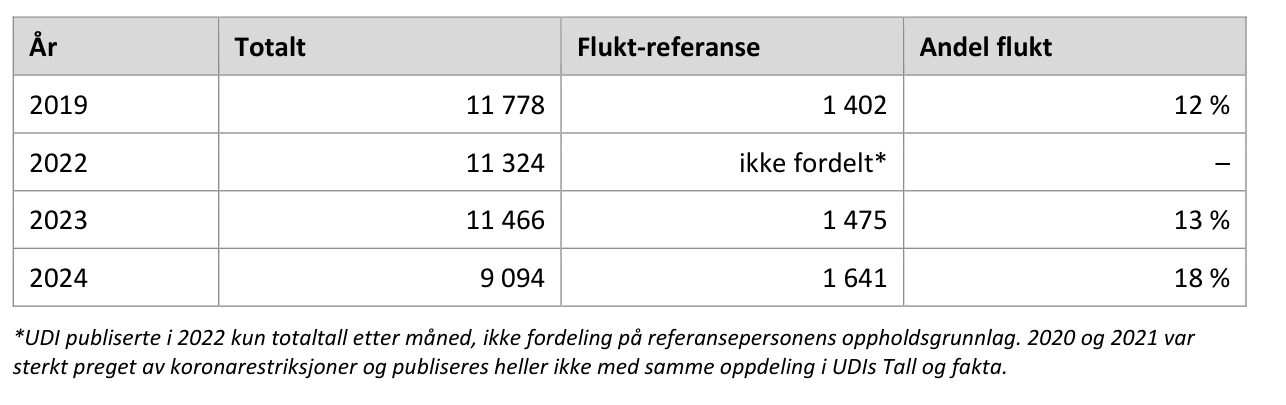
The proportion of family immigration where the reference person has flight status has thus increased steadily – from 12 per cent in 2019 to 18 per cent in 2024. These are as a general rule exempt from the maintenance requirement.
The country of origin exposes the bluff
If one breaks down the 2024 figures by the applicant’s citizenship, the picture becomes even clearer. In the groups that dominate the political debate on family immigration, the great majority of cases proceed through the flight track:
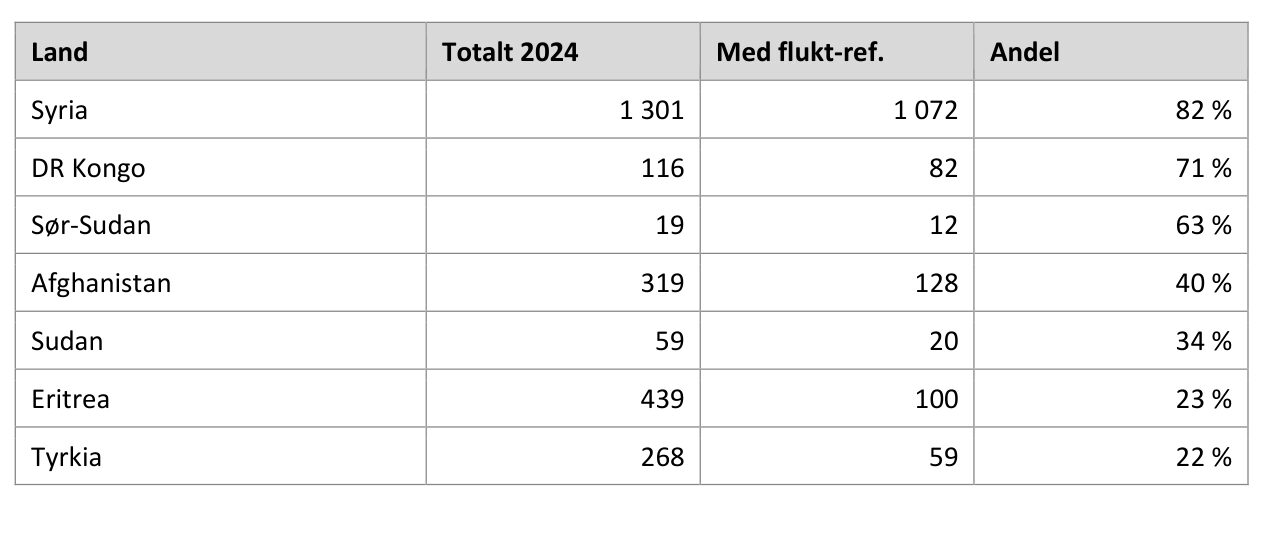
The tendency is consistent over time. For Syrians, the flight proportion has increased from 63 per cent in 2019 (596 of 945) to 72 per cent in 2023 (875 of 1,218) and 82 per cent in 2024. The tightening will therefore matter less and less for the largest single group.
It was KrF that secured a majority for the tightening. NRK asks Storting representative Jonas Andersen Sayed. He says the following to NRK:
– We believe it is a tightening. The income threshold applies to everyone, and then there will be special cases in which it is important that there is still an exemption provision, says Jonas Andersen Sayed.
He does not support the proposal from Frp that would require people to have worked in Norway for at least four years.
– We do not support the proposal that reference persons must have worked in Norway for at least four years. Forcing all families who apply for reunification and establishment to live separately for four years even if you have sufficient income and without exemptions is unreasonable, he tells NRK.
Whom does it actually hit?
On the other side of the table, one finds the countries where the flight exemption is almost not used. These are the groups that actually have to relate to the new NOK 520,000 requirement:
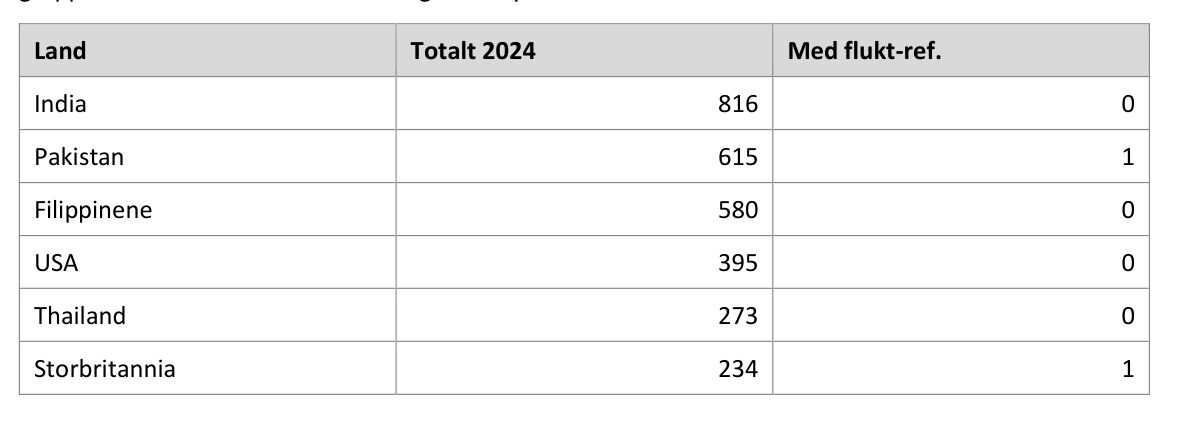
These are labour immigrants, Norwegian men bringing in a spouse from Thailand or the Philippines, and Pakistani and Indian families in Norway bringing in a spouse from the country of origin. These groups are not the ones politicians are talking about when they market the tightening as a measure against uncontrolled immigration.
UDI’s analyses of secondary immigration from the period 2004–2015 show that each person granted residence following an asylum application triggered on average 0.6 family immigration permits during the first eleven years.
For resettlement refugees, the figure was 0.2. SSB’s newer figures show that for Somali, Iraqi and stateless refugees, there have arrived respectively 87, 75 and 65 family immigrants per 100 refugees. These flows will continue also after today’s decision, because the exemption is retained.
In 2023, 1,218 Syrians received a positive decision on family immigration to Norway. For Denmark, the figure was 217. The difference does not lie in the income requirement – Denmark also imposes high financial requirements – but in attachment requirements, conduct requirements and strict rules for marriage migration. The Norwegian majority does not touch these instruments.
The Storting majority raises the income requirement by just over NOK 130,000 and calls it a tightening. The effect on the groups that dominate the political debate – Syrians, Afghans, Eritreans – will be marginal, because they still escape through the exemption.
It is the Norwegian man with a Thai fiancée and the Briton bringing his wife to Norway who must meet the requirement.
Approximately 18 per cent of all family immigration in 2024 went via the flight track. Among new Syrian family immigrants, 82 per cent were exempt. These figures are not changed by an increase to 4 G.


