

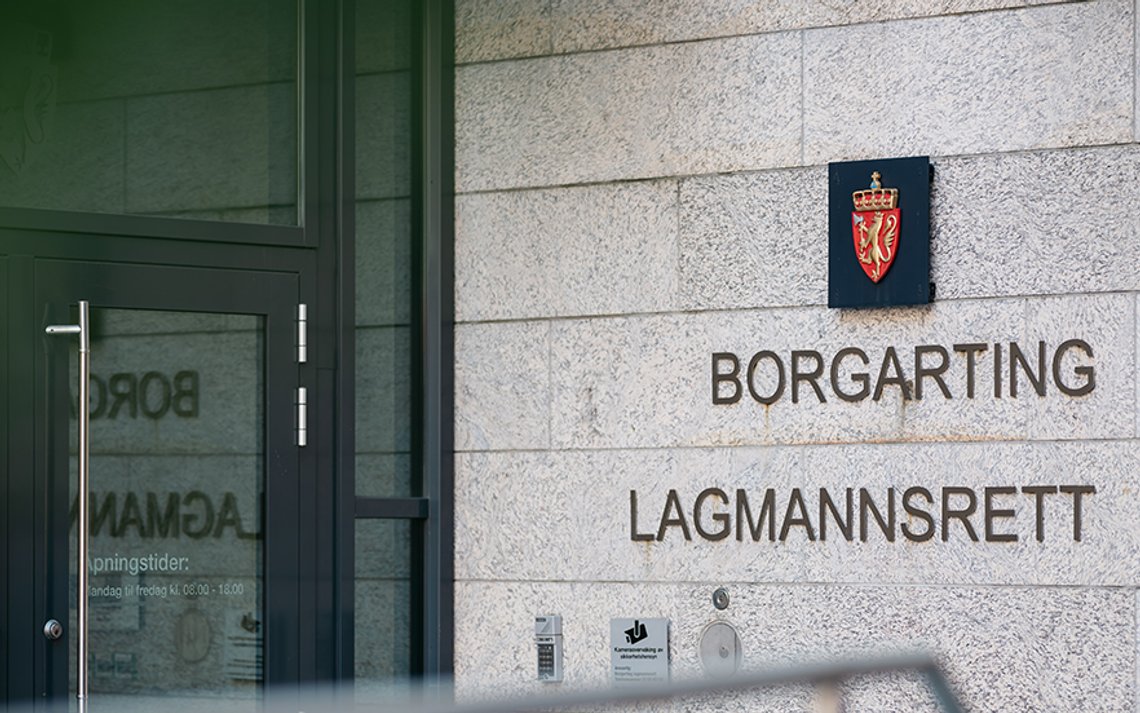


The managing director and an employee of the think tank Rhipto have been convicted of aggravated fraud amounting in total to 42 million kroner, according to an appellate judgment of the Borgarting Court of Appeal. The two convicted persons in Rhipto have been found guilty of having defrauded the Ministry of Foreign Affairs (UD) of 21.7 million kroner and the Ministry of Climate and Environment (KLD) of 22.99 million.
Panorama Nyheter writes that Rhipto chief Christian Nellemann is sentenced to five years’ imprisonment for aggravated fraud. His co-defendant, Rune Henriksen, is sentenced to one year and ten months’ imprisonment. Henriksen is also sentenced to pay 1.3 million to KLD and 10.8 million kroner to UD. Nellemann, meanwhile, is sentenced to repay 18.7 million to UD and 5.5 million to KLD.
“The judgment is approximately as we had expected,” says public prosecutor Henrik Horn.
The two defendants used several million kroner of the grants they received from UD and KLD on high private consumption, including a cabin at Synnfjell, exotic travel, knives and weapons.
The association was originally established to strengthen the United Nations’ analytical capacity regarding how the plundering of natural resources finances war and terror. According to its own statements, Rhipto had delivered information on several dozen countries in the global south, from the Mekong River in the east to Venezuela in the west.
From 2016 to 2021, UD alone paid nearly 30 million kroner to the association in Lillehammer, according to figures from Norad. The funds financed “195 information and analytical reports, courses, workshops and the development of training scenarios, as well as the training of 553 intelligence analysts,” Nellemann wrote in the project’s final report.
Based on spot checks among more than 70 “country analyses” and records from Rhipto’s reporting and correspondence with UD, Panorama Nyheter and Morgenbladet have examined what UD received for the multi-million support. Independent experts have assessed some of Rhipto’s reports and conclusions, and are unsparing in their judgment.
Rhipto’s “country analysis” on Ethiopia is “not of a quality one should pay for,” says UD veteran Jens Petter Kjemprud, Norway’s former ambassador to the country.
Rhipto’s report on Nigeria and the terrorist group Boko Haram is difficult to take seriously, concludes senior researcher at NUPI, Morten Bøås.
Why did UD pay Rhipto for information that was openly available on the internet? That is the question posed by Aslak Jangård Orre, senior researcher at the Chr. Michelsen Institute, after having read one of the association’s reports on Mozambique.
Rhipto’s alleged contribution in the fight against the terrorist group Islamic State (IS) is “pure nonsense,” says Colonel Kåre Emil Brændeland, who was part of Norway’s effort against the group.
Nevertheless, the Ministry of Foreign Affairs (UD) continued to grant millions to the small two-person association over a period of six years.
Christian Nellemann originally conducted research on reindeer, but later became an expert on the illegal exploitation of natural resources and was employed at the environmental foundation GRID-Arendal. Rune Henriksen, who had a background from the Armed Forces, also ended up there.
Arne Strand, senior researcher at the Chr. Michelsen Institute who has reviewed the documents to which Morgenbladet and Panorama have gained access, is in no doubt that it is UD that bears responsibility for checking what the money was spent on.
“It is also evident that the association would have had to be far larger if the alleged results were to be plausible. It appears entirely impossible for two persons both to manage such large sums in a sound manner, and to quality-assure the work,” Strand believes.
He emphasises that Rhipto originally started as a limited liability company (aksjeselskap). In 2015, however, they changed organisational form to an association (forening), inter alia following advice from UD. The opportunities for public access were thereby also reduced.
“Rhipto classified reports and refused to disclose the number of employees allegedly for reasons of their security. The more I read, the more convinced I become that Rhipto’s secrecy was a strategy to avoid critical scrutiny,” he says. “It is quite incredible that UD did not see through them,” states Arne Strand to Panorama Nyheter.


