


Aftenposten turns Hemsedal après-ski into a story about immigration and integration:
It is difficult to understand why. The matter concerns a private travel group consisting of Afro-Caribbean Britons who came to Hemsedal to ski. The participants paid for themselves. They came as tourists to an event and departed again. It is not immigration, and it is not an integration measure.
Aftenposten writes:
The festival is called Soft Life Ski and is organised at various destinations in Europe. Afro-Caribbean culture meets skiing and après-ski. The point is to lower the threshold for trying one’s hand on the slopes. It can contribute to integration, but on X (formerly Twitter) the videos were shared further to tell a different story.
“Can contribute to integration”. Integration into what, then? These are not people who are to enter Norwegian society. They are paying British guests on a ski trip with like-minded individuals.
Document’s journalist Lise Sørensen posted this on her private X account:
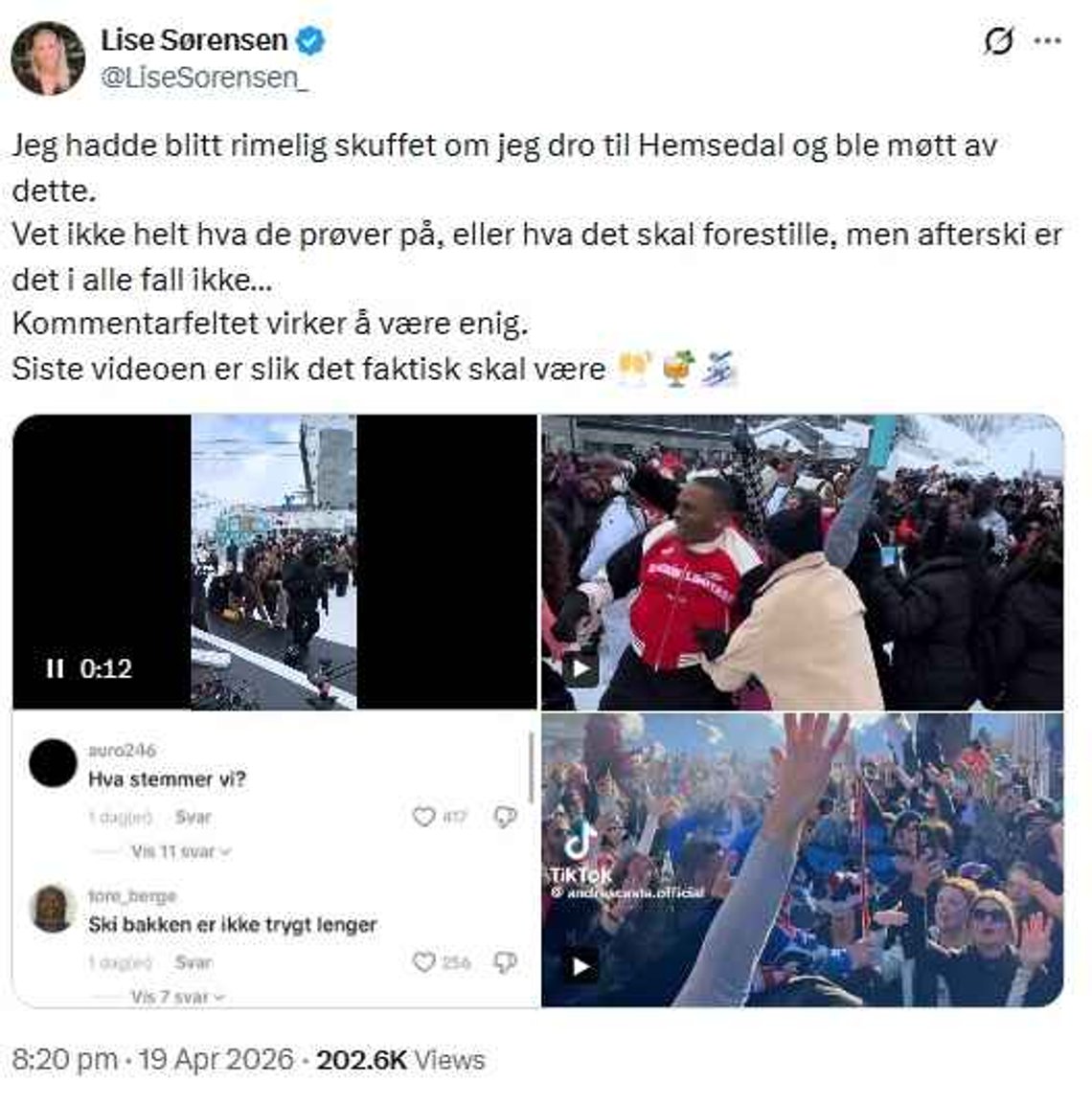
Lise writes that she would have been disappointed. And that is because Norwegians know what après-ski in Hemsedal is like and look forward precisely to that experience. Then one arrives there and discovers that on this trip it has become something entirely different.
Then comes the next assumption from Aftenposten: that the reactions are due to the participants being black. That is not stated in Lise’s X post. It is something Aftenposten adds. It says more about Aftenposten journalist Daniel Røed-Johansen’s own view than about what people actually reacted to.
Afro-Caribbean music and dance culture is something entirely different from what one normally finds at après-ski in Hemsedal. And not everyone throws themselves into twerking with equal enthusiasm.
But this is not a new phenomenon. Large groups that change the atmosphere of a place have always created reactions. In Chamonix in the 1980s there were restrictions on Swedes because they took over the nightlife. Outside the bars there were signs reading “Max 10 Swedes”. The French were not enthusiastic about Swedish rowdy culture in the Alps.
In Hemsedal and at Geilo, the locals for years used to be irritated by large groups from Oslo and Bærum who came to party. Nor have we forgotten all the buses of Swedes who took over the whole of Hemsedal 40 years ago.
No one called it racism at the time.
It concerns the fact that a place is suddenly experienced as different from what was expected. Not about who people are.
That Aftenposten does not see the difference is telling. Because this group of tourists in Hemsedal were black Afro-Caribbean Britons, Aftenposten assumes that the negative reaction is due to racism.
Aftenposten then attempts to link this to Document and Lise Sørensen, and suggests that she is “whipping up the mood”. But what is actually happening is that the newspaper itself is inserting the motives it believes she must have had.
Aftenposten considers that Lise ought to “take responsibility for grums (grums)”, whatever that may be:
Does not take responsibility for grums
Sørensen is a journalist at Document and describes herself as conservative. She wants a stricter immigration policy. She is free to hold that view.
Again, this had nothing to do with immigration policy. These were already well-integrated Britons on a lift pass trip to Hemsedal.
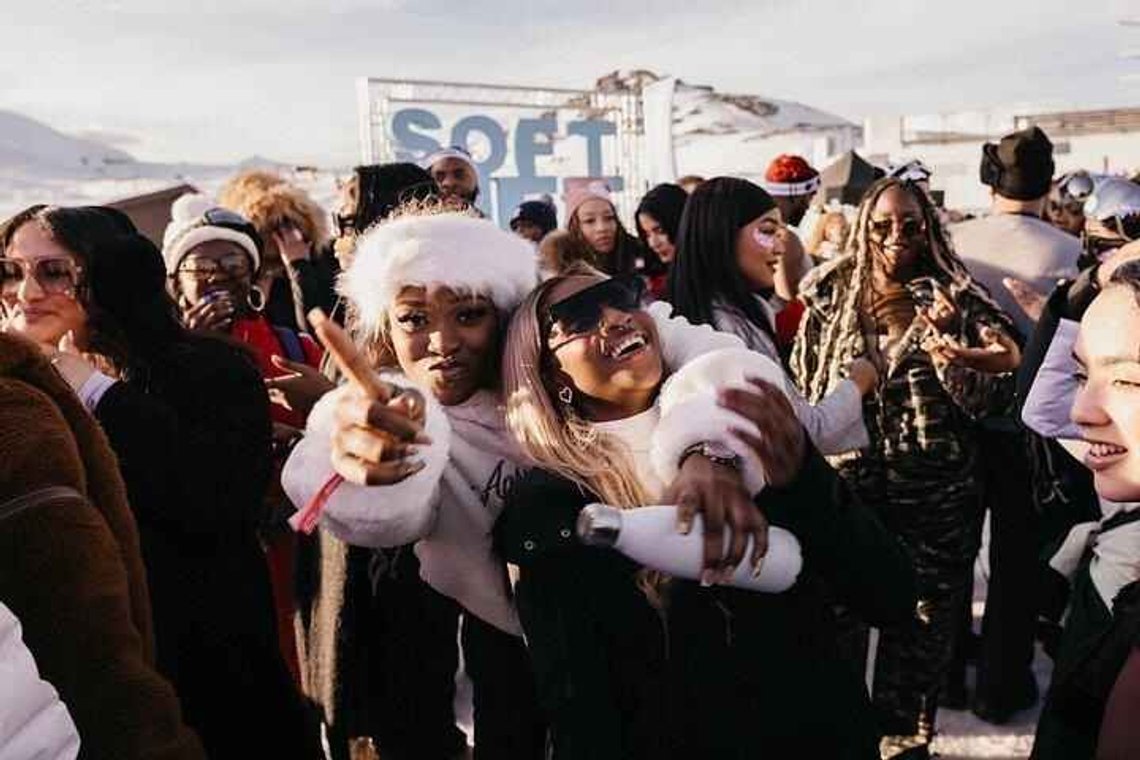
Here from one of their previous trips in the Alps:
It is Aftenposten that links these to immigration policy!
Finally comes what has now become a recurring feature: Aftenposten concludes with information about press support for Document and Hans Rustad’s membership of the editors’ association. As if that has anything to do with the matter!
This is not analysis. It is projection.
Aftenposten criticises others’ framing, but does exactly the same itself – only from a different starting point. And it is Aftenposten that is whipping up the mood.


