

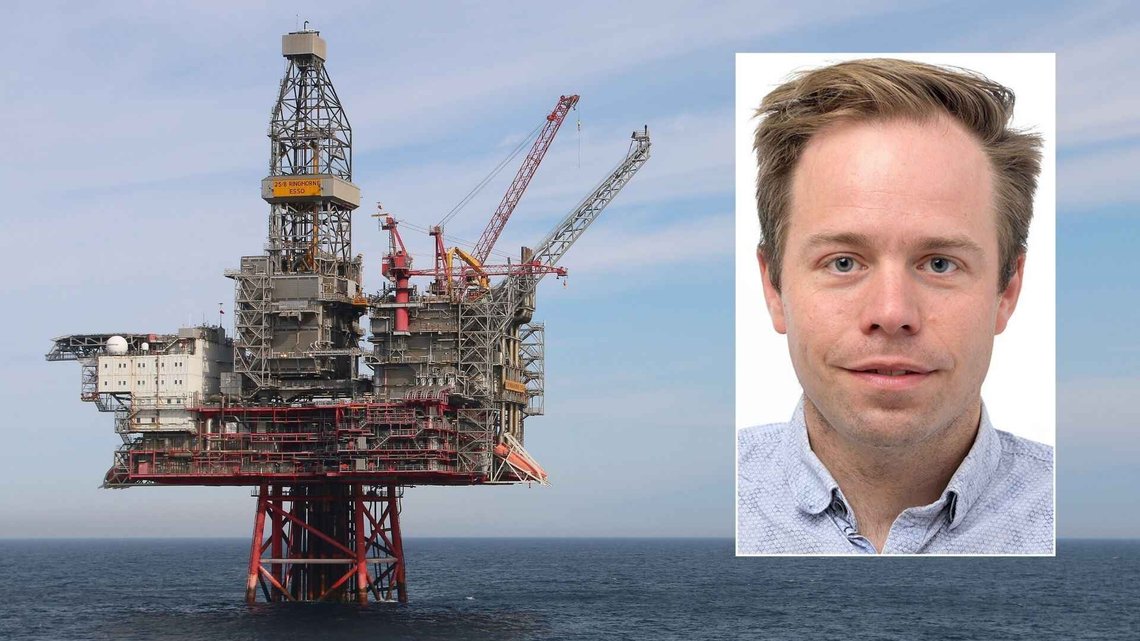


The European Parliament is salivating over Norwegian oil revenues. Now a German EU politician from the Greens wishes to impose an additional tax of up to 25 per cent on Equinor and other oil and gas companies.
The demand comes from Rasmus Andresen, a German member of the European Parliament for the Greens, in an interview with NRK.
– Europeans have enormous bills. We want to tax the oil and gas companies more heavily, said Andresen.
His plan is clear: the Member States are to introduce the tax. The revenues are to go directly back to European consumers, not to the Norwegian state, not to the Oil Fund (Oljefondet), and not to Norwegian welfare schemes.
Five countries are behind it
Andresen does not stand alone. Five EU countries have already put forward a similar proposal following the price increases that followed the war in the Middle East. The proposal is now under consideration in the European Commission.
Such a tax would affect Equinor severely. The Norwegian state owns 67 per cent of the company, and dividends from Equinor are one of several revenue streams that finance the welfare state.
In parallel, a demand comes from Sweden’s Karin Karlsbro in the liberal group Renew Europe. She believes that Norway should use the crisis revenues for increased support to Ukraine and signals that expectations in Brussels are high.
Karlsbro has previously been central to this line of argument. She was among the Members of the European Parliament who last year confronted a Norwegian Storting delegation on a study visit to Brussels.
NOK 521 billion
Minister of Finance Jens Stoltenberg rejected the premise in an email to NRK. He pointed out that, relative to gross domestic product, Norway contributes more than ten times as much to Ukraine as other Western countries.
Stoltenberg also argued that the Oil Fund declines in value when unrest in the world weakens the equity markets—and that Norway therefore does not profit purely from war and unrest.
The state’s net cash flow from petroleum is estimated at NOK 521 billion in 2026, according to Norsk Petroleum. In 2025, the figure stood at NOK 656 billion.
Since Russia’s full-scale invasion of Ukraine, Norway has had additional revenues estimated at around EUR 108 billion, according to calculations by the economists Knut Anton Mork and Håvard Halland. Nordea has estimated the total war gain for Norway at around NOK 3,000 billion.
Europe created the crisis itself
The background is that the EU for several decades made itself dependent on Russian gas through an energy policy that now proves to have been strategically naïve. When Russia attacked Ukraine, security of supply collapsed—and Norwegian gas became the salvation.
Now, when the bill arrives, several Members of the European Parliament are turning their attention to the oil billions on the Norwegian continental shelf.
The proposal in the European Commission formally applies only to Member States, and Norway is not an EU member. However, Norwegian energy exports are closely integrated into the European market through the EEA, and Norway has previously chosen to align itself voluntarily with EU measures in the field of energy—such as the price cap on Russian oil.


