

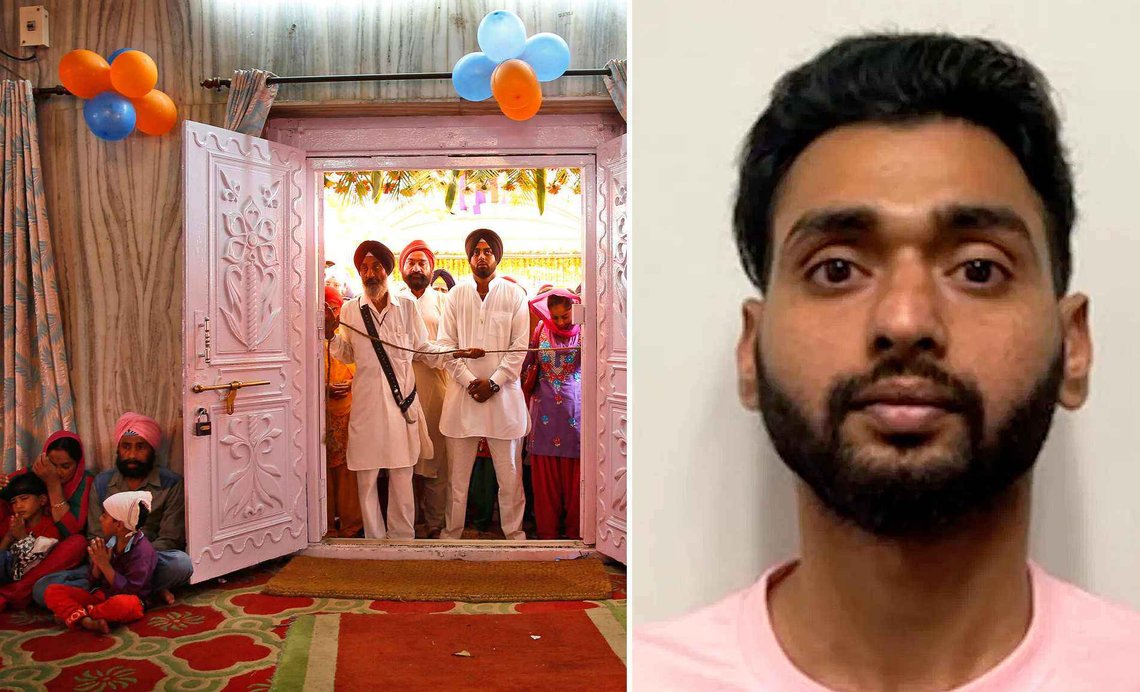


An Indian gangster organisation is carrying out extortion, threats and killings among the 250,000 Indian Sikhs in California, directed from Indian prisons.
Last autumn, Harsimran Singh, president of the American Kabaddi Federation, was in the process of gathering 15,000 spectators in Stockton, California, for the world championship in kabaddi, an ancient Indian sport that appears as a kind of full-contact version of the traditional children’s game known in the Bergen area as “tikken” (tag).
But then the athletes began to withdraw. Singh started to investigate more closely. It turned out that the players had received threatening phone calls from gang members, many of them inmates in Indian prisons. They were ordered to refrain from participating, and warned of consequences if they refused to comply.
The tournament had become a target for some of India’s most notorious criminals.
– The players were very afraid. If they received such a call, they would not play. They did not want to compromise the safety of their families and themselves, says Singh to CalMatters journalist Gagandeep Singh.
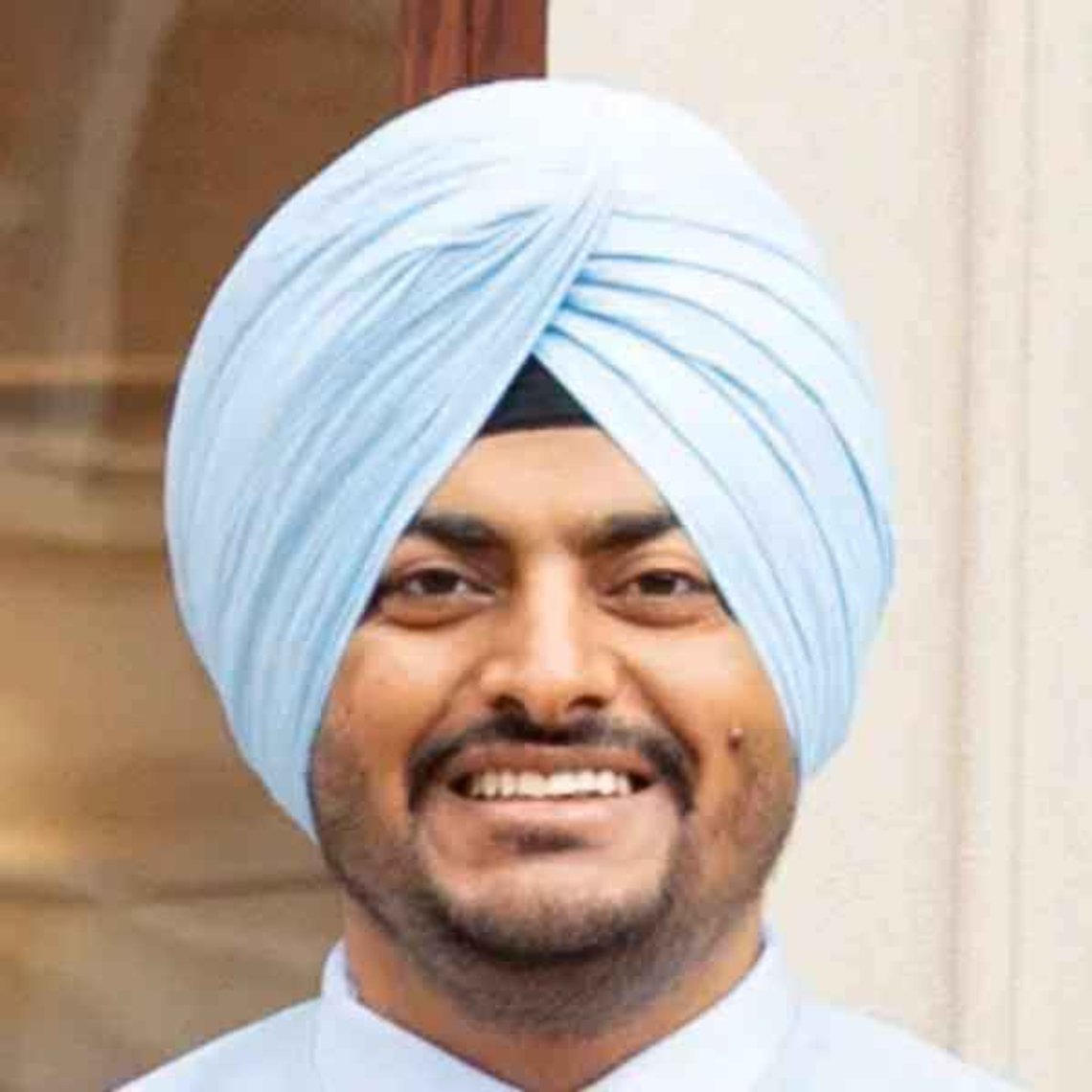 The majority of Sikhs bear the name Singh, also in this article. This is the journalist Gagandeep Singh in the USA. (Photo: CalMatters)
Criminals from north-western India
There are 250,000 Sikhs in California, the largest diaspora in the USA. The close ties to the homeland and regular visits by family in India make them vulnerable to extortion.
Threats against relatives in Punjab can be just as effective as threats against them in the USA.
Police in California say that, among other things, the Sikhs’ prosperity has made them attractive targets for criminal networks in India’s northern and western states: Punjab, Haryana, New Delhi and Rajasthan.
According to Indian police, they specifically select individuals with connections to families with visible assets such as property, transport businesses, liquor outlets and other local enterprises.
Notorious gang
The most central of the criminal networks bears the name of its leader, Lawrence Bishnoi. The organisation has members in India, the USA and Canada.
Despite the leader being imprisoned, investigators in the USA believe that he directs a global network for extortion and murder, communicating via encrypted messaging apps with an apparatus of accomplices in the USA.
The modus operandi consists of a gang member calling the victim and demanding money. If payment is not made, the network, according to the FBI, organises shootings directed at the victims themselves, their relatives, business partners, family, home or business, either in the USA or in India.
In most cases, an initial payment does not lead to the threats ceasing. On the contrary.
According to Sheriff Patrick Withrow in San Joaquin County, California, the initial demands are deliberately calibrated to avoid triggering a police report. It usually begins with amounts between 4,000 and 7,000 dollars, which the criminals assume the victim can pay without involving the police.
A few months later, the extortionists typically return and demand more.
Two cases a month
Withrow’s unit has in recent years received approximately two extortion cases per month linked to this criminal network.
A Sikh businessman in Fresno tells CalMatters anonymously that the gang has extorted him for two and a half months, through an Indian based in California’s Central Valley.
The man says that at one point he was demanded to pay one million dollars.
– It has had a psychological impact on my life. I cannot move freely if I have to travel to India now, he says.
Arrests and FBI operations
In July last year, San Joaquin police arrested eight gang members led by Pavittar Preet Singh, who has been apprehended for weapons offences, violence and murder in India.
In April 2025, FBI Director Kash Patel announced the arrest of Harpeet Singh, whom the FBI described as a terrorist with links to two international terrorist organisations. Throughout 2025, several other arrests were carried out by the FBI and the California Highway Patrol.
One of the most recent indictments concerns Jasmeet Singh from the Bishnoi network, who issued death threats against a Sikh in Canada. Canadian police involved the FBI. The case is to be heard in court in May.
Harsimran Singh in Stockton ultimately chose to proceed with his kabaddi championship despite the death threats. This required extraordinary security measures. Police and FBI agents were present to supplement private guards, even though Singh never filed a formal complaint.


