

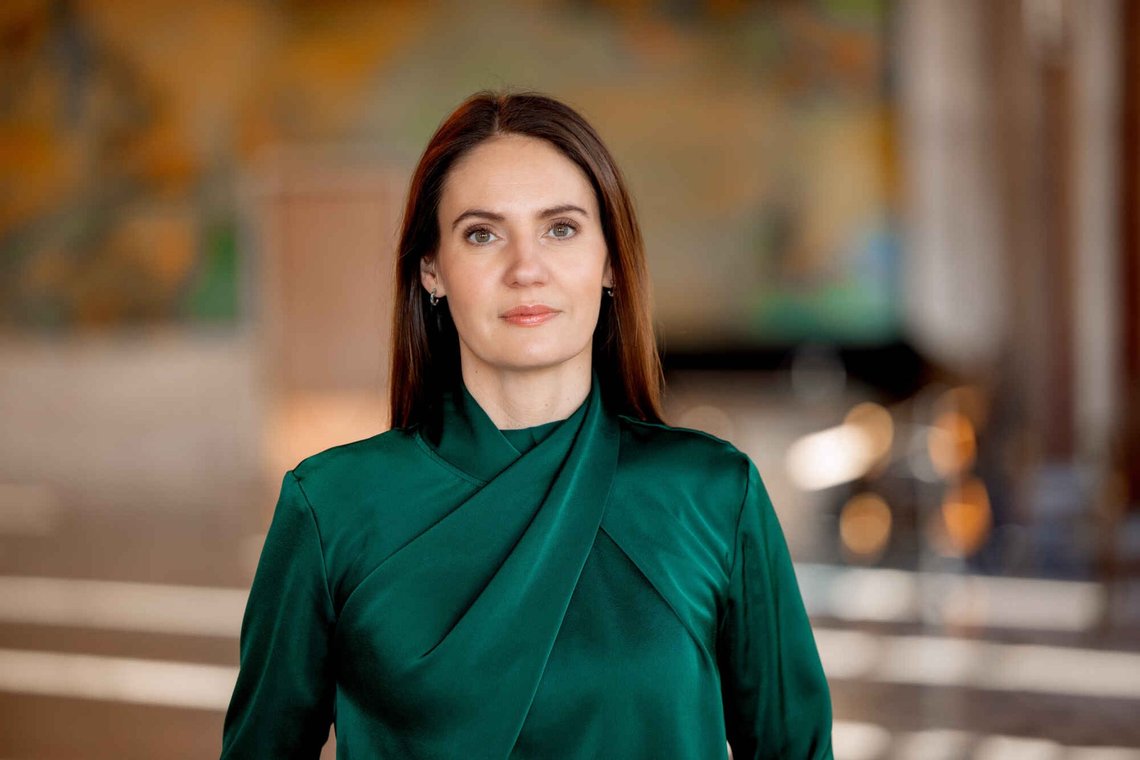


Never before have more incidents of violence been reported in Oslo schools. Councillor for Education Julie Remen Midtgarden (Conservative Party = Høyre) explains part of the violence by stating that pupils have no other ways of communicating. The Education Association warns of increasingly severe violence.
New figures from the Education Agency (Utdanningsetaten) in Oslo show that staff in the capital’s schools reported over 11,200 incidents of violence and threats during 2025. This represents an increase of 50 per cent compared with the previous year, when 7,835 incidents were recorded.
Special schools and special groups stand out markedly in the statistics. Despite these units accommodating only around 1,500 pupils, they account for approximately one third of all reported incidents. Here, the increase was even steeper — 60 per cent in one year.
“Part of the picture”
Councillor for Education Julie Remen Midtgarden (Høyre) believes much of the increase is due to improved reporting procedures and a new incident reporting system that makes it easier for staff to report.
– Much of the increase is due to a better reporting culture and a system that makes it very much easier for the individual to report, Midtgarden told NRK.
At the same time, she acknowledges that there is probably also a real increase, but that it is unclear how large a proportion is attributable to each factor.
Regarding pupils in special schools, the councillor stated:
– What we know about the pupils who attend special schools and special classes is that many of them lack ways of expressing themselves.
And when asked whether staff at special schools must accept being subjected to violence, she replied:
– No staff member should have to accept being subjected to violence. But we must also recognise that for pupils who have extensive and complex challenges, for some, acting out may be part of that picture.
The Association raises the alarm
County board member Anette Sandvær of the Education Association presents a more sombre picture. She questions whether a culture has developed in which staff at special schools are expected to tolerate more.
– Is it the case that it is more acceptable, simply because it is a special school? That what is considered justifiable there would not have been justifiable at another school?
Sandvær states that she has never received as many enquiries as in recent years, and that they concern very serious incidents at primary and lower secondary levels. The Association warns that more severe violence is now finding its way into schools.
The figures show that it is the youngest pupils — children between 6 and 12 years of age — who account for the majority of the reported incidents. The councillor herself pointed out that the debate gives a skewed picture:
– I think that far too often the impression has been given that violence and threats concern 14-year-olds with knives.
Nevertheless, it is the most serious incidents that create the greatest fear among staff, according to the Education Association.
Increase also in other major cities
The problem is not limited to Oslo. Other Norwegian major cities also have high levels of violence, although Trondheim experienced a slight decline last year with 2,774 reported incidents. Midtgarden pointed out that Oslo often becomes a showcase because the media are more readily accessible in the capital.
In March, the Government permitted that pupils who act out (utagerende elever) may be removed from the classroom, justified by the fact that the number of teachers experiencing violence and threats has increased over the past decade.


