



EU laws against discrimination are no longer considered sufficient. Now algorithmic discrimination has become a problem, and a new strategy against racism is to be implemented.
First came the EU Directive of 29 June 2000 on “implementing the principle of equal treatment for all”, regardless of race or ethnic origin. Then came the Action Plan against racism for the period 2020–2025, which emerged in the wake of the George Floyd case in the United States.
Now the strategy plan (PDF) for the years 2026–2030 is finally here.
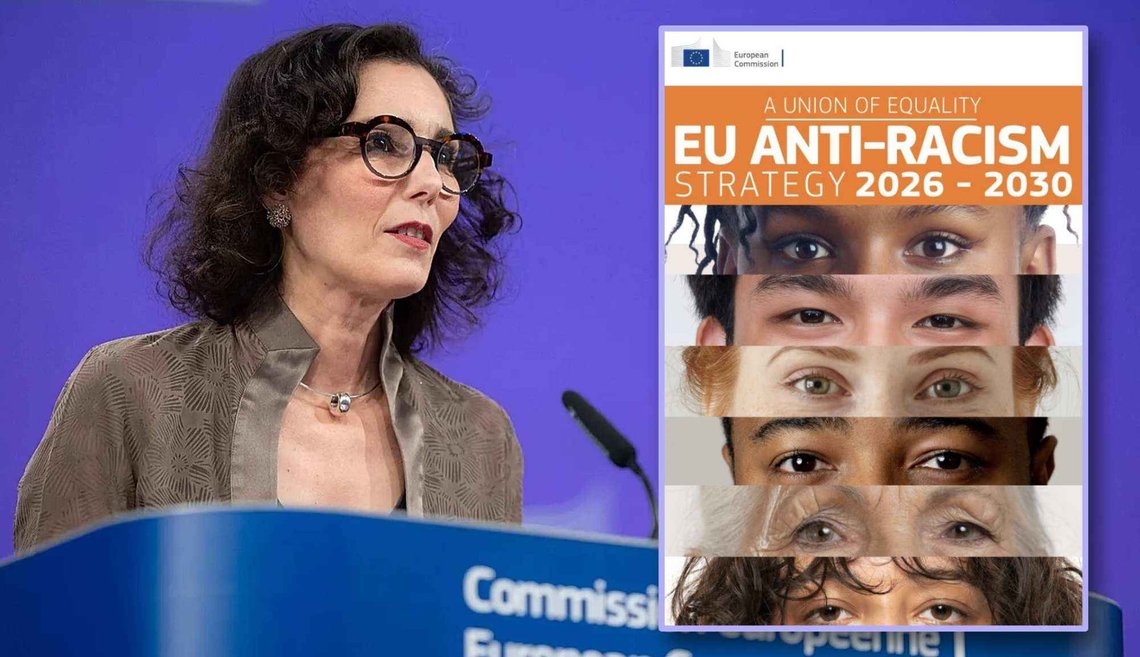
It is a 17-page pamphlet bearing the slogan “A union of equality”. Four of the six photographs on the front page depict people not traditionally associated with Europe.
A total of €3.6 billion is now to be channelled into anti-racism efforts.
Part of this will go towards increasing support for civil organisations through the AgoraEU programme, which is a subsidy scheme for cultural and organisational life.
More funding is undoubtedly required, for racism is highly widespread within the EU area, if one is to believe a survey from Eurobarometer. As many as two out of three inhabitants of the EU’s 27 Member States perceive racial discrimination as a widespread problem.
It has crept up on us:
– Racism is not only about insults, but about something that has crept into our people, said the EU Commissioner for Equality, Hadja Lahbib, when she launched the strategy plan.
A focus on “anti-Muslim hatred” is included in such a strategy. The Commission mentions this specifically and will conduct a “comprehensive mapping of how this manifests itself, and propose measures to combat it”.
It will also facilitate “the development of a practically applicable definition of anti-Muslim hatred in order to improve common understanding and raise awareness”.
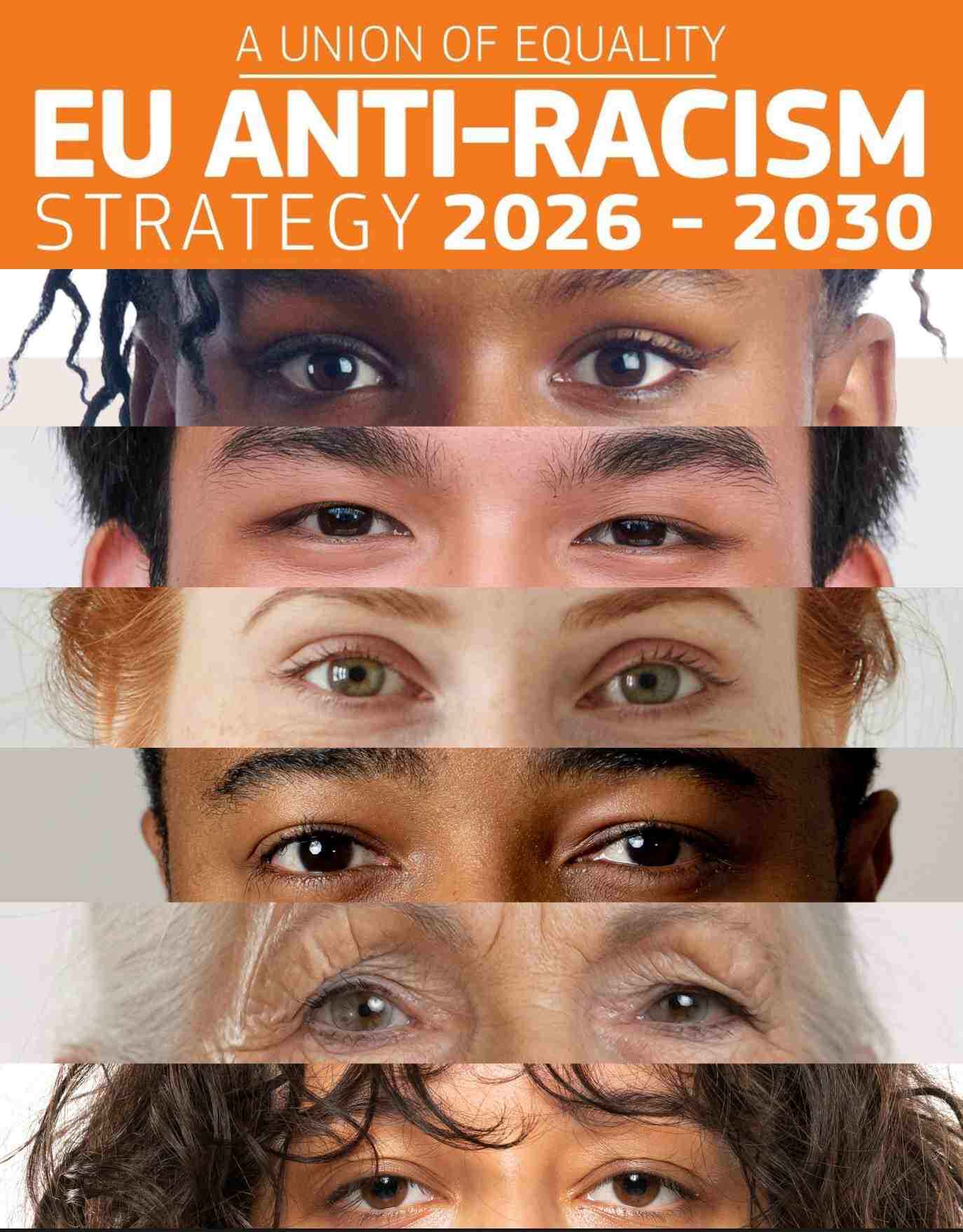 The front page of the strategy plan. Facsimile from the European Commission’s publication.
The driving force behind increased focus on religious and racial issues in the EU is the President of the Commission, Ursula von der Leyen.
When presenting herself for re-election, she outlined visions for the period 2024–29. There she launched her objective of instructing the EU Commissioner to develop a dedicated strategy against racism and for “LGBTQI equality”.
All victim groups are to be included
The aim of the strategy is, among other things, to exert pressure on the Member States’ equality bodies to comply with the provisions of EU Directive 2024/1499 of 7 May 2024. This legislation requires Member States (including Norway) to establish or strengthen national “equality directorates”.
Countries are also encouraged to appoint “national anti-racism coordinators” and to develop national anti-racism plans.
This does not concern only traditional equality between men and women. Equality ombuds are now also to ensure equality between races, ethnic origins, religion or belief, disabilities, age and sexual orientations.
The full overview of which victim groups countries must take into account is, according to the law, found by consulting four other legal texts:
- Article 4 of Directive 79/7/EEC
- Article 2 of Directive 2000/43/EC
- Article 2 of Directive 2000/78/EC
- Article 4 of Directive 2004/113/EC
Among other things, the countries’ equality bodies are to require society to provide everyone with equal rights in the labour market, equally favourable social benefits, and equal access to the purchase and provision of goods and services.
According to the law, all victims of discrimination are to be provided with assistance by the state. Such assistance is to be granted immediately to anyone who invokes the status of victim of discrimination – even if “discrimination has not yet been established”.
Inclusion is to be “integrated into everyday life”
The first measure in the new strategy is stronger enforcement of existing anti-discrimination laws.
- Existing laws are to be evaluated with regard to the “need for stronger sanctions” (increased penalties).
- Particular focus is to be placed on “algorithmic discrimination” and artificial intelligence with embedded racism.
- It is to become easier for EU countries to clamp down on “hate speech and hate crime” by redefining hate crimes, which the EU describes as “harmonising the definitions”.
- Funding is to be allocated to equality, social harmony and inclusion within the Horizon Europe programme, particularly in order to promote greater diversity in the research sector.
One example of what the EU considers algorithmic racism is examination software that may have difficulty recognising students with darker skin tones, or that offers car insurance pricing on websites based on information “closely linked to ethnic background”.
Otherwise, considerable space is devoted to structural racism. EU countries are also to “remove barriers and promote inclusion in education, employment, health and housing”.
- Inclusion is to be “further integrated into everyday life”.
- A campaign on equality is to raise awareness of inclusion across the EU.
- Improve the collection, analysis and use of “equality data”.
- Carry out a study to assess risks and solutions related to housing for “the most vulnerable groups”.
The strategy is also to build partnerships “against racism at all levels of society”.
- Support for civil organisations working against racism is to be increased through the AgoraEU programme, which distributes funding to cultural and organisational life.
- Continue the work of the EU’s anti-racism coordinator in cooperation with, among others, academia.
Critics: – A missed opportunity
Unsurprisingly, several left-leaning organisations working against racism have criticised the strategy plan for not going far enough, or for not resulting in any changes at all.
– It does not address the scope, seriousness and structural nature of racism in Europe, comments the European Network Against Racism (ENAR) in a press release.
“A missed opportunity to address the structural violence experienced by racialised groups,” states the headline.
At the press conference, questions were raised as to whether the Trump administration’s criticism of the EU’s woke policies had led to the content of the strategy being diluted. However, both Lahbib and Julie Pascoet from ENAR rejected this.
– The far right has gained increasing influence in the European Parliament, so if there has been pressure and dilution, it is more likely to have to do with pressure from within Europe, Pascoet argued.
Amnesty International’s Eve Geddie is concerned with “bullies”. Speaking to Deutsche Welle, she states that the strategy is a product of “the prevailing political environment in the EU at present”, and that it lacks ambition:
– It is deeply disappointing that the EU, instead of standing up to bullies, has settled for a timid and diluted policy that falls short of what the situation requires.


