

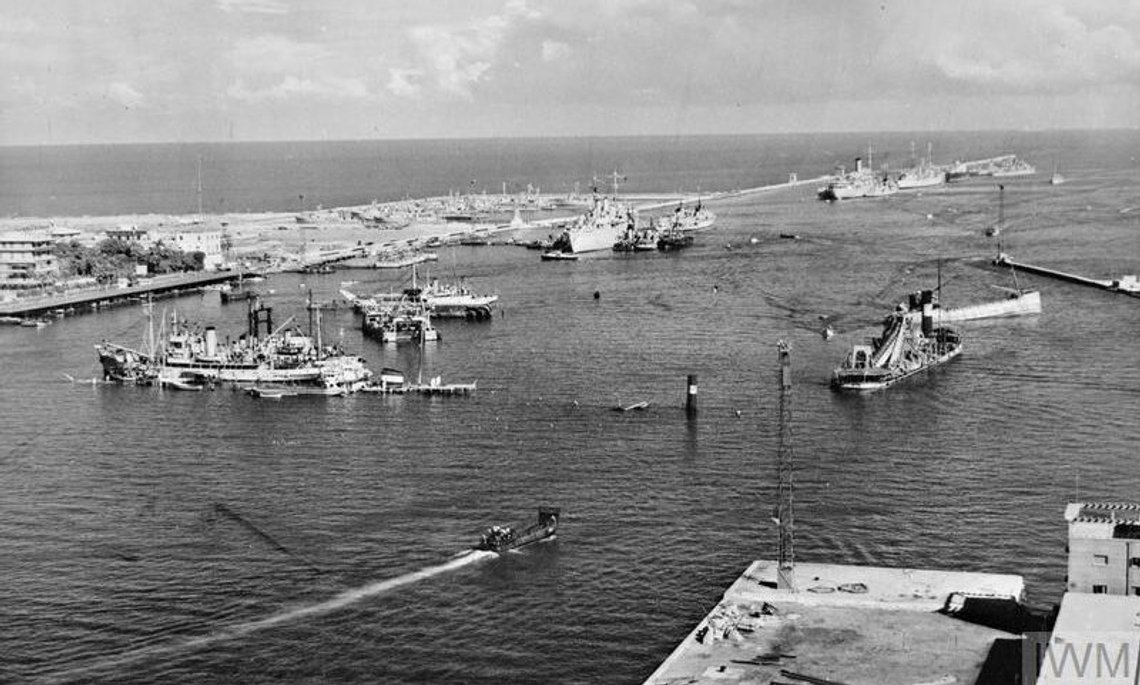
One of the foremost historians of our time, Niall Ferguson, has just published an article in The Free Press entitled ‘How Great Powers Lose Wars They’re Winning’, in which he draws parallels between Nasser’s nationalisation of the Suez Canal in 1956 and Iran’s closure of the Strait of Hormuz in 2026.
During the Suez Crisis in 1956, the old colonial powers, the United Kingdom and France, were forced to retreat. According to Ferguson, much may indicate that the United States has marched straight into an almost identical trap in the Strait of Hormuz.
Ferguson shows how the apparent military and technological superiority of great powers often leads them to overestimate their own strength and underestimate the economic and logistical challenges associated with distant wars, as well as the adversary’s will to resist and the domestic political costs on the home front.
Just as the United Kingdom, France and Israel underestimated Egypt during the Suez Crisis, there is a considerable risk that the United States and Israel have underestimated Iran. They are winning the battles, but risk losing the war. For Iran controls the Strait of Hormuz and thereby the world economy.
In 1956, Egypt’s President Gamal Abdel Nasser nationalised the Suez Canal. The response of the British, the French and the Israelis was a classic colonial power manoeuvre: a coordinated attack to retake the canal and overthrow Nasser.
Israel attacked Sinai, while the British and French bombed and landed troops to secure the canal. The objective was to overthrow Nasser and restore control over the canal. But the old colonial powers had not reckoned with the new superpowers, the United States and the Soviet Union.
The United States, under Eisenhower, refused to support its allies. Washington feared that a war in the Middle East would destabilise the oil price, weaken the dollar and provide the Soviet Union with a propaganda victory in the third world. The Soviet Union, for its part, openly threatened missile attacks against London and Paris.
Militarily, the operation was initially a success. But then reality intervened. The oil price soared as the canal was blocked. The British economy suffered a brutal setback. Sterling took a beating. Together with the lack of support from the United States, this resulted in a humiliating Anglo-French retreat and the final end of the imperial era for the two old European great powers.
The United Kingdom was reduced to a middle-ranking power between the superpowers. France lost confidence in the United States and subsequently withdrew from military cooperation in NATO and developed its own nuclear force independently of the United States—‘Force de frappe’.
Ferguson believes that much may indicate that the United States has now ended up in the same situation as the United Kingdom in 1956, namely in an alliance with Israel to secure control over a strategic waterway in order to remove the regime that controls it. This time it is not the Suez Canal, but the Strait of Hormuz.
Iran has, like Egypt in 1956, lost on the battlefield but retained its most important trump card: the ability to disrupt the world economy by threatening or closing the strait. Even though the United States and Israel are militarily superior, time is working against a great power that becomes increasingly overstretched as time passes, both militarily, economically and politically.
“The economic costs of war accumulate more rapidly than the strategic gains can be reaped.”
The oil price has risen sharply. The stock markets are reacting negatively. Global supply chains are trembling. China, which is heavily dependent on oil passing through Hormuz, has been drawn in as a key actor, just as the United States and the Soviet Union were during the Suez Crisis. Russia, which at that time supported Nasser, now plays a similar role by supplying Iran with weapons. The parallels are striking.
The critical waterway: The Suez Canal was the lifeline of European oil imports in 1956. The Strait of Hormuz is the lifeline of global energy in 2026. Both are geopolitical chokepoints where a regional power can paralyse the world economy by relatively simple means, without winning a single conventional battle.
The alliance with Israel: Then as now, Israel is the closest partner in an attack against a hostile Arab/Persian state.
Military success, strategic failure: The Western forces won the battles, but lost the political and economic war. Egypt retained the canal. Iran appears to retain the ability to threaten Hormuz.
Currency hegemony: The British pound nearly collapsed in 1956. Today, the dollar and American creditworthiness risk suffering from prolonged, costly operations in the Persian Gulf. We are already witnessing an increasing shift towards Russian oil being traded in Chinese petro-yuan rather than in dollars.
Ferguson reminds us that great powers often lose, not because they are militarily weak, but because they underestimate how rapidly economic shocks, allies’ reluctance and the adversary’s asymmetrical means can turn victory into defeat.
In 1956, the United States forced the British and the French to retreat in order to prevent the Soviet Union from gaining excessive influence in the Middle East. In 2026, it is China that may emerge strengthened if the United States becomes bogged down in a prolonged war with Iran over control of Hormuz.
Niall Ferguson’s analysis is a reminder that war is not only about military capacity, but about economics, ideology, domestic politics and global balances of power.
The question now is whether Trump’s advisers remember the Suez Crisis, and whether they have learned from the many lost wars of previous American presidents in the Middle East. The question now is whether Hormuz will become for the United States what Suez became for the United Kingdom. That remains to be seen.
My guess is that Trump will withdraw American forces in the near future, as they did in Venezuela. I suspect that Trump will leave it to those countries dependent on the oil to contribute themselves to keeping the strait open. This applies above all to China, Japan and India, as well as to US allies, the Gulf states and the EU.
They need the oil. The United States does not. The United States is self-sufficient. Trump likely reasons that if EU countries are unwilling to contribute to keeping Hormuz open, they can instead purchase American oil and gas.
Such an outcome would in that case not weaken the United States and Pax Americana in the same manner as the Suez Crisis weakened the United Kingdom and Pax Britannica, as Ferguson appears to consider the likely outcome of the war with Iran. On the contrary.
In any case, whether under international law or not, the apocalyptic theocratic clerical regime in Tehran, with its strong element of Mahdi belief and end-times cult, cannot be allowed to possess nuclear weapons. Preventing the use of nuclear weapons is a collective international concern.
The United States has, on behalf of the international community, hopefully now succeeded in dismantling the Iranian nuclear weapons programme, at least for a considerable time to come. This ought to have been actively supported, and not opposed, by the European NATO countries and the international community at large.
Energy security and open trade routes are likewise a collective international concern. Iran cannot be permitted to control international shipping through the Strait of Hormuz. And here international law is clear.
Freedom of passage through Hormuz is for the international community to ensure, including the maritime nation Norway. The efforts of the United States to keep the strait open ought to have been actively supported by the EU and Norway.
Regime change in Iran, however, is not an international concern. The future of the clerical regime must be for the Iranian people themselves to decide, however much we might wish that the time of the mullahs in Iran is now over.
Trump is doing the right thing. He is doing what must be done, but risks repeating history. Weak allies increase precisely the risk that history will repeat itself.


