

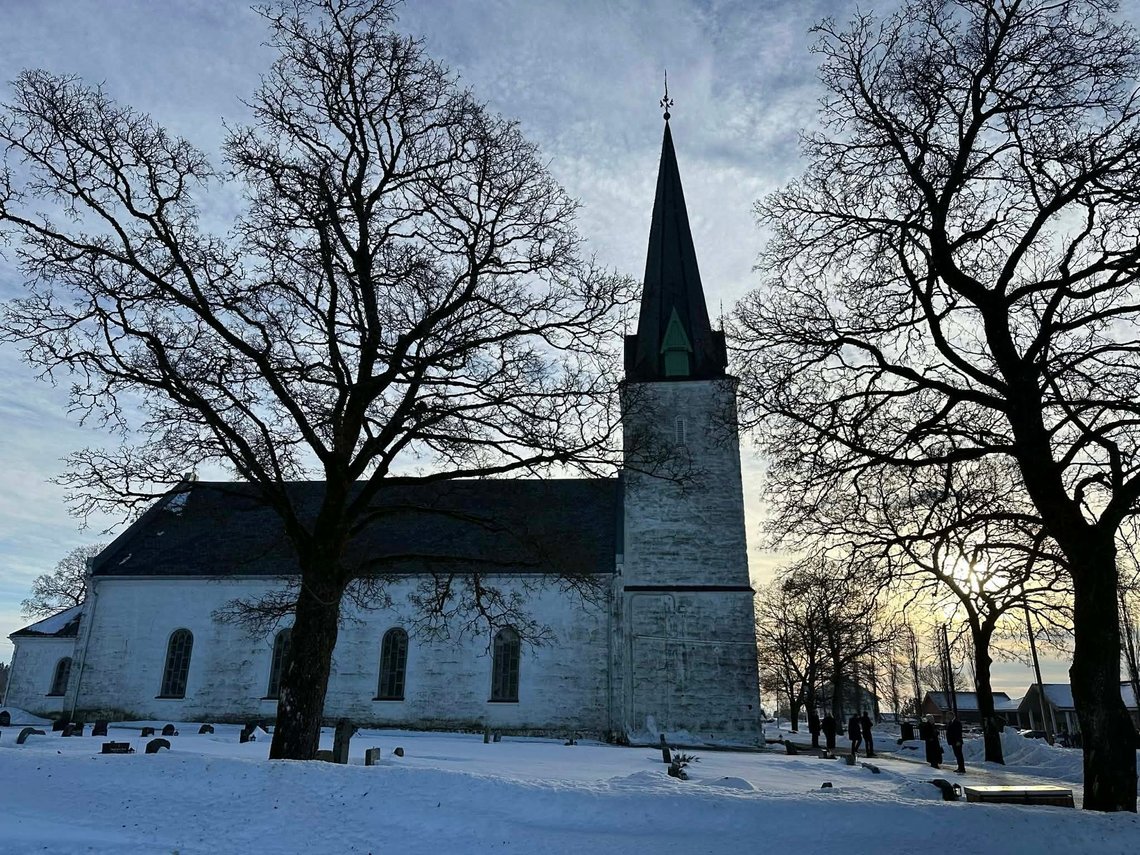


Fewer and fewer Norwegians are choosing a traditional Christian farewell when life comes to an end.
A recent report from TV 2 shows that one in five people now chooses alternative forms of burial instead of the traditional ceremonies in the church. The development raises concern as to whether society’s shared rituals are in the process of disintegrating and whether death is becoming overly privatised.
Loneliness as a driving force for change
The reason why many now opt out of the church is often a fear that attendance in large church spaces will be sparse. TV 2 has spoken with Arve Ammerud, who recently chose an intimate conversation ceremony (samtaleseremoni) for his aunt rather than a traditional funeral. He justifies the choice by noting that most of her friends were deceased and that the family is small. He describes it as a sad sight with empty rows of pews in a church and considers that it does not provide a dignified farewell.
This is highlighted by several as a sign of increasing loneliness among the elderly in modern Norway, where the social network often disappears before life itself has ended.
The loss of the shared space for mourning
Critics of this development point out that the funeral loses its function as a public rite of passage when it is moved into closed and private settings. Whereas the traditional funeral has been an arena in which the entire local community can participate and show respect, the new forms are to a greater extent reserved for a narrow circle. This may lead to death being further rendered invisible in the public sphere and to a higher threshold for showing support to the bereaved when the ceremony is no longer open to all.
The commercialisation of the farewell
Funeral agencies perceive a clear business opportunity in the new needs and are continuously developing new products to meet the demand. Jan Willy Løken of the funeral agency Jølstad confirms to TV 2 that they are focusing on customisation and conversation ceremonies (samtaleseremonier) as a supplement to the traditional offering. Neither the Church nor other faith communities any longer hold the same monopoly on how we mark the end of life.
The question raised from a conservative standpoint is whether traditional dignity is being replaced by a more superficial observance that lacks the deep historical and cultural roots that religious traditions have provided for generations.
Although many bereaved feel that they are able to bring matters to a fitting close by honouring their loved ones in smaller settings, sociologists warn of a development in which we lose the ability to mourn collectively. When an increasing proportion opts out of traditional ceremonies, this marks a clear shift in which individual preferences and the fear of empty seats carry more weight than the shared traditions that have bound society together.


