“`html
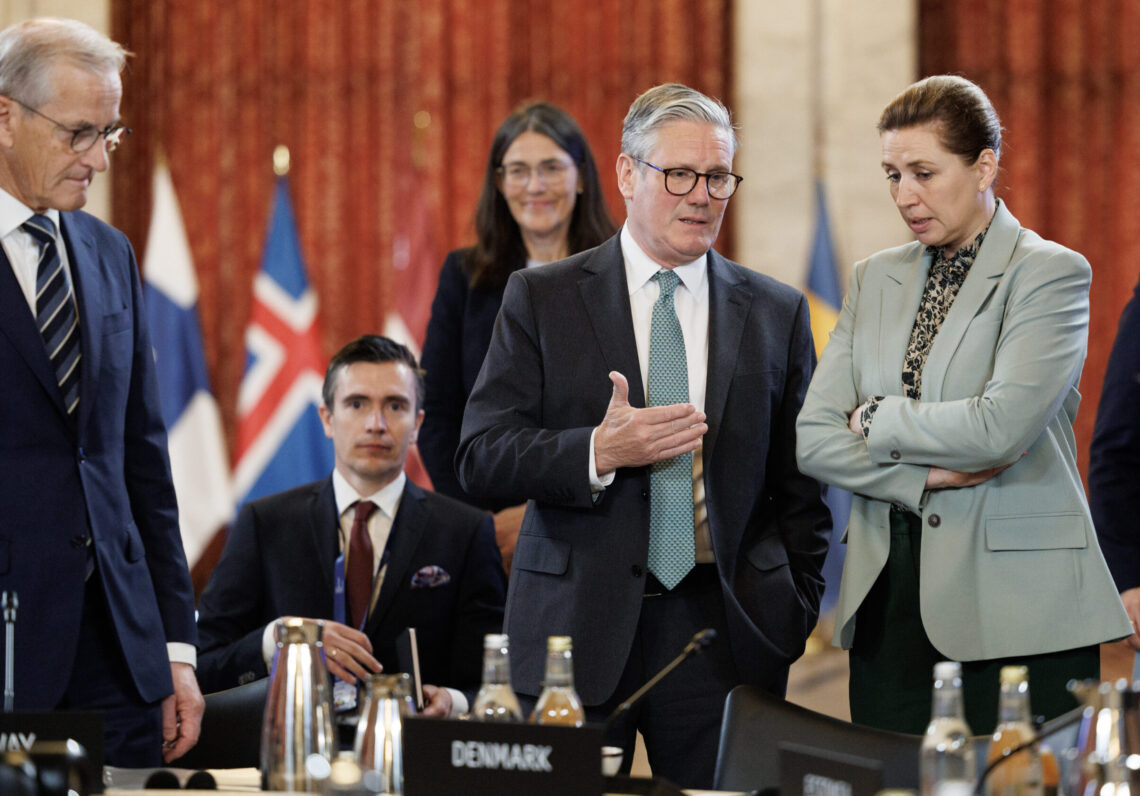
Keir Starmer once again insists that the conflict in Iran “is not our war, and that we will not allow ourselves to be drawn into it”.
Britain’s Prime Minister made the statement at the launch of Labour’s election campaign for the local elections, writes The Times.
– Yes, of course we will defend British lives and British interests in the region, and we will support our allies in the Gulf region, but we will not allow ourselves to be drawn into the conflict.
Starmer used the occasion to deliver some barbs at his political opponents, saying that the United Kingdom would find itself “in a war without a plan” if the leaders of the Conservative Party or Reform UK had been in power.
– They [Kemi Badenoch and Nigel Farage] want to throw themselves headlong into the war without thinking through the consequences.
– That is a dreadful judgement, because to lead one’s country into war is the most important decision a Prime Minister can ever take, and if they had been in government, we would have been in a war without a plan.
But Starmer cannot ignore that Iran’s blockade of the Strait of Hormuz has pushed the oil price up towards 117 dollars per barrel. The United Kingdom is already in a self-inflicted energy crisis, largely due to Net Zero-general Ed Miliband’s fanatical belief that unstable and extremely expensive renewable energy such as offshore wind is the solution.
Sir Keir is to hold talks on Monday with the United Kingdom’s largest energy suppliers, while the departments emphasise that they “are preparing for all possible outcomes”
The Minister of State for Environment, Food and Rural Affairs, Emma Reynolds, told Sky News:
– Supply is stable for the time being, but we must of course be prepared for all eventualities.
– We very much hope that this conflict can be de-escalated, and we are leading the international effort together with our allies to achieve this. But we must of course make plans for the eventuality that this does not happen, and that is why the Prime Minister, as you say, is today meeting leaders from energy companies and also from shipping and logistics.
– But that is to ensure that we work constructively with the industry. We will of course ensure that there is no market abuse, but we must also prepare for all eventualities.
She added:
– I would just like to reassure your listeners that supply is stable. So we are not recommending that people change their habits; they should fill up at the petrol pump as usual, and the price cap will apply until the end of June.
It remains to be seen whether Britons, who are already under heavy pressure from Labour’s economic policy, can carry on as if nothing has happened.
When British motorists fill up, they experience that the price per litre has passed £2, approximately 26 Norwegian kroner.
For the few who have chosen battery-powered cars, electricity costs more than 3 kroner per kWh, plus a daily fixed surcharge of 7.40 kroner.
There is reason to question whether Starmer and Miliband regard these costs affecting ordinary Britons as a problem that Labour’s policy ought to take into account.