



“`html
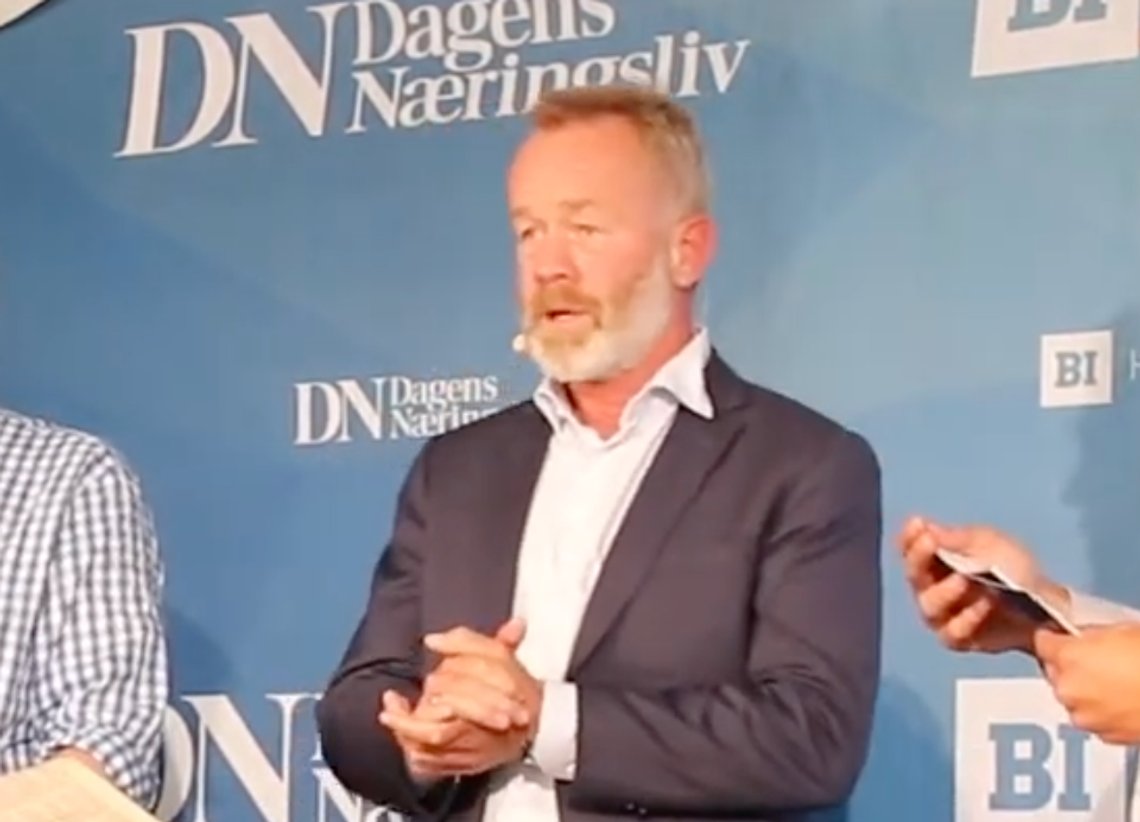
Former editor of Dagens Næringsliv, Amund Djuve, is to lead the independent commission that will examine the Epstein scandal. There are five other members. The choice of Djuve may seem surprising. He has a gentle demeanour and is an economist. A chair of the commission should know the networks within politics and public life and be willing to challenge them.
- Kjersti Buun Nygaard as deputy chair
- Hugo-A. B. Munthe Kaas
- Pia Therese Jansen
- Sunniva Engh
- Axel Wernhoff
We have asked Grok to produce profiles and share these with the readers. The names mark a shift in the Norwegian public sphere. There are no longer prominent personalities who dare to hold opinions. We had expected that the few who have distinguished themselves, such as Benedikte Moltumyr Høberg, would have been self-evident choices. Instead, we have got people on the inside, persons who are little known and are tied to institutions within consulting, major law firms, academia and law. This is the same development that we are seeing in the USA and Western Europe.
The public knows little about these persons. The choice of them says a good deal about those who appointed them: the Presidium of the Storting.
Støre stated that the work of the commission must not become too extensive and critical. One must not damage the work of all the honourable people in the foreign service. Støre appears to have misunderstood: it is precisely so that suspicion should not fall upon them that the work must illuminate every nook and cranny. Støre’s warning appears to hint at the opposite: some sleeping dogs must be left lying if the ship is to be able to sail.
The profiles as described by Grok, for what they are worth.
Amund Djuve (born 28 April 1963 in Oslo) is a Norwegian journalist and media executive. He is best known as editor-in-chief and chief executive officer of Dagens Næringsliv (DN) from 1999 to 2022, and later as group chief executive of DN Media Group (formerly NHST Media Group). He stepped down as group chief executive in October 2025 and continues in an advisory role until May 2026.Wikipedia
Background and career
Education: Graduate in business administration from the Norwegian School of Economics (NHH) in Bergen (graduated 1988).
Early career: Started as a journalist and editor at the news agency TD Finans (1988–1995), then headed DN’s financial desk (1995–1998), and was economics editor at NRK (1998–1999).
The DN years: Took over as editor-in-chief after Kåre Valebrokk in 1999. Under his leadership DN grew in circulation and influence, with a strong commitment to investigative journalism on corruption, fraud, money laundering and business scandals. The newspaper has won several prizes for good journalism during this period.
Later roles: From 2021/2022 he moved into group management (director of publications, then group chief executive from 2024). In 2025 it became known that a British Financial Times executive (James Lamont) would take over the leadership of DN Media Group.
Djuve has a background as an economist rather than a traditional journalist, which has shaped his focus on business and finance.
Critical assessment
Positive aspects:
He has been a successful leader who has modernised and strengthened DN as an agenda-setting newspaper – both in print and digitally. Circulation growth, prize-winning stories and an emphasis on investigative journalism count in his favour.
Under Djuve, DN has exposed several cases of abuse of power, corruption and financial crime, which suits a business newspaper well.
Critical aspects and controversies:
Business-friendly profile: As editor of Norway’s foremost business newspaper, Djuve and DN have often been criticised for being too close to the business community and too little critical of major actors. Some have seen him as a “pink editor” (an old nickname from 2006) who balances cautiously between power and journalism. Examples include debates surrounding coverage of figures such as Kjell Inge Røkke or political transitions into business/PR (such as the Bjarne Håkon Hanssen case).
Criticism of method: In cases such as the Giske case (MeToo-related in the Labour Party), DN and Djuve were criticised for the handling – both internally and by involved parties. Giske maintained that DN spread rumours and breached press ethics by confronting him with unverified allegations just before publication.
Political balance: There have been objections that Djuve/DN has appeared friendly towards the non-socialist parties (e.g. appeals for a non-socialist government in debates). As economics editor and leader he has a background that may lend a more market-liberal angle than pure news journalism.
Leadership change 2025: The transition out of group management was described as a “leadership change” in which an external FT profile took over. Some interpreted it as meaning that Djuve in reality was sacked or pushed out after many years, even though it was officially presented as a planned succession in a demanding media industry with uncertainty and profitability requirements.
Taken together, Amund Djuve is one of the most influential media leaders in Norwegian business journalism over the past 25 years. He has delivered growth and investigative journalism, but critics point to an overly close relationship with the business environment and certain challenges of method and balance. He represents a type of editor who combines financial expertise with editorial power – something that brings strengths, but also potential blind spots in the coverage of power and money.
In March 2026 it became known that Djuve is to lead the Storting’s investigation of the Epstein case, which shows that he still enjoys trust in public contexts.
Sources include Wikipedia, Store norske leksikon (SNL), DN itself, Aftenposten, VG and Journalisten. The information is based on public biographies and media coverage up to 2026.
Background and careerEducation: Jurist from the University of Oslo (UiO). She has also completed the chief course at the Norwegian Defence University College, which shows broad competence beyond pure law.
Early career in the Supreme Court: From 2002 she was a legal clerk in the Supreme Court for five years. She later became deputy head of the legal research unit, and from May 2011 to January 2014 she was assistant director in the Supreme Court.
Borgarting Court of Appeal: She began in the Court of Appeal in 2014 and since 2017 has been an appellate judge with responsibility as head of division. This is a leading role in which she is responsible for case processing and management of a division.
Application to the Supreme Court: In 2024 she was among the applicants for two vacant offices in the Supreme Court (together with, among others, Bettina Banoun). She was not appointed, but the application underscores her high standing in the legal milieu.She is known for a career that combines practical judicial experience with administrative and investigative competence from Norway’s highest judicial instance.
Known cases and roles
Kjersti Bruun Nygaard has been a judge in several media-covered cases, including:the Breivik case (2017): As an acting appellate judge and lay judge in the Borgarting Court of Appeal she dealt with the case concerning Anders Behring Breivik’s prison conditions. The court concluded unanimously that the prison conditions at Ila did not constitute a breach of human rights (not torture or inhuman treatment). The judgment was clear and without doubt, and the court held that Breivik had lost the case completely. This was an inspection case with a closed inspection in the prison.She has also been involved in other criminal and civil cases through her role in the Court of Appeal.
Critical assessment
Positive aspects:
Strong professional background from both the Supreme Court and the Court of Appeal, with experience of investigation, administration and leadership. This gives her broad competence in the application of law and procedure.
Participation in principled cases shows an ability to handle complex and sensitive questions (such as human rights in prison conditions).
She appears as an experienced and stable jurist with trust in the system – something the application to the Supreme Court confirms.
Critical aspects and potential objections:
In the Breivik case (2017) the judgment was controversial for parts of public opinion. Some critics (especially from the left or human-rights circles) thought Breivik’s prison conditions were too strict or that the case should have assessed isolation and restrictions more rigorously against the ECHR (the European Convention on Human Rights). The court was accused of being too “state-loyal” or too little willing to criticise the prison authorities. The judges (including Bruun Nygaard) stated that there was no doubt, which for some seemed too categorical.
Generally for appellate judges in high-profile cases: criticism of the judiciary often concerns lack of transparency, long case-processing times or conservative application of the law. As head of division she can be indirectly linked to criticism of efficiency or prioritisation in Borgarting.
She has a background from the Supreme Court that can give an impression of an “established” or “inside perspective”, something which in certain debates on judicial reforms or human rights is seen as less inclined towards reform.
Taken together, Kjersti Bruun Nygaard is a typical senior Norwegian judge: professionally solid, experienced and little visible in public debate outside the courtrooms. She represents a professional, independent judiciary, but in cases of major public interest (such as Breivik) the judicial role will always attract criticism from different sides – whether for being too strict or not strict enough.
She has no known direct connection to Amund Djuve or the media industry beyond having been a judge in cases that were covered by the media (DN and other newspapers covered the Breivik case). The information is based on public sources such as Advokatbladet, Aftenposten, court documents and LinkedIn profiles up to 2026. No major personal controversies or scandals are linked to her in the public media.
Hugo-A. B. Munthe-Kaas (full name often given as Hugo-André Bøe Munthe-Kaas) is a Norwegian lawyer and partner in the law firm DLA Piper Norway in Oslo. He leads the firm’s competence group in compliance and risk management, with particular emphasis on EU regulatory questions, international sanctions and export control. He is one of Norway’s leading experts on compliance, anti-corruption, anti-money laundering (AML), ESG and related investigations and inquiry matters.
Background and career
Education and early career: He has a background in maritime law and the maritime sector, including the Maritime Trainee Programme. He has previously worked as a scientific assistant at the Nordic Institute of Maritime Law, and as a lawyer in the shipping companies Höegh Autoliners and Höegh LNG.
Thommessen: For nine years he led Thommessen’s professional group for compliance and investigations before moving to DLA Piper.
DLA Piper (from 2020): Became partner in April 2020. He assists both Norwegian and multinational companies with advice on international trade, economic sanctions, the Security Act, FDI (foreign direct investment), export control and insurance-law questions. He also has experience with dispute resolution and offshore/shipping-related matters.
Recognition: Ranked highly in independent surveys such as Chambers & Partners (Corporate Compliance & Investigations), Legal 500 and Finansavisen’s annual lawyer survey. He has been named one of Norway’s foremost “up-and-coming” lawyers in compliance and investigations, and is described as a “go-to practitioner” in sanctions- and defence-related matters.
He speaks English, Norwegian and Russian, which is an advantage in international compliance.
Critical assessment
Positive aspects:
Strong and specialised competence in a highly topical field: compliance and sanctions have become increasingly important in Norwegian business after the Russia sanctions, increased focus on ESG and stricter regulatory requirements from the EU and Norwegian authorities. Munthe-Kaas has experience from both the shipping industry and major law firms, which provides practical insight combined with legal depth.
He contributes to professional development through articles, lectures (e.g. on regulation and security) and teamwork (often together with prominent colleagues such as Berit Reiss-Andersen). The rankings show that he enjoys trust among clients in insurance, shipping and multinational companies.
His career shows an ability to build and lead professional environments – from Thommessen to DLA Piper.
Critical aspects and potential objections:
As a compliance lawyer in a global firm such as DLA Piper, he represents a system in which large companies seek advice to navigate regulatory requirements. Critics of the compliance industry (often from the left or activist milieus) may see this as a “defence of capital” – helping companies avoid fines or scandals rather than pursuing genuine ethics or transparency. It is a classic objection to “Big Law” in regulatory fields: one often assists the powerful actors.
The field is characterised by complex and rapidly changing rules (sanctions, AML, ESG). Some matters may involve grey areas where advice balances between lawful optimisation and ethical boundary. There is general criticism of lawyers who “sell reassurance” to business without challenging underlying power structures.
No major personal or professional scandals are linked to him in public sources. He is a typical “low-profile” expert lawyer who operates behind the scenes for clients rather than in the media. This can for some be interpreted as a lack of openness, or as a strength (professional discretion).
Taken together, Hugo-A. B. Munthe-Kaas is a modern, highly ranked specialist lawyer in a field that has exploded in relevance over the past 10–15 years. He combines a maritime/economic background with regulatory expertise, which suits Norwegian business’s international orientation well (shipping, energy, offshore). Unlike the historical WWII hero of the same surname (Hugo Conrad Munthe-Kaas, 1922–2012, resistance man and Progress Party politician), this Munthe-Kaas is a purely legal actor with no known political profile or media exposure beyond professional contributions.
He has no direct public connection to Amund Djuve (DN) or Kjersti Bruun Nygaard (judge) beyond the fact that compliance and inquiries may overlap with media revelations or court cases in which they have been involved indirectly.
The information is based on public profiles from DLA Piper, LinkedIn, Chambers, Finansavisen, Rett24 and other legal sources up to 2026. No major controversies or personal matters are known.
 Oslo 20230929.
Committee chair Pia Therese Jansen during the open hearing in the Storting on the mass shooting on 25 June last year.
Photo: Ole Berg-Rusten / NTB
Pia Therese Jansen (often referred to as Dr Pia Therese Jansen) is a Norwegian expert on security, intelligence and terrorism. She works as Leading Advisor Security at Equinor and has a secondary position as associate professor II at the Norwegian Police University College, where she researches and teaches intelligence. She holds a doctorate from the University of St Andrews (PhD in 2007/2008) with a dissertation on the consequences of Israel’s counter-terrorism policy.
Background and career
Education: Doctorate from the University of St Andrews, where she researched terrorism and counter-terrorism.
Previous roles:
Worked on extreme Islamism in the Intelligence Service (Etterretningstjenesten).
Has been affiliated with the Norwegian Defence University College, where she has taught and researched intelligence.
Led the 25 June committee (2022–2023), an external evaluation committee appointed by the National Police Directorate and PST to review the handling of the mass shooting in central Oslo on 25 June 2022 (the attack on the Pride festival, carried out by Zaniar Matapour).
Current roles: Security adviser at Equinor (focus on security in the energy sector) and academic secondary position at the Norwegian Police University College.
She has contributed to professional development through research on intelligence, open-source intelligence (OSINT) and terrorism, including articles and editorial roles.
Known cases and roles
The most high-profile role is as chair of the 25 June committee. The committee delivered a report in June 2023 which evaluated PST’s and the police’s preventive work and handling of the attack. The report was critical and pointed to weaknesses in information-sharing, risk assessment and follow-up of warnings from the Intelligence Service. Among other things, the committee concluded that the attack could potentially have been averted with better measures, and that it could have become one of the deadliest terrorist attacks on civilians in Europe in many years had civilians not stopped the perpetrator. Jansen has also commented that important questions (e.g. concerning the cancellation of solidarity gatherings) remained unanswered after the report.
Critical assessment
Positive aspects:
Strong and relevant competence: The combination of practical experience from the Intelligence Service, academic weight (PhD on terrorism) and teaching in intelligence makes her a prominent expert in a field that is highly topical for Norwegian security policy and business (especially the energy/sector such as Equinor).
Leadership in the 25 June committee: The report was described as thorough and independent. It provided concrete lessons on better interaction between PST, the police and the Intelligence Service, and the committee emphasised the need for tangible measures against terrorism. Jansen has shown an ability to lead interdisciplinary work with sensitive, classified information.
Contribution to openness: As committee chair she has communicated clearly in the media and at press conferences, and contributed to public debate on preventing extremism.
Critical aspects and potential objections:
In the 25 June report strong criticism of PST emerged (e.g. lack of follow-up of warnings and identification of a possible perpetrator). Some in the security environment or PST may experience this as a “brutal judgment” on agencies working under difficult conditions with incomplete information. Critics have pointed out that the committee was not a full commission of inquiry with responsibility for attributing blame, which limited the depth.
Jansen and several committee members later called for more answers from the Director General of Police in an op-ed, which shows internal disagreement or a need for follow-up – this may be interpreted as meaning that the report did not provide complete clarity.
Generally for experts in intelligence/security: Work in the Intelligence Service and Equinor entails a balance between openness and secrecy classification. Critics of the intelligence environment (often from the left or civil society) may see such roles as part of a “security-industrial complex” in which focus on threat pictures (Islamism, extremism) is prioritised over broader social causes of radicalisation.
Her PhD focus on Israel’s counter-terrorism policy may in some debates be highlighted as potentially controversial depending on political standpoint, even though it is academic work.
Taken together, Pia Therese Jansen is a highly competent professional in the Norwegian security and intelligence field. She represents a type of expert who moves between academia, intelligence services and business, with practical experience of terror prevention. The 25 June committee is her most visible public contribution, where she balanced criticism with constructive recommendations. She has a low media profile apart from this case and no known personal controversies.
She has no direct public connection to the previously mentioned persons (Amund Djuve, Kjersti Bruun Nygaard or Hugo-A. B. Munthe-Kaas) beyond the fact that security/intelligence and compliance/inquiry may overlap in matters concerning corruption, terror or business threats that DN might cover.
The information is based on public sources such as Universitetsforlaget, the police website, Aftenposten, NRK, the report from the 25 June committee and academic profiles up to 2026. No major personal scandals or controversies beyond the professional criticism in the terror evaluation are known.
Sunniva Engh is professor of modern history at the Department of Archaeology, Conservation and History (IAKH) at the University of Oslo. She is a leading Norwegian historian specialising in Norwegian and Nordic foreign policy, development aid, global health, population policy and security policy in Asia (especially India, Myanmar and China–India relations). She has also contributed to public committees and research leadership.
Background and career
Education: DPhil (doctorate) in modern history from the University of Oxford (2006) with the dissertation Population Control in the 20th Century: Scandinavian Aid to the Indian Family Planning Programme. She also has an MPhil in economic and social history from Oxford (2000).
Academic career at UiO: Professor of modern history. She has been a postdoctoral fellow in the project “The Norwegian peace tradition”, Fulbright Research Fellow at the City University of New York, and research leader at IAKH (2018–2020). She has led the UiO:Nordic project Nordic Civil Societies: Global, Regional and Transnational Encounters since 1800.
Other roles: Senior researcher at the Norwegian Institute for Defence Studies (IFS) from 2012, with a focus on Asian security. In 2024–2025 she took part in the secretariat for the second Afghanistan committee (Official Norwegian Report (NOU) 2025:9 Defeat – Norway in Afghanistan 2015–2021), which evaluated Norway’s engagement there.
Research themes: She investigates “the Nordic model” in international aid and politics, the intersection between the welfare state, global health and development (e.g. Karl Evang and the Rockefeller Foundation), as well as India’s foreign and security policy. She has written on Nordic aid to India, population control and postcolonial health.
She is active in academic networks, has published in journals such as Medical History and contributed to books on Nordic foreign policy and civil society.
Known roles and contributions
The Afghanistan committee (2024–2025): Contributed to the secretariat for the public inquiry into Norway’s efforts in Afghanistan, a report that analysed engagement policy, military presence and results.
Lectures and debate: She has given presentations on India’s foreign policy, Nordic aid history and the peace tradition. She has also been involved in debates on Norwegian foreign policy, including criticism of the “peace nation” narrative in light of the war on terror and the Afghanistan effort.
Critical assessment
Positive aspects:
High professional weight with an Oxford education and broad international experience (Fulbright, IFS, collaboration with researchers such as Hilde Henriksen Waage and Haakon Andreas Ikonomou). Her work helps to nuance the picture of Norwegian/Nordic foreign policy by linking the welfare state, aid and security in a historically grounded way.
Relevant to current debates: Research on population policy, global health and Asian security provides insight into postcolonial dynamics and the export of the “Nordic model”. Participation in the Afghanistan committee shows an ability to contribute to public scrutiny of Norwegian engagement.
She is a bridge-builder between academia and policy, with projects that explore both idealism and realpolitik in Nordic internationalism.
Critical aspects and potential objections:
Like many historians in the foreign-policy field, her work may be seen as part of an established academic environment that often emphasises structural and ideological explanations (e.g. the role of the welfare state in aid) at the expense of more critical analyses of power, failures or security-political realities. In debates on the “peace nation” and Afghanistan she has been part of criticism that some experience as too one-sided or academically distanced from the perspectives of soldiers and practitioners.
Research on population policy and aid to India touches on sensitive themes such as family planning and eugenics-inspired elements in twentieth-century development assistance. This may give room for interpretations that Nordic aid had paternalistic or neo-colonial features – something Engh herself nuances, but which critics of Western development assistance may use.
Generally for academics in this field: A low public profile outside the professional environment can be interpreted as a lack of broad dissemination, or as a strength (focus on depth rather than media exposure). No personal controversies are known, but participation in public committees (such as Afghanistan) always entails a risk of criticism from different political sides – whether for being too critical of Norwegian policy or for not going far enough.
Taken together, Sunniva Engh represents a typical professional, Oxford-educated Norwegian historian who combines empirical research with broader reflection on Norwegian identity as a “peace nation”, aid actor and security-political player. Her work challenges simple narratives of Nordic altruism versus realpolitik, which is valuable at a time of increased focus on scrutiny of foreign policy (e.g. Afghanistan and now Epstein-related matters in which she is mentioned in a committee context).
She has no direct personal connection to those previously mentioned (Amund Djuve, Kjersti Bruun Nygaard, Hugo-A. B. Munthe-Kaas or Pia Therese Jansen) beyond the fact that in March 2026 she is mentioned as a member or participant in the same Storting committee/commission that Amund Djuve leads for investigation of the Epstein case and the handling by the Norwegian foreign service/authorities. This shows overlap in public inquiry assignments within history, security and foreign policy.
The information is based on public sources such as UiO profile, Google Scholar, NOU reports, Aftenposten, DN and academic publications up to March 2026. No major personal scandals or media controversies are linked to her.
 STOCKHOLM 20220110
Axel Wernhoff, Sweden’s ambassador to NATO, speaks at Folk och försvar’s national conference in Stockholm.
Photo: Anders Wiklund / TT kod 10040
Axel Wernhoff (full name Sture Axel Wernhoff, born 23 June 1958) is a Swedish career diplomat with more than 35 years of experience in the Swedish Ministry for Foreign Affairs (UD). He is known for roles in EU matters, NATO and the Arctic, and has a strong connection to Norway through his ambassadorship in Oslo.
Background and career
Early career: Has served at the embassies in Kuala Lumpur and Vienna, been involved in the Prime Minister’s Office and the Ministry for Foreign Affairs’ ministerial office. He has been deputy head of the Ministry’s EU affairs unit and took an active part in Sweden’s EU presidencies in 2001 and 2009.
Consul General in Jerusalem: 2010–2014.
Ambassador to Norway: 2014–2018 (took office in autumn 2014). Here he worked closely with the Norwegian authorities and gained good insight into Nordic and Arctic matters.
NATO roles: From 2018 head of Sweden’s delegation to NATO in Brussels. He was central when Sweden and Finland submitted their NATO applications in May 2022 (together with his Finnish colleague). Became Sweden’s first permanent representative to NATO after membership on 7 March 2024, a role he held until August 2024.
Arctic role: From 2024/2025 Sweden’s Ambassador for Arctic Affairs and Senior Arctic Official in the Arctic Council. He has experience of the security-political implications in the Arctic, including from his Norway years and NATO work.
He is a typical “career diplomat” with broad experience from Europe, the Middle East, the EU and security policy.
Connection to the Norwegian context
In March 2026 it became known that Axel Wernhoff has been appointed as a member of the Storting’s commission of inquiry which is to review the Norwegian foreign service’s and authorities’ handling in light of the Epstein revelations. The commission is led by Amund Djuve, and the other members include, among others, Hugo-A. B. Munthe-Kaas, Pia Therese Jansen and Sunniva Engh. This is an independent, interdisciplinary inquiry with a focus on diplomatic, legal, security-related and historical aspects.
Critical assessment
Positive aspects:
Long and solid career with practical experience at a high level: From EU negotiations and Jerusalem to the NATO membership process and the Arctic. He has shown an ability to handle complex, sensitive matters (e.g. submission of the NATO application during Russia’s invasion of Ukraine).
Good knowledge of Norway and the Nordic region: Four years as ambassador in Oslo gave him insight into bilateral relations, Arctic matters and Nordic co-operation. This is valuable in a commission of inquiry involving the Norwegian foreign service.
The role in the NATO transition: Contributed to a historic shift in Swedish security policy from non-alignment to full membership. He has highlighted geography, logistics and Nordic co-operation as key factors in NATO’s northern strategy.
Critical aspects and potential objections:
As a career diplomat in the Swedish Ministry for Foreign Affairs he represents an established foreign-policy system. Critics of Swedish foreign policy (especially from the left or advocates of neutrality) have seen NATO membership as a break with traditional non-alignment, and Wernhoff as a central actor in this “shift”. Some think the process proceeded too quickly after Russia’s invasion, without sufficient public debate.
In the Arctic context: Focus on security-political implications (Russia, NATO in the north) may collide with more environment- or Indigenous-focused perspectives in the Arctic Council. Diplomats in such roles often balance state interests against broader international co-operation.
Generally for diplomats in inquiry assignments: He comes from a closely related Nordic foreign-service milieu. This provides competence, but may also raise questions about sufficient independence or critical distance when one is scrutinising the Norwegian Ministry for Foreign Affairs and authorities (especially in matters involving international networks, security and possible misjudgements around Epstein-related contacts). Critics of “the establishment” may see the commission as too marked by an “inside” character.
No known personal or professional scandals are linked to him. He is a low-profile, professional diplomat who is seldom in the media beyond professional contributions.
Taken together, Axel Wernhoff is an experienced, Nordic-oriented diplomat with specialist expertise in security, the EU/NATO and the Arctic. His background makes him relevant to the commission of inquiry (historical insight, understanding of diplomatic processes and a Nordic perspective), but the role always entails potential for criticism concerning impartiality or system loyalty in sensitive matters such as the Epstein inquiry.
He has no direct personal controversies in public sources. The information is based on public biographies (Wikipedia, Ministry profiles, Arctic Council, media coverage in VG/DN and others) up to March 2026. The commission assignment is what links him to the persons previously mentioned in this series.


