

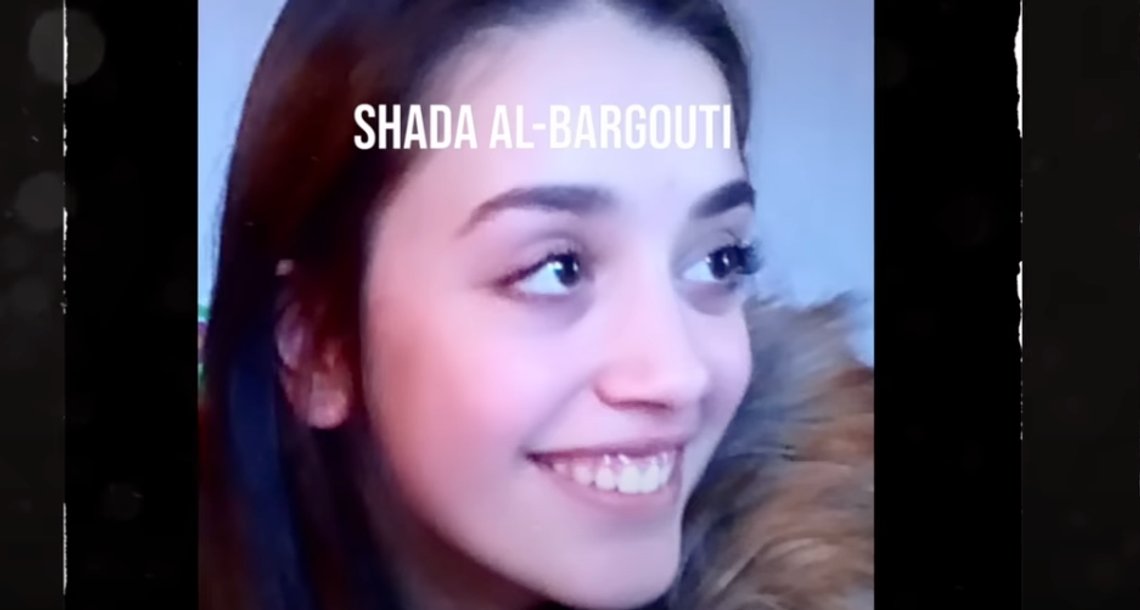
A ten-year-old judgment raises new questions in the case of Shada, the Palestinian girl who died at a child welfare institution in 2019. The parents were convicted of having exercised violence against all three children over a period of more than three years. The judgment is based on explanations and interviews, but no physical evidence was presented.
The Shada case is a tragedy. A 16-year-old girl dies in her room at a child welfare institution. She is said to have hanged herself with an iPhone cable attached to a curtain rod, according to the death certificate, written by a doctor who cannot be identified.
There is no doubt that the parents and Shada’s siblings are deeply affected, and that they are left with many unresolved questions after the death. It has been natural to cover the case from this perspective, and earlier articles have to a large extent been based on statements from the parents’ legal representative, Rodgeir Vinsrygg.
But several readers have raised critical questions, including about family life and about a judgment against the parents from 2016.
Document has now obtained access to the judgment from Gulating lagmannsrett (Gulating Court of Appeal), which we should have ensured we had obtained earlier. It raises new questions.
Charged with abuse
In 2015 the parents were indicted. They are said repeatedly and frequently to have struck and kicked their three children from 2011 to 2014.
The case first went before Fjordane tingrett (Fjordane District Court), where the father was sentenced to imprisonment for 1 year and 6 months. The mother received 1 year. In addition they were ordered to pay each of the children NOK 100,000 in compensation.
The parents appealed the judgment, and the appeal proceedings took place in Gulating lagmannsrett, in September and October 2016. There the sentence was increased to imprisonment for 2 years for the father and 1 year and 3 months for the mother.
In judicial interviews the children are said to have stated that the parents shouted and screamed at them so that they became frightened, and that they, particularly the father, exercised violence by striking and kicking them and “stamping” on their foot.
House arrest
The parents are said to have given them house arrest and locked them in without being able to go to the toilet. The children said that they were not to tell others about the treatment they were subjected to at home, but instead to provide explanations such as that they had fallen down the stairs if anyone discovered the marks on their bodies.
The judgment is anonymised, but the details correspond with the Shada case.* In the judgment the parents are referred to as A and B, while the children are referred to as C, D and E, from the oldest to the youngest.
Brutal descriptions
On the basis of the interviews, the Court of Appeal writes in the judgment that: “… the father struck C and D both with the flat hand and with a clenched fist. When he used a clenched fist, he struck partly with the knuckles and partly with the side of the fist. He struck them in this way over the entire body, in the stomach, on the upper body, on the upper and lower arms, on the head, in the face, pulled them by the hair and held around their wrists and twisted them around.”
“The mother could also strike, kick and throw objects at them.”
The children are said to have lived in continuous fear of being subjected to violence.
A psychologist conducted an assessment, and all the children are said to be traumatised by the treatment. The oldest and the youngest are said, among other things, to have developed post-traumatic stress syndrome, while the middle child is said to be depressed and traumatised. C is said to have developed a dissociative disorder and E a developmental disorder.
The Court of Appeal considers it proven that the accused conducted themselves as described in the indictment against them.
Lack of concrete evidence
Only witness descriptions and the children’s statements in judicial interviews formed the basis for the Court of Appeal’s decision. The parents and their witnesses dispute the explanations and that such conditions existed in their home. Both father and mother stated that they would have intervened against the other if anything of that kind had occurred.
The parents admitted that they had slapped the children on the hands and buttocks in order to get their attention, taken them by the upper arm and lifted them up, and that they did not regard that as violence. They could give the children house arrest with the door open.
Interviews with the child welfare service
In the first interview with the child welfare service (barnevernet), on 25 November 2014, the children denied that they were struck, and stated that the door was open, and not locked, when they had house arrest.
The Court of Appeal criticises the child welfare service for having asked repeated leading questions about violence and for not listening to the children during the interviews. The child welfare service also lied to the children by telling them that they know that “the father struck the children”. But the court considers that the explanations in the judicial interviews are not influenced by the child welfare service’s method in the conversations, and that the information that emerged there is credible.
A matter for the public
The Shada case has received great public attention, and the public deserves to become acquainted with all aspects of the case.
Document regrets that the work we have done was not thorough enough. We should also have checked this information earlier, and followed it up.
The judgment is based on incomplete evidence. What happened prior to the interviews? The children were placed in foster homes and had had contact with the child welfare service. Could the leading questions and the manipulation have continued? Or were the conditions in the home worse than we have been told?
In any case the circumstances surrounding Shada’s death are mysterious. But the new information nuances the picture.
There are still many unresolved questions in the case. A girl is found dead in her room, apparently hanged from a charging cable attached to a curtain rod. The death certificate is signed by a doctor who cannot be identified, as the certificate does not contain any health personnel number. The Emergency Medical Communication Centre (Akuttmedisinsk kommunikasjonssentral, AMK) is said to have been contacted, and life-saving attempts are said to have been made. This call is not registered with AMK, according to the parents’ legal representative Rodgeir Vinsrygg.
In a case such as this all circumstances must be investigated. Document continues to follow the case.


