
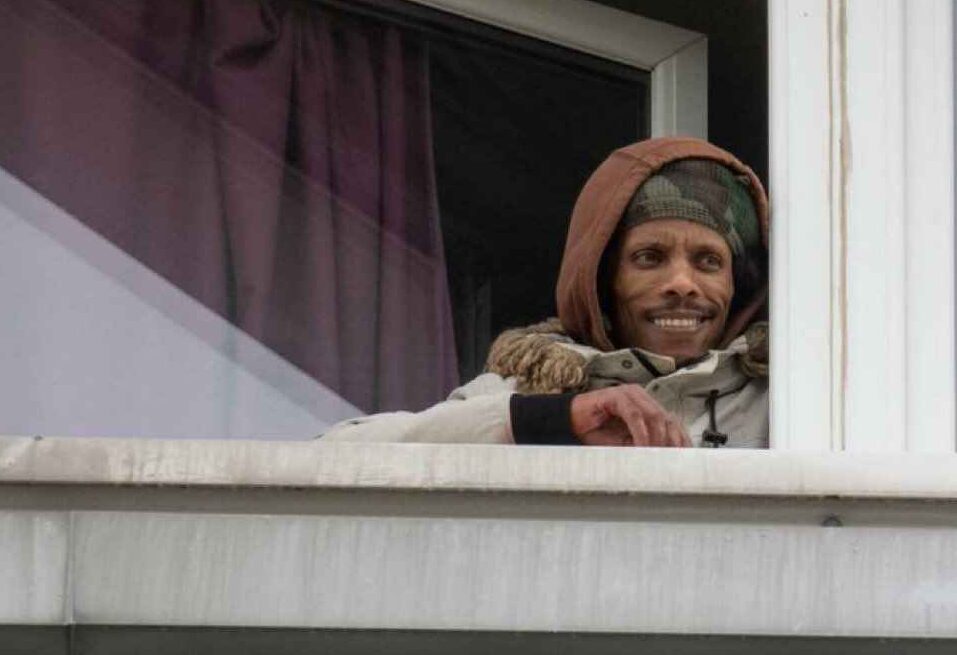
A man of hitherto unknown origin was arrested in the Scottish capital, Edinburgh, after stabbing one person and injuring another and subsequently barricading himself in a block of flats on Monday. The police have not released any description of the perpetrator, but images show a man who can scarcely be described as typically British in appearance. As usual, it is ‘not terror-related’, yet this is beginning to appear as a euphemism for the opposite.
‘A man has been arrested in connection with a disturbance in the Calder Gardens area of Edinburgh, which occurred at around 8.25 a.m. on Monday 2 March 2026,’ the police said in a press release. Fire services, ambulances and police arrived at the scene quickly, and schools and nurseries in the area went into lockdown, and people were warned against going there. The injured did not sustain life-threatening injuries. There is no further risk to the public, the police said. The man, who has not been named, ransacked a shop and attempted to enter a nursery before forcing his way into a nearby flat, where he was subsequently arrested. An image showing him grinning in the window of the block of flats has been widely shared on social media and in newspapers.
Videos and images show a man who may have origins in the Middle East or Africa. Reactions on social media are, as usual, marked by anger, concern and exasperation. ‘Typical Edinburgh man,’ many say, ironically. A headline in The Scottish Sun refers to him as the ‘Edinburgh knife man’. Although Scots are not angels – there are, of course, criminals within the Scottish population – it is exceedingly rare, if not unheard of, for Scots to wave machetes in the streets and attack random people.
Created fear and terror
If it is not terror, the police will presumably conclude that mental ill-health is to blame. The result is in any event the same – according to Store norske leksikon, terror means ‘fear, horror or reign of terror and is a term both for extreme fear and for that which can trigger such fear. To terrorise is to create extreme fear by carrying out acts of terror or by threatening such acts.’ Regardless of motive, the result is the same. The knife man created fear and terror in Calder yesterday, a fear that will likely linger for the parents who were told that their children were in lockdown at school, and for the shop employees who experienced having their premises turned upside down by a man with two large knives.
The Calder area is not particularly exclusive, to put it mildly. The housing stock consists largely of council housing, many of them tower blocks, in grey and brown, built in the 1960s and 1970s. Cobbinshaw House, where the knife man barricaded himself, has 13 storeys. There is considerable poverty in the area, and inexpensive council housing makes it likely that the knife man, whether he is an asylum seeker or not, lives there. In Britain, immigrants are housed where it is cheap, which explains why Reform UK performs so well in areas where residents experience integration problems first-hand.
As with the Southport massacre, the police are waiting before releasing details about the perpetrator. They perhaps hope that the tempers that have been set boiling will subside if some time passes. This time, the images and videos say most of what needs to be said. The public understand what this concerns, mental illness or not. The main point is not whether it is terrorism or not, but that incidents such as this could have been avoided had Britain not practised open borders.
More immigration?
While there is broad political consensus in Westminster on limiting immigration to Britain, the Scottish National Party takes a different view. They would prefer to have more, both asylum seekers and labour migrants. Because of Scotland’s declining population, they believe they need more people, and where they come from matters less. As recently as October, First Minister John Swinney criticised the Starmer government for wishing to pursue a more restrictive immigration policy, stating that Scotland wished to receive far more people. The Scots do not appear to agree. Reform UK is now the country’s second largest party, with 20 per cent of the vote, against the SNP, which has 34 per cent. Labour and The Conservative Party are struggling with support and have only 15 and 10 per cent of the vote.
The lines are hardening, and yesterday’s knife attack does not strengthen the SNP. While politicians such as John Swinney are far removed from areas such as Calder, many of their voters are not.
Note from the editor: it has since been claimed that the man hails from Somalia, but this is not yet verified. The police say his age is 23. This is disputed by many commenters on social media, who claim he looks much older.